

























Evan Bates and Madison Chock surge into Olympic week as ice dance rivalry tightens

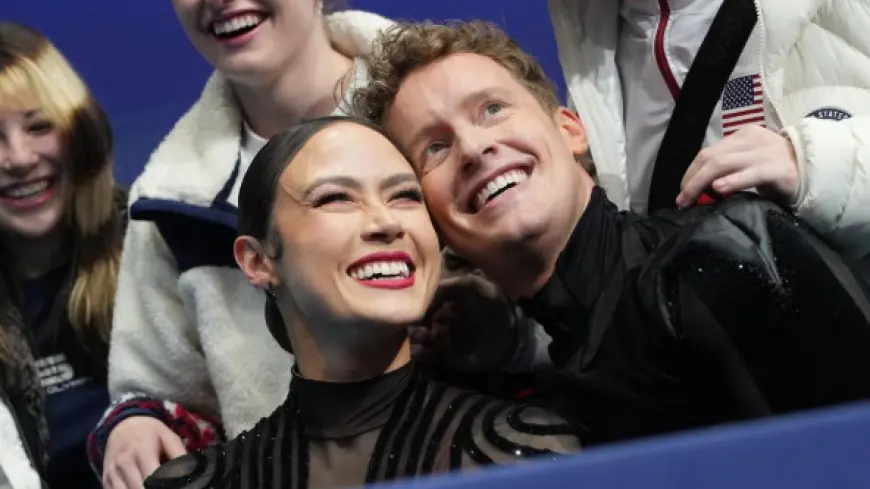
Evan Bates and Madison Chock entered the Milano-Cortina Winter Games as the United States’ most dependable ice dance points source, then backed it up with a season-best performance that kept Team USA on top of the figure skating team event standings. Their showing also sharpened the storyline heading into the individual ice dance competition: a head-to-head battle with a fast-rising French duo that has quickly become the event’s defining matchup.
With the rhythm dance and free dance still ahead, the Americans’ early edge has set the tone for a week where margins are expected to be thin and execution under pressure will decide the medals.
Evan Bates and Madison Chock set the pace
Chock and Bates delivered a season-best 133.23 in the team event free dance, a score that held up as the top mark of the segment and helped the U.S. maintain its overall lead. Their performance combined high speed, tight unison, and emphatic character work—exactly the kind of package that earns points both in technical levels and in the components that reward interpretation, skating skills, and choreography.
For the U.S., that matters because the team event is often won in the details: turning a “safe” skate into a big one can be the difference between gold and a podium scramble. Chock and Bates have built a reputation for delivering those big points when the stakes spike.
Team event scores that shaped the standings
Here is how the top of the free dance segment stacked up:
| Team | Nation | Free dance score |
|---|---|---|
| Madison Chock / Evan Bates | United States | 133.23 |
| Charlene Guignard / Marco Fabbri | Italy | 124.22 |
| Marjorie Lajoie / Zachary Lagha | Canada | 120.90 |
| Diana Davis / Gleb Smolkin | Georgia | 117.82 |
| Utana Yoshida / Masaya Morita | Japan | 98.55 |
Those numbers created separation at the top and reinforced a key truth of Olympic ice dance: if you can bank a high score early, you force everyone else into a narrower lane later.
The rivalry defining Olympic ice dance
The main tension now sits at the top of the individual field. Chock and Bates have been trading blows with a newly formed French pairing of Laurence Fournier Beaudry and Guillaume Cizeron, a duo that formed in 2025 and found major success quickly. The contrast is sharp: the Americans’ long-built chemistry and power-driven delivery versus the French pair’s refined line, expressiveness, and polish.
This season, the matchup has already produced tight results at major events, with the Americans narrowly finishing ahead in key moments. That competitive closeness is fueling a simple Olympic reality: no team can coast. A small slip on twizzles, a loss of edge quality, or a missed level can swing the final standings.
How their style wins points
Chock and Bates tend to score well when they combine three elements in the same skate:
-
Clean, high-level elements that protect their base value
-
Speed and flow that make transitions look effortless rather than labored
-
Commitment to character that reads clearly from the first beat to the last pose
Their best programs look like they’re moving through the music rather than skating on top of it. In a judging system that rewards both technical content and overall quality, that blend is how they turn “very good” into “hard to catch.”
What to watch next in the schedule
The Olympic ice dance competition continues with the rhythm dance on Monday and the free dance on Wednesday (ET dates, local start times vary). The rhythm dance is often where rankings compress, and it can punish even small timing errors because required patterns and key points are evaluated closely.
The free dance is where the full story gets told—two teams can be separated by fractions after the rhythm, then everything hinges on whether they hit their peak when it matters most.
For Chock and Bates, the immediate task is not chasing perfection but repeating the essentials: levels, speed, and control under pressure. If they do that, they keep the rivalry on their terms. If they leave openings, the field is deep enough to make them pay.
Sources consulted: Reuters, International Olympic Committee, Associated Press, U.S. Figure Skating