






















Lavrov Denounces Claims of Russian Interference in Armenian Elections

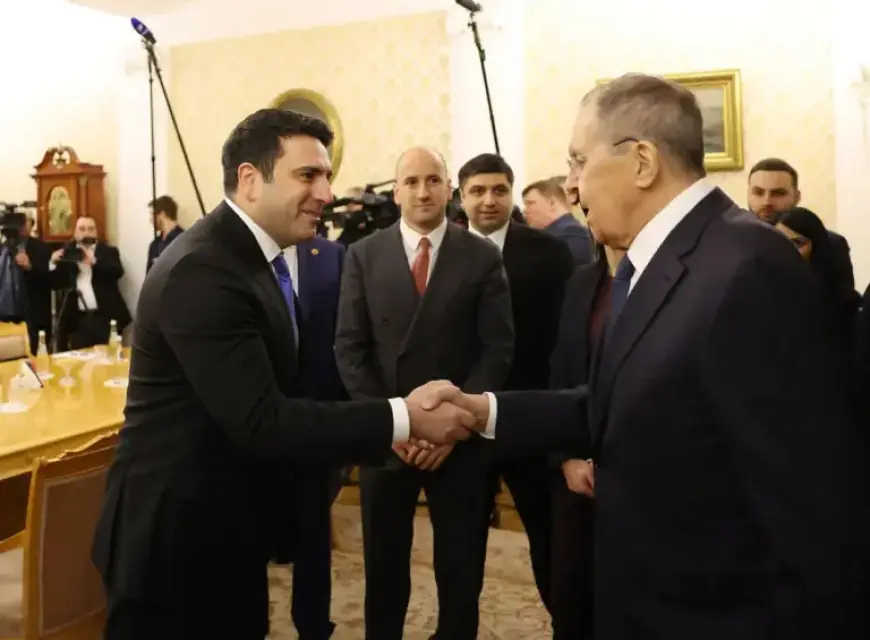
Russian Foreign Minister Sergei Lavrov has publicly rebuked claims made by Armenian and EU officials regarding alleged Russian interference in Armenia, specifically concerning accusations of planned ‘imaginary attacks’ and the potential threats posed by the Russian-led Collective Security Treaty Organisation (CSTO).
Lavrov’s Critique of Armenian Officials
During a meeting with Armenian Parliamentary Speaker Alen Simonyan, who was visiting Moscow, Lavrov addressed the statements made by Armenian leaders. He expressed confusion over the notion of imaginary threats from the north and emphasized that such rhetoric is perplexing.
- Simonyan previously accused Russia of waging a ‘hybrid war’ against Armenia.
- In January, Armenian Prime Minister Nikol Pashinyan alleged that CSTO member states, including Russia, failed to provide military assistance during conflicts with Azerbaijan.
- Pashinyan described these failures as constituting an ‘existential threat’ to Armenia.
European Union Involvement
Lavrov’s remarks also referenced comments from the EU’s top diplomat, Kaja Kallas. She stated that Armenia sought assistance to combat malign influences from Russia ahead of its parliamentary elections in 2026. Kallas implied that its initiatives were similar to support provided to Moldova.
- Kallas labeled Russia and its proxies as sources of disinformation aimed at Armenia.
- Armenian officials are increasingly vocal about the hybrid threats they perceive leading up to their elections.
Reassurances from Armenia
In response, Simonyan assured Lavrov that Armenia values its relationship with Russia. He expressed concerns regarding the public rhetoric coming from Russia, which he said troubles both the Armenian government and society.
- The Armenian leadership aims to clarify that, despite some issues requiring discussion, they are not seeking to act against Russian interests.
- This ensures that the perception of Armenia as a traditional ally of Russia remains intact.
Meeting Outcomes
While in Moscow, Simonyan also met Russian counterpart Valentina Matvienko. Their discussions encompassed a range of topics, including the ongoing peace efforts between Armenia and Azerbaijan.
Consequently, Lavrov expressed a desire for collaborative efforts and a commitment to maintaining strong ties between the two nations. He urged against narratives that could undermine mutual trust.
Conclusion
The tensions demonstrate the complexities in Armenian-Russian relations, particularly in light of the upcoming 2026 parliamentary elections. As claims and counterclaims circulate, the importance of diplomacy and clear communication becomes ever more critical.