


















Understanding Curling Power Play: Key Rules of this Winter Olympic Sport

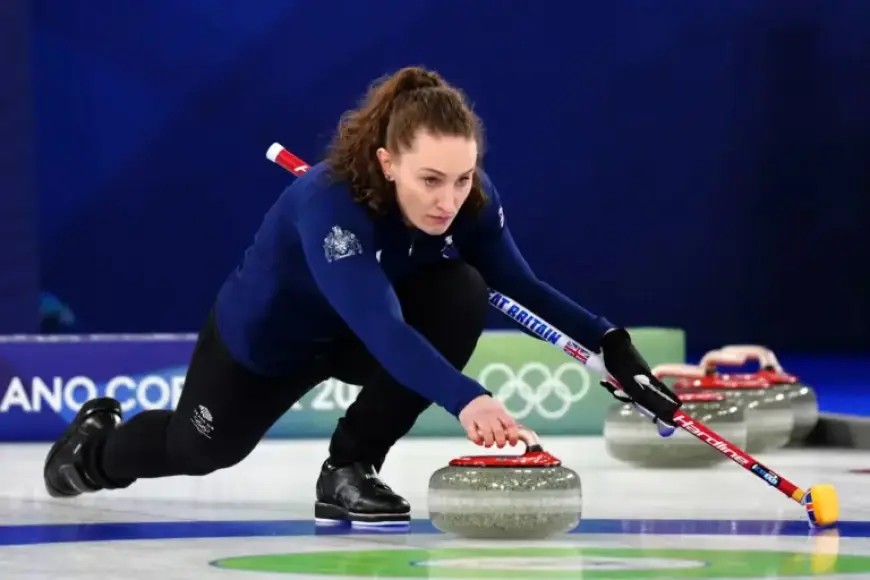
Curling is a captivating sport featured prominently at the Milano-Cortina Winter Olympics. The competition showcases mixed doubles between the men’s and women’s events, starting two days before the Opening Ceremony. It runs until the medal matches on the final days.
Highlights of Mixed Doubles Curling
Scottish athletes Bruce Mouat and Jennifer Dodds won the World Championships in 2021. Following a disappointing fourth-place finish in the 2022 Beijing Olympics, they are poised to pursue another medal opportunity.
Understanding the Format
The mixed doubles format differs significantly from traditional curling. In standard events, teams consist of four players, each throwing two stones, totaling eight stones per end. In contrast, mixed doubles format involves:
- Each team throwing five stones per end.
- Each player throwing two stones.
- One player being responsible for the first and last stones of an end.
This unique setup can lead to high-scoring ends, with up to six points possible. The game starts with pre-placed stones for every end, which enhances the strategic element.
The Power Play Rule
Each end usually has one stone positioned behind the four-foot circle and another as a center guard. However, when a team calls a power play, the stones are repositioned. This allows:
- One pre-placed stone as a corner guard.
- One stone placed behind the corner guard, aligned with the tee line.
This placement opens space for better scoring opportunities down the center of the sheet. Each team can utilize the power play once per game, adding to the tactical depth of mixed doubles curling.
As the competition unfolds, the dynamics of mixed doubles will be increasingly pivotal in determining the medalists at the Winter Olympics.