

























British Woman Reveals She’s 20% Robot with Mind-Reading Bionic Arm

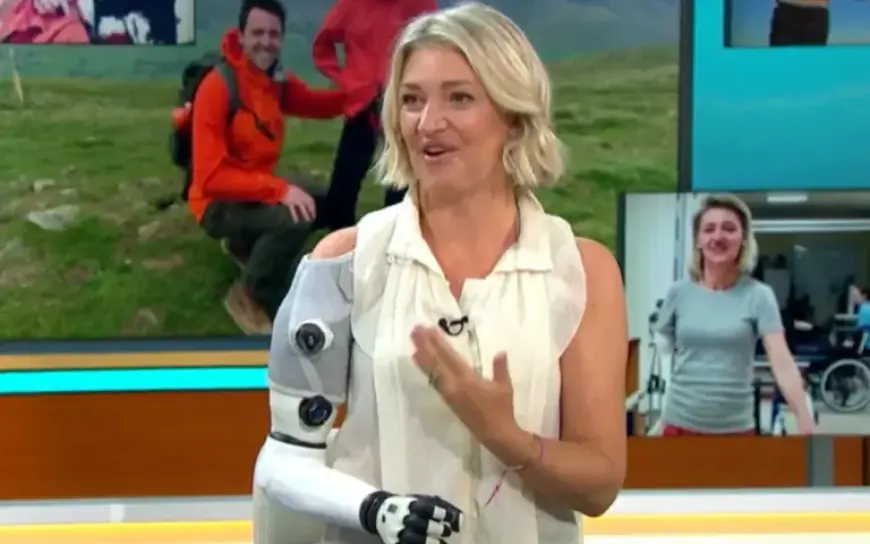
In a remarkable intersection of technology and humanity, a British woman has shared her extraordinary experience with a bionic arm that incorporates mind-reading capabilities. This innovative device has transformed her daily life after she lost her right arm and leg due to a tragic accident.
Meet Sarah De Lagarde: A 20% Robot
Sarah De Lagarde, the woman behind this inspiring story, describes herself as 80% human and 20% robot. In 2022, she was struck by two trains, which necessitated the use of advanced prosthetics. Her bionic arm has rewritten the narrative of her life, enabling her to reconnect with her family and embrace activities she once thought impossible.
The Bionic Arm: Features and Functionality
This state-of-the-art bionic arm utilizes artificial intelligence to interpret and learn from the user’s muscle signals. Thanks to myoelectric sensors and motors, it provides more natural and human-like movements. Some notable features include:
- Mind-reading capabilities to anticipate user intentions.
- Rechargeable design, allowing it to be charged overnight like a smartphone.
- Adaptive software that learns frequently used movements for seamless integration into daily life.
The Role of AI in Bionic Technology
As technology advances, AI’s role in medical prosthetics continues to expand. Sarah’s bionic arm is a testament to how far we’ve come in utilizing AI for human enhancement. It empowers users like her to engage in activities from simple hugs to climbing mountains.
Children’s Delight
Sarah’s children are equally fascinated by her bionic arm. They are particularly amused by its charging feature, comparing it to other everyday devices. This blend of humor and technology has helped the family adapt to their new reality.
Implications for the Future
The world has witnessed various milestones in artificial intelligence, each contributing to advancements in multiple sectors, including healthcare. The integration of AI into bionic limbs represents a significant breakthrough in enhancing quality of life for those who have experienced limb loss.
| Key AI Milestones | Year |
|---|---|
| Turing Test Developed | 1950 |
| Term “Artificial Intelligence” Coined | 1956 |
| ELIZA Chatbot Created | 1966 |
| Deep Blue Defeats Kasparov | 1997 |
| Siri Launches | 2011 |
| AI Writes Movie Sunspring | 2016 |
| ChatGPT Released | 2022 |
As we look to the future, innovations like Sarah’s bionic arm will continue to pave the way for enhanced human capabilities. Through such advancements, technology not only integrates into our lives but also enriches them in profound ways.