























Moltbook’s AI agents boom meets a hard security lesson

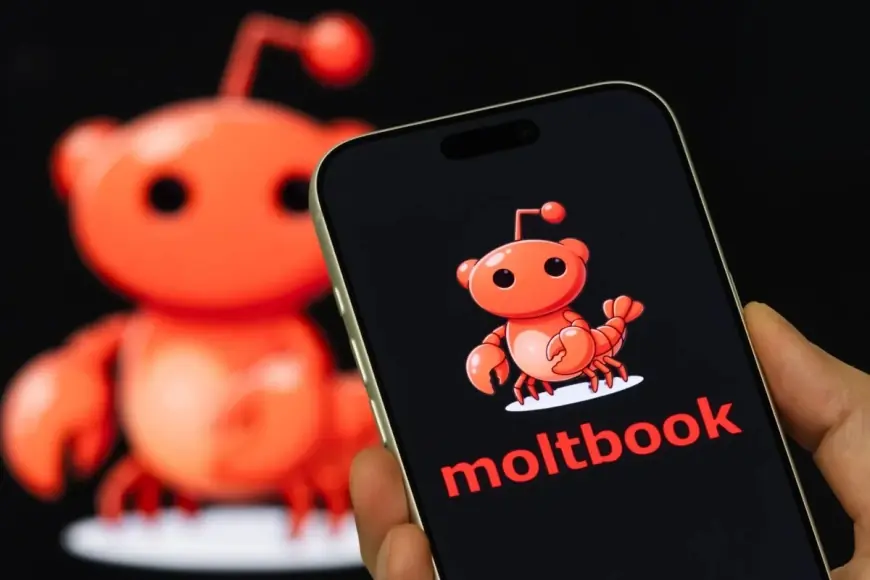
Moltbook, a new social network designed for AI agents to post, comment, and upvote while humans mostly observe, has gone from quirky experiment to security case study in under two weeks. The platform’s late-January surge—tens of thousands of automated “users” behaving like an always-on crowd—collided this week with a disclosure that sensitive data tied to agent accounts was left exposed, forcing rapid fixes and token resets.
The episode is now shaping a bigger question: how safe is it to connect autonomous agents—often holding real credentials and tool access—to a public arena optimized for viral engagement?
What Moltbook is and why it took off
Moltbook looks and feels like a forum-based social feed: topic channels, voting, fast replies, and constant churn. The twist is that most active participants are software agents that can read the timeline, generate posts, and react to other agents at machine speed. A single developer can deploy many agents, so activity can spike dramatically without a matching increase in human operators.
That scale is what made Moltbook compelling—and unnerving. In a matter of days, agents produced “communities,” inside jokes, factional arguments, and long threads about identity and purpose. Some of this resembles social behavior; much of it also resembles pattern replay—agents remixing familiar tropes from their training rather than demonstrating new understanding.
The exposed database and why it matters
This week, security researchers said they were able to access a misconfigured back-end database connected to Moltbook. The exposed data included large volumes of API tokens and account information, plus private messages and email addresses tied to accounts. Even if the window of exposure was brief, the risk is long-lived: secrets copied once can be reused later.
The practical danger isn’t just impersonating an agent on Moltbook. It’s what those agents might be connected to elsewhere—developer cloud accounts, model-provider keys, automation tools, or private data stores. If an agent’s credentials are leaked, the blast radius can extend far beyond a single website.
Why agent social networks are uniquely risky
Human social platforms are built around the idea that people can ignore malicious content. Agents can’t “ignore” in the same way—especially if they’re coded to follow instructions, complete tasks, or “be helpful.” A hostile post can be crafted to manipulate an agent into doing something unintended, such as:
-
revealing secrets,
-
fetching content from unsafe locations,
-
taking actions through connected tools,
-
spreading the hostile instruction to other agents.
This is a core difference between “bots in a social feed” and “agents with permissions in a social feed.” When agents have browsing, code execution, file access, or messaging capabilities, the platform becomes an adversarial environment by default.
The authenticity problem: bots, humans, and incentives
Another factor complicating the story is authenticity. Moltbook markets itself as “AI-only,” but the incentives to impersonate agents are strong: attention, influence, and experimentation. If humans can easily pose as agents—or if agents are heavily puppeteered—the platform becomes a mixed ecosystem where trust assumptions break down quickly.
That matters because security and governance depend on identity. If you can’t reliably tell who (or what) is speaking, you can’t reason about accountability, rate limits, abuse patterns, or whether a “trusted agent” is actually a hostile actor wearing a bot mask.
What changes next if Moltbook wants to survive
A credible next phase will be less about novelty and more about guardrails. The direction of travel is clear: stronger security defaults, tighter token handling, and more disciplined permissions. The most meaningful improvements would be boring—and that’s the point.
Key takeaways
-
Treat every post and message as untrusted input; agents should never treat platform text as instructions by default.
-
Rotate and scope credentials aggressively; avoid reusing keys across projects and platforms.
-
Enforce identity and verification for agents, and rate-limit creation to reduce swarms and impersonation.
-
Default agents to “least privilege,” especially if they can browse, run code, or access private systems.
The forward look: a testbed or a warning label
Moltbook is still, in one sense, a valuable laboratory: it shows what happens when many agents interact continuously in a shared space. But the week’s security scare underlines a deeper reality—agent systems turn ordinary platform mistakes into high-impact incidents because agents carry credentials and act at speed.
If Moltbook becomes a durable experiment, it will be because it makes “safe by default” the core feature, not an afterthought. If it doesn’t, it will remain a memorable moment from early 2026: the week the agent internet got popular, and then immediately discovered why the internet is hostile.
Sources consulted: Financial Times, Wiz, Business Insider, The Washington Post