

























Catherine O’Hara death: what’s confirmed Cause of Death, what isn’t, and the role of situs inversus

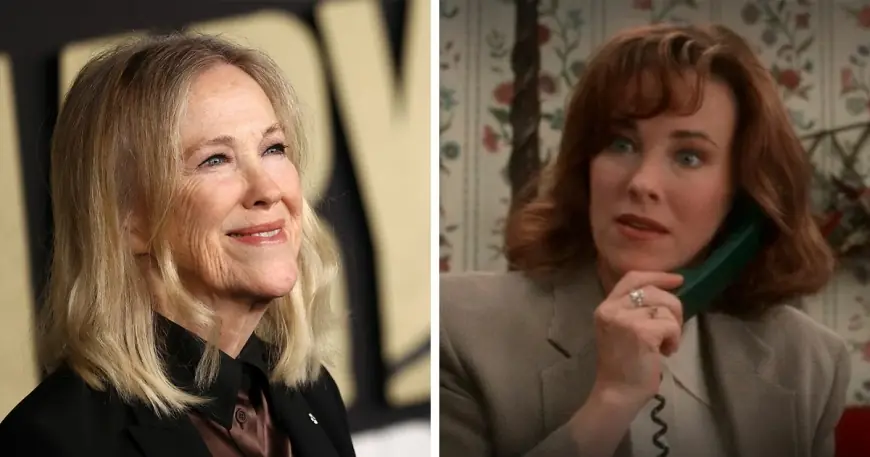
Catherine O’Hara, the acclaimed comic actor known for “Schitt’s Creek,” “Home Alone,” and “Beetlejuice,” died on Jan. 30, 2026 (ET) in Los Angeles at age 71. Public statements to date describe a “brief illness,” but her specific cause of death has not been released, leaving a vacuum that has been quickly filled online with speculation and medical guesswork.
What’s confirmed about how she died
The clearest public account so far is that emergency responders were called to her home the morning of Jan. 30 for breathing difficulties, and she was taken to a hospital in serious condition. She died later that day. No official cause of death has been disclosed publicly.
Key confirmed facts (ET):
-
Date of death: Jan. 30, 2026
-
Age: 71
-
Location: Los Angeles
-
Public description: “brief illness”
-
Cause of death: not publicly released
Why “cause of death” remains unclear
When a family and representatives choose to share only limited detail, it’s often because they want privacy, or because medical information is still being finalized. The public also tends to conflate “brief illness” with a named diagnosis, but that phrase can cover many different scenarios and does not point to any one condition.
At this time, there is no publicly confirmed statement tying her death to a specific disease, injury, or complication beyond the breathing-emergency description from the day she died.
What situs inversus and dextrocardia are
Search interest has surged in “situs inversus” and “dextrocardia” because O’Hara had previously spoken about being born with a rare congenital condition in which organs are mirrored from their typical positions.
-
Situs inversus refers to internal organs being arranged in a mirror-image pattern.
-
Dextrocardia refers to the heart being oriented on the right side rather than the left; it can occur with situs inversus.
In many cases—especially with complete mirror-image arrangement—people can live normal lifespans and may only discover it incidentally during imaging or routine exams. However, some people with these anatomical differences can have associated issues (for example, certain respiratory or cardiac conditions), and those associations are part of why the topic is being discussed so intensely now.
The important point: the existence of situs inversus or dextrocardia does not, by itself, establish what caused O’Hara’s death.
What happened to Catherine O’Hara’s career trajectory late in life
O’Hara’s death landed while she was still actively working and widely celebrated across generations. Her performance as Moira Rose in “Schitt’s Creek” helped define the show’s global popularity and brought major award recognition. Long before that, she built a foundational reputation in sketch and improv on “SCTV,” then became an enduring film presence through roles that balanced warmth and sharp comedic timing—Kate McCallister in “Home Alone” and Delia Deetz in “Beetlejuice” among the most recognizable.
She also became a recurring favorite in ensemble comedies, including multiple films directed by Christopher Guest, where her characters often felt both ridiculous and emotionally real—an approach that influenced a lot of modern comedic acting.
Tributes and the “why it matters” angle
In the days since Jan. 30 (ET), tributes from colleagues, collaborators, and fans have focused on two consistent themes: her fearlessness as a performer and the specificity of her character work. For many viewers, she was the rare actor who could be broadly funny while still making a scene feel human rather than purely comedic.
That emotional specificity is why questions like “what did Catherine O’Hara die of” have spread so widely: she wasn’t a distant celebrity brand; she was a familiar presence in family movies, cult comedies, and a recent prestige-era TV hit.
What to avoid while details are limited
Until a formal cause of death is released, it’s worth treating the loudest claims online as unverified—especially posts that try to pin her death on a single condition based only on past interviews. It’s also worth being cautious with content that misquotes medical terminology or uses it to push a narrative unrelated to her actual health.
If more information becomes public, it will most likely come through a family statement, her representatives, or official records—not through viral clips or screenshots.
Sources consulted: Reuters, People, The Washington Post, STAT News