
























Tommaso Cioni and Annie Guthrie Pulled Into a Missing-Person Crisis as Family Pleads for Answers in Tucson

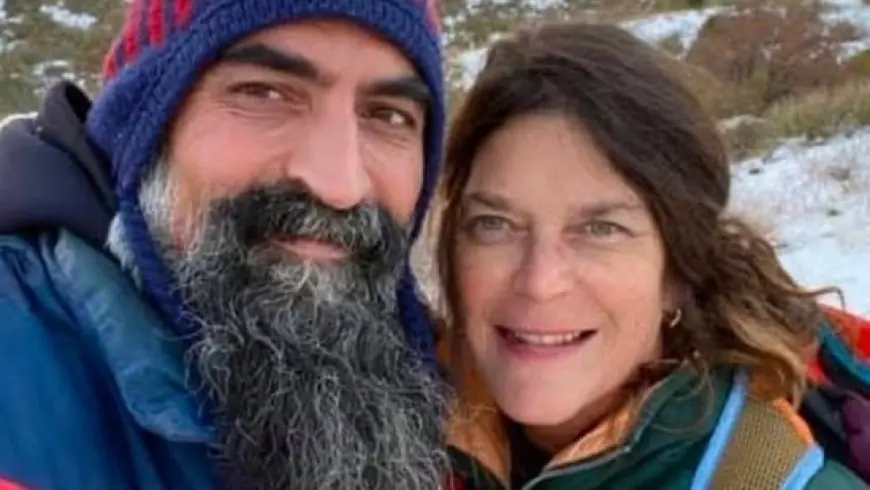
Tommaso Cioni and Annie Guthrie have become central names in a fast-moving Tucson investigation after Annie’s mother, 84-year-old Nancy Guthrie, vanished from her home over the weekend. The case has drawn national attention in recent days because Nancy’s daughter Savannah is a prominent morning television anchor, but law enforcement has emphasized a simpler reality: an older adult with physical limitations is missing, and investigators are treating the situation as a criminal matter while they work timelines, evidence, and digital trails.
What happened: the last confirmed sighting and the investigation focus
The last publicly confirmed sighting of Nancy Guthrie was late Saturday night, January 31, 2026, when she was dropped off at her Tucson home after a family dinner with Annie Guthrie and Tommaso Cioni. Investigators have said Cioni waited until Nancy appeared to make it inside safely. In Eastern Time, that drop-off window has been described around roughly 11:30 p.m. to 11:45 p.m. ET, based on local time in Tucson.
By Sunday morning, Nancy did not show up to her usual church service. A welfare check later that day led to the missing-person report and a rapidly escalating search. Authorities have since indicated there were signs suggesting an intrusion at or near the home, and they have been collecting and testing physical evidence while also pursuing surveillance video and phone-related data.
As the case intensified, Annie Guthrie and her siblings released an emotional public video appeal asking for Nancy’s safe return and urging anyone with information to come forward.
Who are Tommaso Cioni and Annie Guthrie, and why their names are everywhere
Annie Guthrie is Nancy’s oldest daughter. Tommaso Cioni is Annie’s husband and Nancy’s son-in-law. Their visibility is driven by two facts: they were part of Nancy’s last known evening before she disappeared, and they are family members of a nationally known television figure, which tends to accelerate public attention and speculation.
That combination is precisely why investigators have pushed back on online rumor cycles. Law enforcement has publicly stated that the case does not have an identified suspect, even as internet commentary has tried to assign blame in the absence of confirmed facts.
What’s behind the headline: the incentives and the pressure points
This story is unfolding at the intersection of three forces:
Context
An older adult went missing quickly and quietly, a pattern that can turn dangerous within hours. When a case involves a public figure’s family, it can also become a magnet for misinformation and opportunists, complicating the search.
Incentives
For investigators, the incentive is speed and precision: establish a clean timeline, preserve evidence, and prevent contamination from public noise. For the family, the incentive is to keep attention high enough to generate tips without feeding false narratives that can derail leads. For online personalities, the incentive can be attention itself, which is why rumors proliferate at the worst possible moment.
Stakeholders
The most directly affected stakeholders are Nancy Guthrie, her family, and the Tucson community. But there are also secondary stakeholders: local law enforcement leadership, agencies assisting the search, neighbors whose cameras and observations may matter, and the wider public that can either help with credible tips or harm the process with speculation.
What we still don’t know: the missing pieces that will decide the case
Several core questions remain unresolved and are likely central to the investigation:
-
The exact moment Nancy was last seen inside or near her home after drop-off
-
Whether any door, window, or other entry point shows definitive evidence of forced access
-
Whether there is a confirmed trail of digital activity after late Saturday night, including phone, wearable devices, or home-connected systems
-
Whether nearby cameras captured a vehicle, a person on foot, or unusual activity during the overnight hours
-
Whether any physical evidence indicates where Nancy may have been taken or which direction a suspect could have traveled
Until those pieces are confirmed, the public narrative is vulnerable to guesswork. That guesswork can be damaging, especially when it targets family members who may also be witnesses helping authorities reconstruct the timeline.
Second-order effects: why rumor control matters as much as search logistics
Cases like this often turn on small signals: a neighbor’s doorbell camera, a delivery driver’s recollection, a brief phone ping, a faint footprint trail. When speculation floods social media, two predictable problems follow.
First, false tips multiply, pulling resources away from credible leads. Second, witnesses can become hesitant, fearing public blowback or getting dragged into internet drama. That can slow the flow of information precisely when investigators need it most.
What happens next: realistic scenarios and triggers
-
Investigators narrow a timeline window
Trigger: confirmed camera footage, verified device data, or a reliable witness statement tightens the overnight gap. -
A person of interest emerges, but not an arrest
Trigger: evidence points to a specific vehicle or individual, yet probable cause is not established. -
The case pivots to a broader search radius
Trigger: a confirmed sighting, a location signal, or a physical clue suggests movement away from the neighborhood. -
The public appeal produces the key tip
Trigger: someone recognizes a vehicle, a person, or an unusual interaction from that night and reports it promptly. -
Officials increase messaging against misinformation
Trigger: rumor volume starts interfering with operations or creating safety concerns for witnesses and family.
Why it matters
The names Tommaso Cioni and Annie Guthrie are trending because they sit closest to the last known hours of Nancy Guthrie’s normal routine, not because that proximity implies wrongdoing. In the days immediately after a disappearance, the most important work is unglamorous: timelines, cameras, device logs, evidence integrity, and tips that can be verified. The fastest path to answers is separating what is confirmed from what is merely loud, and keeping public attention focused on actionable information that can help bring Nancy home.