

























Great Lakes Ice Coverage Surges, Lake Erie Reaches 95% Coverage

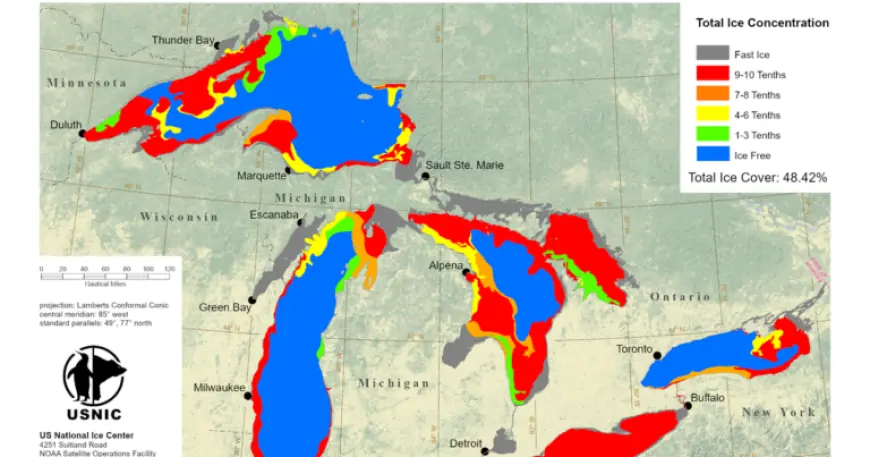
Winter has firmly established itself over the Great Lakes, leading to a remarkable increase in ice coverage. Recent data, reported on February 3, indicates that the total ice coverage for the Great Lakes has surged to 48.42%. This increase is a direct result of an Arctic cold air system that has influenced temperatures significantly.
Current Ice Coverage Statistics
The distribution of ice coverage varies considerably among the different lakes. As of Tuesday afternoon, here are the detailed ice coverage percentages:
- Lake Erie: 95.33%
- Lake Huron: 77.49%
- Lake Ontario: 37.23%
- Lake Superior: 34.31%
- Lake Michigan: 33.33%
Lake Erie stands out with an impressive 95.33% coverage, effectively turning it into a frozen expanse. This condition will likely reduce the formation of lake-effect snow in western New York and Pennsylvania.
Comparative Ice Coverage Insights
Lake Huron is also showing strong ice coverage at 77.49%, likely to affect weather patterns in the region. Meanwhile, Lakes Superior and Michigan have less coverage but are steadily increasing. Lake Superior, while at 34.31%, holds significant volume despite the lower percentage.
Future Projections for Ice Coverage
Historically, the ice cover on the Great Lakes peaks in late February or early March, often averaging around 53% for the season. The current figure of nearly 48.5% suggests that this winter could witness a “high ice” year, should the cold temperatures persist. This is a significant contrast to the lows recorded in early 2024.
However, a potential change in the jet stream could bring milder weather next week, which may affect the existing ice. If this occurs, thinner ice, particularly on Lakes Michigan and Ontario, could begin to break up or retreat.
Safety Precautions
It’s important to remember that no ice is entirely safe. Unseen currents and temperature variations can pose risks. Caution is advised for anyone planning to venture out onto the ice.