
























China’s Space Carrier: Revolutionary Superweapon or Mere Propaganda?

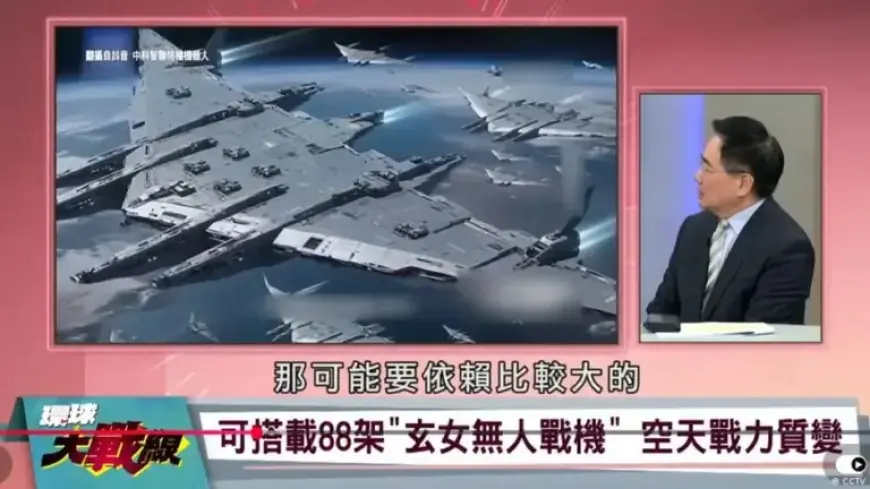
China has unveiled an ambitious concept for a flying aircraft carrier called Luanniao, which translates to “Heavenly Bird.” This superweapon aims to revolutionize warfare in space, yet many experts question its viability.
Overview of China’s Luanniao
Measuring 242 meters (794 feet) in length and boasting a wingspan of 684 meters, Luanniao is designed to weigh up to 120,000 tons at takeoff. This remarkable craft is intended to launch unmanned space fighters known as Xuannu, which can deploy hypersonic missiles targeting threats both in the atmosphere and in orbit.
Significance in Global Space Competition
China has significantly invested in its military capabilities to establish itself as a leader in space technology. Juliana Süß, a space security expert from the German Institute for International and Security Affairs, notes that China’s prestige in space is critical to its government. Over the years, it has positioned itself ahead of Europe, trailing only behind the United States.
Technical Challenges of the Luanniao
Despite the exciting concept, experts express skepticism about its technical feasibility. Current rocket technology cannot support the launch of a 120,000-ton structure into orbit. Practical hurdles include power supply, propulsion systems, cooling mechanisms, and protection from space debris, not to mention the staggering costs involved.
Comparative Analysis with Existing Carriers
While Luanniao aims to exceed the weight of the largest current aircraft carriers by around 20%, it falls short in length. For comparison, the USS Gerald R. Ford measures approximately 337 meters and weighs about 100,000 tons when fully loaded.
A Strategic Signal Amidst Tensions
The announcement of Luanniao is perceived by analysts as more of a strategy than a blueprint for a working model. It serves as a psychological weapon designed to intimidate adversaries. This notion aligns with the findings of The National Interest, which categorized Luanniao’s development as part of China’s propaganda efforts.
Geopolitical Implications
Experts suggest the unveiling of Luanniao is strategically timed, reflecting tensions with the United States, especially regarding Taiwan. Heinrich Kreft, a space analyst, observed that such proclamations function as deterrents, casting doubt on their actual feasibility.
The Future of Space Warfare
China’s aggressive space ambitions may alter the dynamics of global military power. Initiatives like Luanniao are part of a broader trend where nations vie for supremacy in space capabilities.
Credibility and Strategic Importance
The discussion around Luanniao is riddled with questions of credibility. While the vision presented may seem grand, the actual construction and operational readiness of such a vehicle remain uncertain. Nonetheless, it serves as a marker in the ongoing tug-of-war for dominance in the space sector.
- Project Name: Luanniao (“Heavenly Bird”)
- Length: 242 meters (794 feet)
- Wingspan: 684 meters
- Weight: Up to 120,000 tons
- Primary Use: Launching unmanned space fighters (Xuannu)
Ultimately, while Luanniao represents an audacious vision for future warfare, its practical implications and challenges suggest a complex road ahead for China’s aspirations in space technology.