
























Chappell Roan at the Grammys 2026: The Viral “Nipple Ring” Dress, What It Signaled, and Why It Took Over the Night

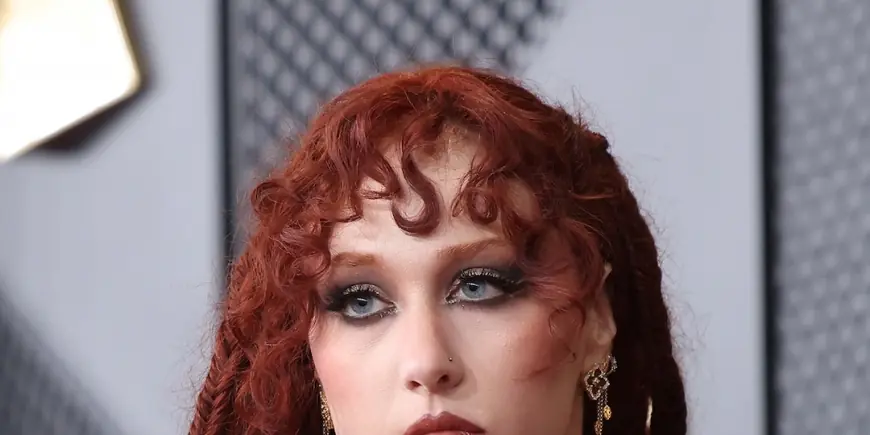
Chappell Roan didn’t just show up to the 2026 Grammy Awards—she set the tone for the entire red-carpet conversation, arriving in a sheer burgundy gown designed to create the illusion that it was suspended by nipple rings. The look ignited immediate online debate about taste, broadcast standards, and how far “naked dressing” can go before it stops being fashion and turns into a compliance puzzle.
The ceremony itself took place Sunday, Feb. 1, 2026, with Trevor Noah returning to host.
Chappell Roan’s Grammys 2026 outfit: what she wore and why it read as “impossible”
The dress was a custom piece tied to Mugler, styled by Genesis Webb, and referenced a late-1990s couture-era silhouette. It came with an optional cloak/cape that could change how exposed the look appeared moment to moment—an important detail in a night where photos move faster than context.
Another detail mattered as much as the gown: the “nipple ring” effect was built around prosthetics/pasties so images could circulate broadly without being immediately blocked or removed by common nudity rules on major platforms. That turned a provocative outfit into a meta-commentary on how modern censorship often hinges on a tiny technicality.
Roan herself leaned into the moment afterward with a light, dismissive tone, essentially saying she didn’t see it as especially outrageous—an approach that kept the story from becoming an apology tour and instead framed it as self-expression.
Grammys 2026 context: why Chappell Roan was already a focal point
Roan entered the night with major-category visibility. Her single “The Subway” was nominated for Record of the Year and Best Pop Solo Performance, meaning she was positioned at the intersection of credibility and spectacle—exactly where a red-carpet narrative gets amplified.
For newer mainstream stars, the Grammys can function like two simultaneous competitions: one for awards, one for cultural attention. Roan has proven she can win the second battle without surrendering the first.
Who is Chappell Roan and why “Pink Pony Club” keeps coming up
If you’re seeing “who is Chappell Roan” alongside “Pink Pony Club,” it’s because her rise has been tied to theatrical pop staging and a persona that treats performance, fashion, and identity as one package rather than separate lanes. She won Best New Artist at the 2025 Grammys and performed “Pink Pony Club,” which became a reference point for her brand of maximalist showmanship.
That context matters: the 2026 outfit didn’t come out of nowhere. It’s consistent with a career arc that uses visual storytelling as part of the music’s impact.
What’s behind the headline: incentives, stakeholders, and the quiet strategy in a loud dress
The incentives are straightforward. A red-carpet moment can generate days of coverage, drive streaming, and cement an “era” without requiring a single new release. For a nominated artist, that attention also reinforces the idea that they’re not a one-cycle phenomenon.
The stakeholders are less obvious:
-
The artist and team (creative control, brand coherence, audience expansion)
-
Stylists and fashion houses (proof of influence, future commissions, cultural imprint)
-
Event producers and broadcasters (keeping the show headline-worthy while avoiding controversy that derails the night)
-
Social platforms (moderation rules that end up shaping art and fashion choices)
-
Fans and detractors (who effectively act as distribution networks)
There’s also a missing piece that fuels the churn: most people see the photo first and learn the details later—if at all. When an outfit is designed around an illusion, the internet will fill in blanks with assumptions.
What we still don’t know and what to watch next
Even with the visuals, key questions remain unsettled:
-
Whether the look will trigger tighter dress guidance for future award shows, or whether it becomes just another “new normal” moment
-
How platforms and broadcasters will respond to increasing “edge-case” styling designed to exploit nudity-policy loopholes
-
Whether the attention translates into measurable commercial lift for “The Subway” and the broader catalog in the days after the ceremony
What happens next: realistic scenarios and triggers
-
A wave of copycat “policy-hack” fashion moments, triggered by the proven payoff of viral reach without removal.
-
A stricter red-carpet code language (even if loosely enforced), triggered by pressure from advertisers and broadcast partners.
-
A shift in the conversation from “how shocking” to “how constructed,” triggered by more behind-the-scenes details about prosthetics, styling, and references.
-
A sustained narrative tying Roan’s fashion to her artistry rather than distraction, triggered if her nominated work continues to climb in streams and radio play post-Grammys.
The core takeaway from Grammys 2026 is that Roan’s outfit wasn’t only about exposure—it was about control. In a media ecosystem that rewards instant reaction, she arrived with a look engineered to travel, to survive moderation, and to keep the focus on her terms.