
























U.S. States Deepen Divide on Immigration Enforcement Policies

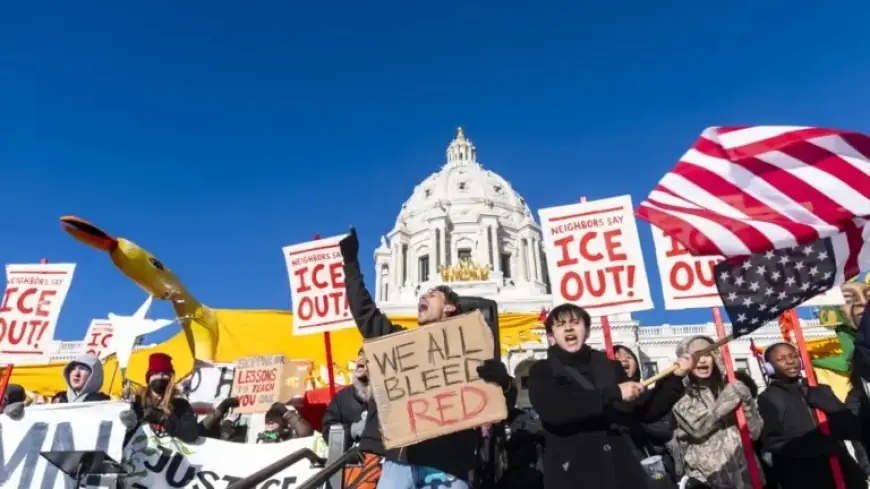
Recent discussions in the U.S. have intensified over immigration enforcement policies, particularly in response to tragic events involving individuals impacted by federal crackdowns. The deaths of Renee Macklin Good and Alex Pretti have prompted state leaders to critically examine how immigration enforcement is handled at the federal level.
State Responses to Immigration Enforcement Policies
Democratic leaders in various states have pledged to hold federal Immigration and Customs Enforcement (ICE) accountable. These promises include potential criminal charges against federal agents involved in immigration actions. Following an ICE increase in Chicago last year, Illinois established the Illinois Accountability Commission to gather evidence regarding ICE activities and consider accountability measures.
- Rubén Castillo: The chair of the commission, a former federal judge, has stated they are in dialogue with local law enforcement about possible prosecutions.
- Legal Perspective: Experts argue that states do have the authority to prosecute federal officials if they violate state laws.
- Civil Suits: Illinois has laws that allow individuals to file civil lawsuits against federal agents, despite federal attempts to block this action.
Actions in Democratic States
Democratic lawmakers in states such as New York, California, Colorado, and Oregon are contemplating legislation similar to Illinois’ laws. Their aim is to strengthen state-level protection against federal immigration enforcement.
Republican States Support Aggressive Enforcement
Meanwhile, Republican-led states have adopted more stringent immigration policies since the Trump administration began advocating for mass deportation. For instance:
- Tennessee: The state now provides grants to local law enforcement that collaborate with ICE, significantly increasing formal agreements with the agency.
- Proposed Legislation: New policies in Tennessee, influenced by former Trump advisor Stephen Miller, could prohibit undocumented individuals from acquiring government services or certification.
- Indiana: Recently passed measures mandate cooperation between local agencies and immigration enforcement.
- New Hampshire: Adopted a law disallowing sanctuary cities, ensuring that local governments comply with ICE.
Contrasting Approaches Among States
The divide on immigration enforcement is prominent, with many Democratic states pursuing protective measures against ICE. California faces legal challenges regarding its federal agent oversight laws. In Maine, a tip line has been set up for reporting ICE abuses, and Massachusetts leaders are advocating for “safe zones” where immigration agents would be restricted from making arrests.
As Minnesota prepares for its legislative session following an ICE surge, Democrats plan to propose measures empowering residents to sue federal agents and reforming eviction processes for those impacted by immigration enforcement.
Conclusion
As this divide grows, the U.S. states are showcasing contrasting philosophies on immigration enforcement policies. With some states leaning towards accountability and protection while others enforce stricter immigration controls, the debate is set to continue evolving.