






















Georgia Fort arrest ignites press-freedom fight after St. Paul church protest

Independent journalist Georgia Fort has become the latest flashpoint in a widening national debate over protest coverage after federal agents arrested her at her Minnesota home on Friday, Jan. 30, 2026 (ET). Fort says she was doing her job—documenting a politically charged demonstration inside a St. Paul church—and that her arrest criminalizes journalism. Federal prosecutors say the case is about protecting worshippers’ rights and stopping coordinated disruption.
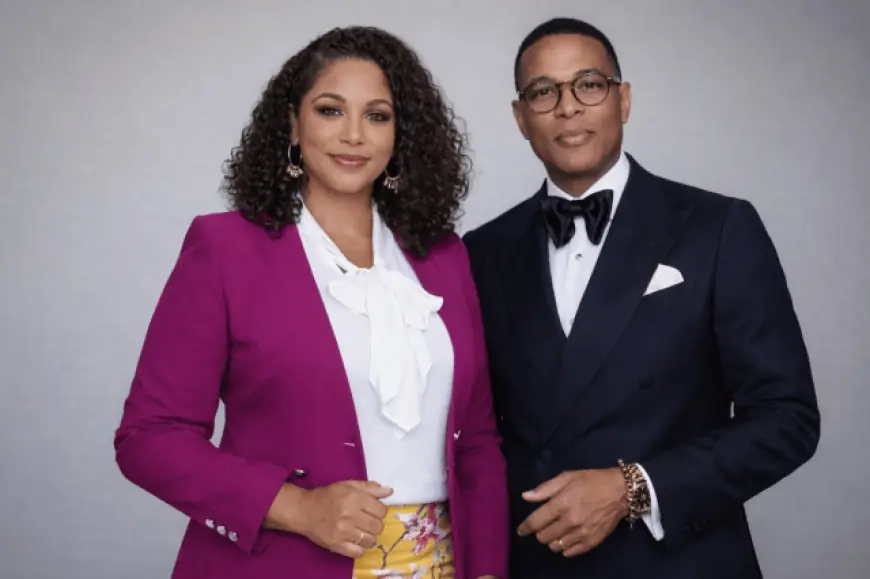
The episode has drawn national attention not only because Fort livestreamed her arrest, but because it sits alongside the parallel federal case involving journalist Don Lemon tied to the same event.
Who is Georgia Fort
Fort is a Minneapolis–St. Paul-based independent reporter known for live, on-the-ground coverage of protests, policing, and civil-rights issues. She runs a local newsroom project focused on community reporting and has built a large audience through frequent real-time video reporting of demonstrations and court proceedings.
In recent years, Fort’s work has centered on Minnesota’s civic flashpoints, including high-profile police accountability cases and public demonstrations tied to immigration enforcement. Supporters describe her as a documentarian of public life; critics argue her proximity to activists can blur the line between observer and participant—an argument now being tested in court.
The protest that led to the arrests
The arrests stem from a Sunday, Jan. 18, 2026 (ET) protest at Cities Church in St. Paul, Minnesota, where demonstrators entered during a service and chanted slogans opposing immigration enforcement. The protest focused on the church’s leadership, highlighting that a pastor associated with the church also holds a senior role with U.S. Immigration and Customs Enforcement in the region.
The protest unfolded against a tense backdrop in Minnesota, where recent immigration enforcement actions and deaths linked to federal operations have intensified public anger and organized demonstrations. The church protest quickly became a symbol for both sides: protesters framed it as confronting state power in a moral space, while officials framed it as intimidation inside a house of worship.
What the federal case alleges
Federal authorities have used civil-rights statutes and a federal law commonly known as the FACE Act—a law that protects access to certain facilities, including places of worship—to pursue charges tied to the church disruption.
Prosecutors allege that a group of defendants coordinated actions intended to interfere with churchgoers’ ability to practice their faith without intimidation or obstruction. Fort and Lemon have both insisted their presence was journalistic and that they did not plan or carry out the disruption.
As of Monday, Feb. 2, 2026 (ET), officials have said nine people have been arrested in connection with the incident, including journalists and activists. Several of those initially taken into custody have since been released while the case proceeds.
Key dates in the Georgia Fort case (ET)
| Date | Event | What happened |
|---|---|---|
| Sun., Jan. 18, 2026 | Cities Church protest | Service disrupted by anti-ICE demonstrators |
| Thu., Jan. 29, 2026 | Initial federal action expands | Arrests related to the same event accelerate |
| Fri., Jan. 30, 2026 | Fort arrested at home | Agents take Fort into custody; she records the moment |
| Sat., Jan. 31, 2026 | Early release and court steps | Fort and other defendants begin initial court process |
| Mon., Feb. 2, 2026 | Additional arrests announced | Total arrests rise to nine |
Why press advocates are alarmed
Press-freedom groups argue the case risks setting a precedent where journalists can be prosecuted for being present at controversial events, especially when reporting is done live and includes interactions with participants. Their core concern is straightforward: if documenting a disruptive protest can be characterized as joining a conspiracy, reporters may be deterred from covering exactly the kind of public events the First Amendment was designed to protect.
Civil-rights organizations have also highlighted the potential chilling effect on independent journalists, who often lack the institutional legal backing and rapid-response support that large newsrooms can provide.
Officials defending the arrests have emphasized a different principle: that the right to protest does not extend to disrupting religious services in a way that intimidates worshippers, and that federal law provides tools to protect that right.
What happens next
The near-term fight is likely to revolve around intent and evidence: whether prosecutors can show planning or participation beyond recording and interviewing, and whether defense attorneys can establish that Fort’s actions fall squarely within newsgathering.
Several pressure points will shape what comes next:
-
Pretrial motions challenging the application of the FACE Act and conspiracy statutes to journalistic conduct
-
Discovery disputes over video, messages, and organizing materials tied to the protest
-
Judicial rulings clarifying where the line is drawn between documenting an event and taking part in it
For Fort, the stakes are both legal and practical: beyond the case outcome, the process itself—restrictions, legal costs, and uncertainty—can reshape an independent reporter’s ability to work. For the broader media landscape, the case is fast becoming a test of how aggressively the federal government can pursue protest-related prosecutions when journalists are on the scene.
Sources consulted: Associated Press; ABC News; NAACP Legal Defense Fund; Foundation for Individual Rights and Expression