

























Epstein files release accelerates, fueling privacy backlash and a Capitol Hill showdown

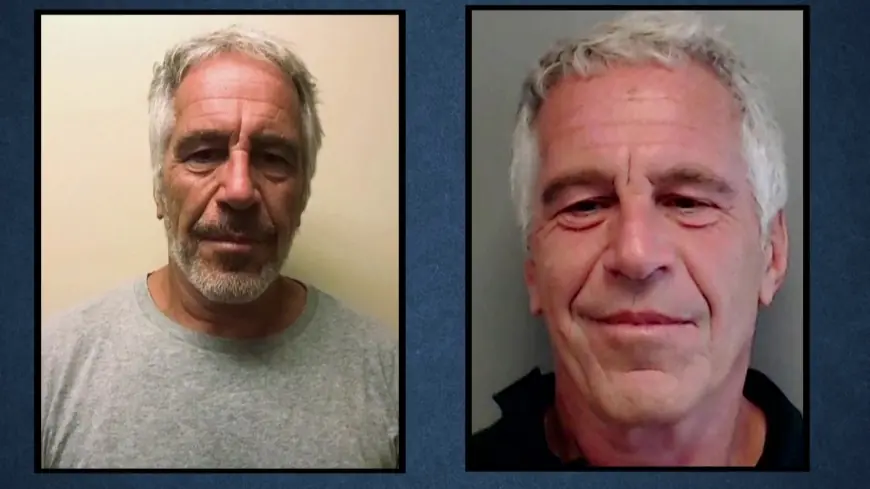
The Justice Department has expanded its public “Epstein files” archive with a massive late-January release that officials say brings the government into legal compliance—while lawmakers and survivors’ advocates argue key questions remain unresolved. The newest tranche, posted Friday, Jan. 30, 2026 (ET) and updated in the library through Monday, Feb. 2 (ET), has intensified a tug-of-war between transparency and the risk of exposing victims in a document dump that runs into the millions of pages.
The stakes are immediate: what the public can see, what Congress can review, and how quickly errors can be corrected when sensitive material is made available at scale.
What’s in the Epstein files library now
The Justice Department says the latest publication added over 3 million pages and brought the total public production to nearly 3.5 million pages tied to Jeffrey Epstein-related investigations and prosecutions. The release also includes more than 2,000 videos and about 180,000 images, a scale that has strained search and download systems and complicated efforts to track what is new versus duplicated.
The department describes the collection as drawn from multiple “primary sources,” including investigative and case materials from Florida and New York matters involving Epstein, the New York criminal case involving Ghislaine Maxwell, and investigative files related to Epstein’s death. The archive now includes an age-gated warning because of sensitive sexual content within the materials.
Timeline of releases and why the dates matter
The law driving the rollout set a short fuse, and the release schedule has been one of the biggest sources of public friction. Here’s the basic cadence in Eastern Time:
| Date (ET) | Release moment | What changed |
|---|---|---|
| Thu., Dec. 19, 2025 | Initial postings begin | First wave goes public under the new law |
| Mon., Dec. 22, 2025 | Large add-on release | Thousands more documents; early redaction concerns surface |
| Fri., Jan. 30, 2026 | Major “final” tranche | DOJ says production reaches nearly 3.5 million pages |
Officials have characterized the January 30 drop as completing the department’s obligation. Critics have focused on whether additional responsive records exist and whether the “final” label matches what the government previously said about the universe of material.
Why some records are redacted or withheld
The Justice Department says it “erred on the side of over-collecting,” and that anything not produced falls into limited buckets. Those categories include: duplicate documents across investigations, materials withheld under legal privilege, items withheld under narrow statutory exceptions (including depictions of violence), and items deemed unrelated to the Epstein or Maxwell case files.
The department also says it instructed reviewers to keep redactions focused on protecting victims and their families, and it has emphasized that “notable individuals and politicians” were not redacted simply because they were well known. Another notable feature of the release: officials say the production includes materials submitted to investigators by the public, which can include items that are fake or falsely submitted, meaning the archive contains claims that are not necessarily verified.
Victim privacy concerns and the redaction controversy
The archive carries an explicit warning that, because of volume, it may still contain sensitive personal information that was not intended for release. That warning has taken on added weight after earlier waves of documents prompted complaints about victim-identifying details appearing in public-facing files and about inconsistent redaction quality.
A separate controversy that has lingered since the December releases is technical: some “blacked-out” redactions in certain documents were vulnerable to basic copy-and-paste or editing workarounds, allowing underlying text to be recovered. Even when those issues were limited to specific files, the episode undermined confidence that the system reliably protects victims while meeting the law’s transparency mandate.
The tension is structural. A release designed to be comprehensive can also be chaotic, and the people most at risk of harm from mistakes are the victims whose identities and personal histories were never meant to become internet content.
Congress pushes for unredacted access
On Capitol Hill, the argument has shifted from “release more” to “prove the redactions are lawful.” Members of the House Judiciary Committee have asked the Justice Department to arrange rapid review of the complete unredacted files for oversight purposes. Their stated goal is to evaluate whether withheld material is limited to the narrow reasons allowed by law—victim privacy and other specified exceptions—rather than broader justifications like reputational damage or political sensitivity.
That push has also been tied to upcoming oversight questioning of Justice Department leadership, with lawmakers seeking time to examine the unredacted set before public hearings.
What happens next
Three developments will shape the next phase:
-
Corrections and removals: whether the department identifies and fixes files that inadvertently expose sensitive personal information.
-
Oversight access: whether Congress is granted structured, secure review of unredacted materials—and under what rules.
-
Completeness disputes: whether the government’s “nearly 3.5 million pages” production is accepted as the full responsive universe, or whether additional record sets emerge as still pending.
For the public, the biggest practical reality is that the archive is not a neat narrative—it’s a vast, uneven record that mixes court materials, investigative documents, and unverified submissions. For policymakers, the core question is whether transparency has been achieved without turning victims into collateral damage.
Sources consulted: U.S. Department of Justice; Associated Press; The Washington Post; The Verge