

























Linux’s b4 Tool Enhances AI Code Review with Dogfeeding Integration

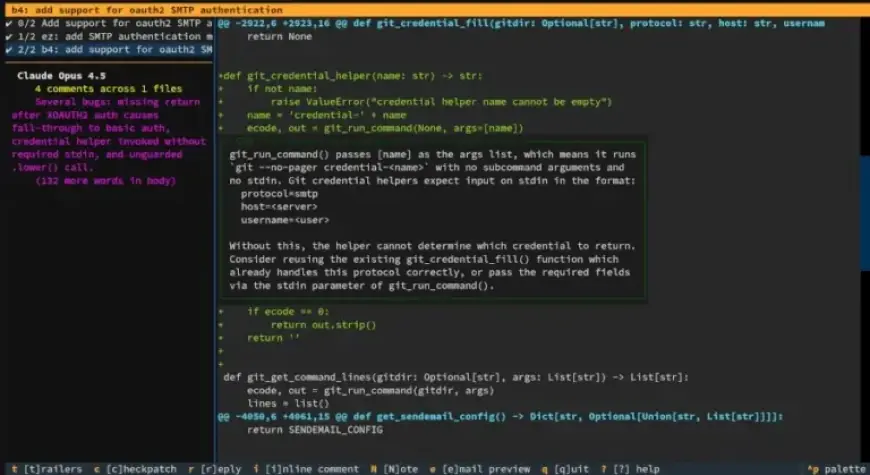
The b4 tool, widely adopted by Linux kernel developers, is undergoing enhancements to improve AI-assisted code review processes. Recently, the tool successfully executed a dogfooding phase with its text user interface (TUI), allowing for AI-enabled reviews of patches within the b4 system.
Overview of b4 Tool Enhancements
Konstantin Ryabitsev, a key figure at the Linux Foundation and the lead developer of the b4 tool, has spearheaded the development of the “b4 review TUI.” This user interface aims to support kernel developers in managing patches while opting to utilize AI agents, such as Claude Code, for assistance in code review. The integration of AI into the b4 tool represents a significant advancement in the workflow of Linux kernel developers.
Key Milestones and Development
Over the weekend, the community achieved a notable milestone by conducting the first actual agent-assisted review using the new TUI. Ryabitsev announced this success and noted that while further refinements are necessary, the TUI is already proving beneficial in code review tasks.
Benefits of AI-Assisted Code Review
Integrating AI into the b4 tool offers several potential advantages:
- Enhanced efficiency in reviewing patches.
- Increased likelihood of identifying overlooked issues.
- Customization based on user preference; AI assistance is strictly optional.
This development not only enriches the capabilities of b4 but also provides an intriguing option for developers aiming to improve their code review process with the help of machine learning technologies.
Additional Developments in AI Code Review
In related news, Chris Mason from Meta is also advancing AI code review tools. These innovations are expected to contribute further to the evolving landscape of AI applications within Linux kernel development.
The incorporation of AI technologies, especially in tools like b4, signifies a progressive step for Linux kernel developers. With continued efforts, the b4 tool’s AI features may soon become integral to modern development practices.