

























Exploring the Strangest Phones Tested Over 14 Years

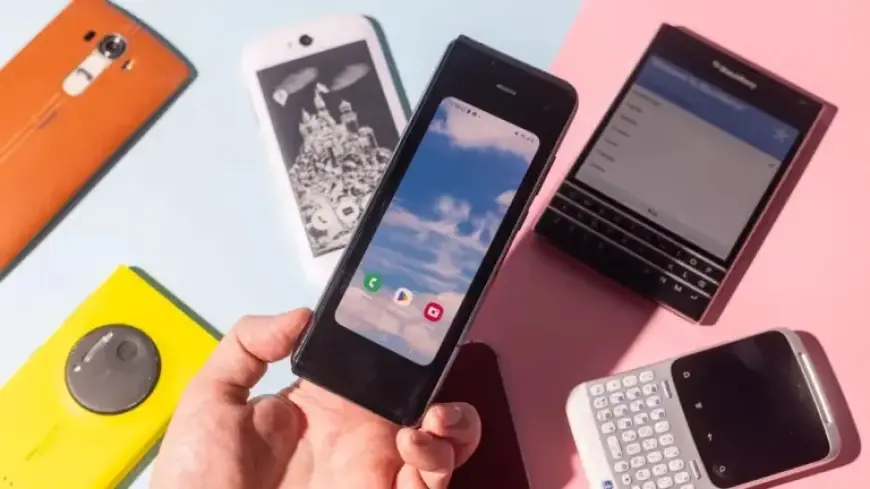
The world of mobile phones has seen remarkable transformations over the past 14 years. Through the lens of a seasoned journalist, we observe the rise and fall of iconic brands and the emergence of peculiar devices that defied conventional design. From BlackBerry’s square screen to Yota’s dual displays, the industry has known many oddities. This article explores the strangest phones tested over the years, showcasing their unique features and the quirks that set them apart.
BlackBerry Passport: The Square Surge
Released in 2014, the BlackBerry Passport attempted to merge business needs with unique design. With its 4.5-inch square display and physical keyboard, it catered to users seeking a distinctive experience. However, the odd shape proved impractical for everyday use. Soon, BlackBerry shifted its focus away from this design, ceasing its phone production in 2016.
YotaPhone 2: A Dual Display Dilemma
Launched in 2014 by Russian company Yota, the YotaPhone 2 featured an innovative second E Ink display. This rear screen was designed for energy-efficient reading and notifications. However, its small size and limited functionality diminished its appeal, leading to the company’s liquidation after only two models.
HTC ChaCha: The Facebook Phone
The HTC ChaCha, unveiled in 2011, sought to capitalize on social media’s popularity with a dedicated Facebook button. Despite its clever concept, time diminished its relevance, and HTC exited the smartphone market in 2018. The dedicated social media button did not gain widespread acceptance.
Sirin Labs Finney U1: The Crypto Companion
Targeted at cryptocurrency enthusiasts, the 2019 Sirin Labs Finney U1 featured a hidden second screen for secure crypto transactions. Despite its niche market, usability issues and high costs limited its success, prompting the company to abandon mobile manufacturing shortly after its launch.
Planet Computers Gemini PDA: Blending Productivity and Portability
The Gemini PDA, released in 2018, combined phone and laptop functionality. Its clamshell design and full keyboard appealed to professionals, but its bulk rendered it impractical for everyday use. While it boasted 4G connectivity and Android software, it struggled to find a wide audience.
LG G5: The Modular Experiment
LG’s G5 debuted in 2016 as a modular smartphone, allowing users to swap out components. While this idea intrigued many, practical challenges, such as the need to restart the phone to change modules, marred its usability. LG discontinued phone production as demand for the G5 waned.
Samsung Galaxy Note: The Phablet Pioneer
In 2011, Samsung introduced the Galaxy Note, a device that pushed the boundaries of mobile design with its 5.3-inch display. Despite initial criticism for its size, it paved the way for the trend of larger smartphones. Its built-in stylus became a signature feature in subsequent models.
Nokia Lumia 1020: The Photographer’s Dream
Unveiled in 2013, the Nokia Lumia 1020 stood out for its incredible 41-megapixel camera. This Windows Phone device appealed to photography enthusiasts, offering unmatched image quality for its time. Although the Windows Phone platform struggled, the Lumia 1020 remains memorable for its unique features.
LG G4: Leather and Curves
Launched in 2015, the LG G4 caught attention with its leather backing and subtly curved display. Although aesthetically appealing and unique, the leather and curve did not translate into widespread success. LG’s experimentation did not lead to a revival in its smartphone lineup.
Motorola Moto X: Personalization at Its Peak
The 2013 Motorola Moto X allowed for extensive customization through the Moto Maker service. Users could choose colors, materials, and even personalize their devices. Despite its novelty, logistical challenges led to the discontinuation of this feature a few years later.
Samsung Galaxy Fold: The Foldable Frontier
In 2019, the Samsung Galaxy Fold launched as one of the first foldable smartphones. It featured a unique design, although its functionality faced criticism due to its awkward proportions. Despite the rocky start, Samsung has since continued to innovate in the foldable space with improved iterations.
The strange phones tested over 14 years reflect a blend of innovation, creativity, and sometimes impracticality in mobile design. The evolution of these devices showcases a fascinating aspect of technology history, highlighting trends that both captured and disappointed consumer interest.