

























The Epstein files release triggers global fallout and renewed scrutiny of past decisions

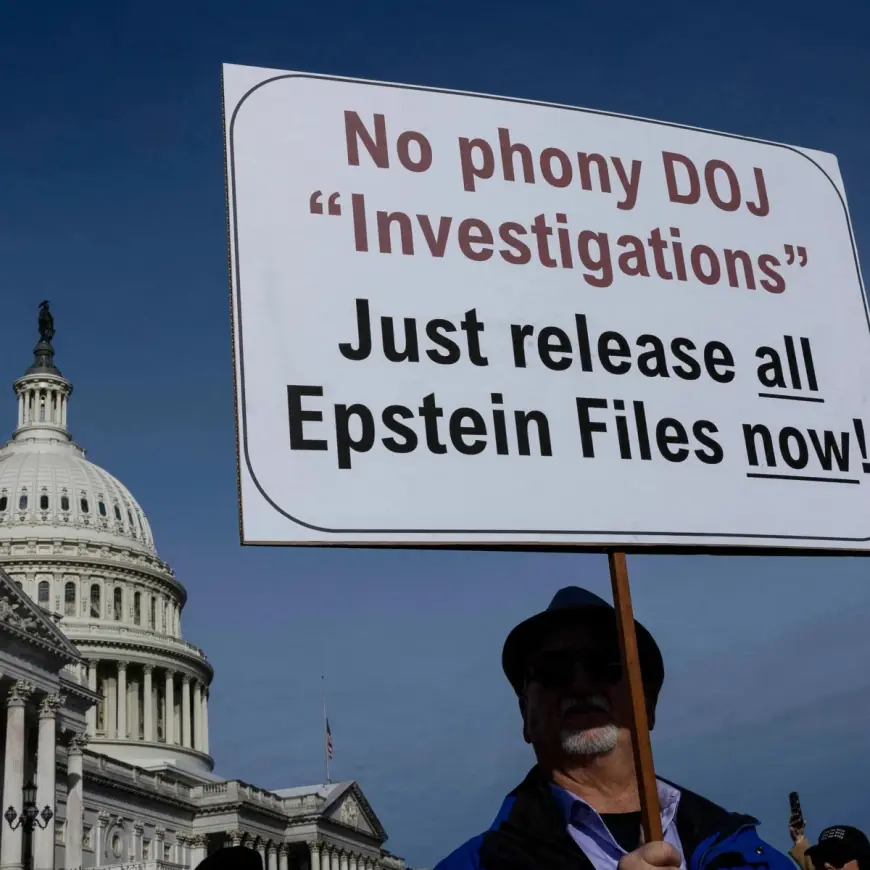
The latest release of the Epstein files is reshaping a long-running scandal into a fresh political and legal flashpoint. On Friday, Jan. 30, 2026 (ET), federal authorities published millions of additional records tied to Jeffrey Epstein, igniting immediate fallout abroad, sharpening questions about who knew what and when, and reopening debates over redactions, accountability, and the government’s earlier handling of the case.
The disclosures arrive under a transparency law passed in late 2025, and they land in a public atmosphere where every new document can spark reputational damage, renewed demands from survivors, and fresh pressure on officials to explain past charging decisions.
What’s inside the Epstein files release
The newly posted material is massive and uneven by design: it mixes investigative records, communications, and public tips submitted over many years. Officials described the publication as a cumulative release that now totals nearly 3.5 million pages, with a separate cache of videos and images. They also warned that the collection may include false or sensational submissions that were sent in by the public and swept into the production.
A central tension is that transparency and privacy protections pull in opposite directions. The governing law permits withholding or redacting information that could identify victims, and it also bars release of child sexual abuse material. At the same time, it restricts withholding based on embarrassment, reputational harm, or political sensitivity.
Release snapshot (as of Friday, Jan. 30, 2026 ET)
| Item | Publicly described level |
|---|---|
| Total pages released | Nearly 3.5 million |
| Additional pages in latest batch | Over 3 million |
| Videos included | More than 2,000 |
| Images included | About 180,000 |
| Law enacted | Nov. 19, 2025 |
The law behind the disclosures
The statute that drove the release set out a broad scope: investigative materials on Epstein, records tied to Ghislaine Maxwell, and travel documentation such as flight logs or manifests for aircraft and other travel connected to Epstein or related entities. It also covers internal communications around decisions to investigate, charge, decline to charge, or resolve matters through agreements, as well as materials connected to Epstein’s detention and death.
The law’s structure matters as much as its breadth. It explicitly limits redactions to narrow categories—primarily victim privacy and sensitive illegal content—while discouraging the common practice of withholding names because they are politically powerful or publicly prominent. That framework helps explain why the publication has prompted renewed public parsing of names and relationships, even when inclusion in records does not indicate wrongdoing.
International shockwaves and domestic politics
The release quickly spilled beyond the United States. In Slovakia, a senior government adviser resigned after messages and imagery surfaced showing interactions with Epstein years after Epstein’s Florida conviction. The official denied wrongdoing but stepped down amid political pressure and concerns that the controversy could damage the government’s standing.
In the United Kingdom, the disclosures revived calls for a former prince to cooperate with U.S. authorities and lawmakers reviewing Epstein-related matters. References in correspondence—again, not proof of criminal conduct—have been enough to reignite demands for fuller explanations about Epstein’s access to influential figures and the degree to which any of them assisted, ignored, or misunderstood his conduct.
In Washington, the release has also become a partisan accelerant. The documents have been framed in competing ways: as overdue transparency, as incomplete transparency, or as a politically fraught disclosure that still leaves major questions unresolved.
Redactions, victim privacy, and the risk of misinterpretation
The new trove is likely to produce two parallel fights: one over omissions and one over meaning.
First, survivors and advocates have long argued that privacy protections must be executed consistently. If victim identifiers are insufficiently shielded, the harm can be immediate and irreversible. At the same time, if large portions are blacked out beyond what the law allows, public trust collapses and suspicions intensify.
Second, there is the interpretive problem: presence in a file is not the same as culpability. Epstein’s contacts were wide, and investigative files can contain everything from verified communications to unverified tips. Even authentic emails can reflect mundane social outreach rather than criminal activity. The more the trove spreads across social media, the more likely it is that partial screenshots and decontextualized excerpts will drive narratives that are difficult to correct.
What comes next
The practical next phase is less about a single “name list” and more about methodical sorting: identifying which materials add new facts about decisions, networks, and timelines. Three near-term indicators will shape the story:
-
Further releases and updates. Officials have indicated the repository may be updated if additional documents are identified for publication.
-
Oversight pressure. Lawmakers are likely to test whether the production truly matches the law’s requirements, especially on the boundaries of permissible redactions and withheld categories.
-
Legal and reputational responses. Public figures mentioned in the documents may issue denials, clarifications, or legal threats, while survivors may push for clearer accountability for enablers and institutional failures.
The result is a disclosure that is both huge and incomplete in the way all large investigative archives tend to be: a pile of raw material that can illuminate the past, but also a catalyst for confusion unless handled carefully.
Sources consulted: U.S. Department of Justice, Congress.gov, Reuters, Associated Press