
























Jeffrey Epstein files PDF release fuels confusion over what’s public now

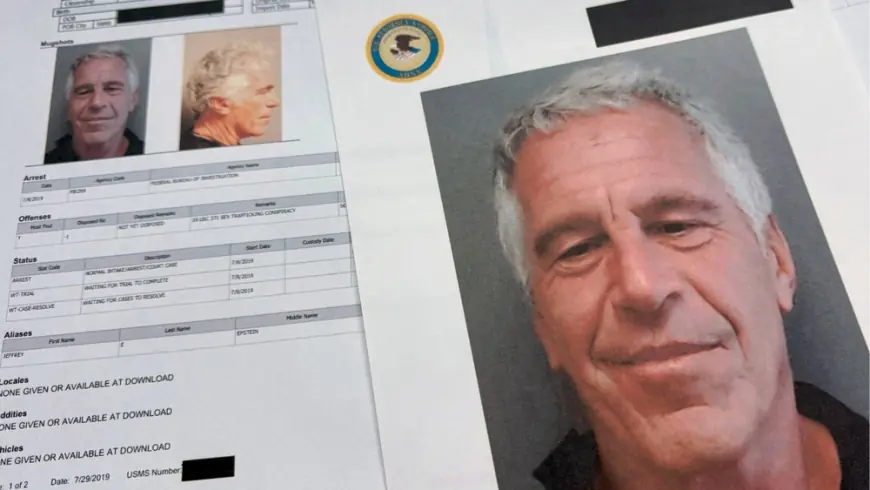
A new wave of government disclosures tied to Jeffrey Epstein has set off a familiar scramble online: people searching for a jeffrey epstein files pdf to read for themselves, cross-check names, and understand what changed in the latest dump. The Justice Department says it has now published a massive final batch of materials under a transparency law passed late last year, but lawmakers, advocates, and survivors’ representatives are still raising questions about redactions, completeness, and how victims are protected.
The result is a chaotic information environment: legitimate documents exist, older court filings are being recirculated as if they were new, and fake “download” pages are spreading across the web.
Jeffrey epstein files pdf: what’s new in 2026 release
On Friday, January 30, 2026 (ET), the Justice Department said it published more than 3 million additional pages tied to Epstein, alongside more than 2,000 videos and about 180,000 images, bringing the total released under the law to roughly 3.5 million pages. The department’s public library page showed it was last updated Saturday, January 31, 2026 (ET).
The timing matters because many people searching “where are the files” are mixing together different sets of material:
-
The new government library release is a large collection assembled under a 2025 transparency mandate.
-
Separate court records from earlier civil litigation were unsealed in prior years and are now being reposted and labeled as “new files,” even when they are not.
Even in the new batch, the appearance of a person’s name, contact details, or a mention in correspondence does not automatically indicate wrongdoing. Many references can be incidental, secondhand, or part of investigative record-keeping rather than evidence of criminal conduct.
What the Justice Department posted
The department has framed the publication as compliance with the law’s disclosure requirements, with content presented in multiple datasets and formats. Much of the material is scanned or archived, which means it can be difficult to search without specialized tools.
The library itself carries strong warnings that some of the released content includes graphic descriptions of sexual abuse. That warning is not just boilerplate: the government has acknowledged the release includes explicit material among the videos and images, and that reality is shaping how the files are accessed and discussed.
For readers trying to make sense of it, the most practical approach is to treat the release as a set of raw records, not a curated narrative. Some items will be duplicative, fragmentary, or unclear without context from investigative timelines and court proceedings.
Why “missing pages” claims continue
Despite the department’s statement that its release meets the law’s requirements, critics are disputing whether the public has received everything that should be disclosed. Several lawmakers and watchdog voices are pressing for clarity on three points:
-
How many total responsive records exist. Public reporting and prior government planning documents have cited multi-million-page backlogs, and critics argue the known universe of records may exceed what has been posted.
-
Redaction standards. Complaints have focused on situations where victims’ identifying details appear insufficiently protected, while other information is heavily masked. The details of those redaction choices are not fully explained in the public materials.
-
What remains withheld, if anything. The department has signaled the planned releases are complete, while some lawmakers are calling for access to unredacted versions to verify compliance and assess whether additional records should be released.
These disagreements are likely to keep the topic in the headlines because the transparency question is now intertwined with oversight, privacy protections, and high public interest in Epstein’s network of contacts.
How to search the material safely
The popularity of “download the pdf” queries creates an opening for bad actors. If you’re trying to read the documents, basic digital hygiene matters more than usual:
-
Use only official government pages for the library; avoid third-party “mirror” sites that ask for payment, logins, or personal data.
-
Treat any site requesting Social Security numbers, bank details, or identity checks as a red flag.
-
Be cautious with files shared on social media or messaging apps, especially archives that bundle “everything” into one download—malware often rides in those packages.
-
Keep in mind that older court filings are widely circulated; verify the date and context before assuming a document reflects the latest release.
What to expect next
The disclosure is already rippling beyond the United States, with political fallout overseas and renewed calls for cooperation in ongoing investigative lines. In Washington, the next developments are likely to center on congressional oversight requests, possible court challenges over access or privacy protections, and technical questions about how searchable the library will become as more people attempt to analyze it.
Key takeaways
-
A major new batch posted Jan. 30, 2026 (ET) added over 3 million pages plus thousands of videos and images to the public record.
-
Confusion is being driven by recirculated older court documents and misleading “new files” claims.
-
The biggest open issues are completeness, redaction consistency, and victim privacy safeguards.
Sources consulted: U.S. Department of Justice; Reuters; Associated Press; PBS NewsHour