

























Brussels Bureaucracy Flood: Von der Leyen’s Relief Promises Unravel as Deceptive

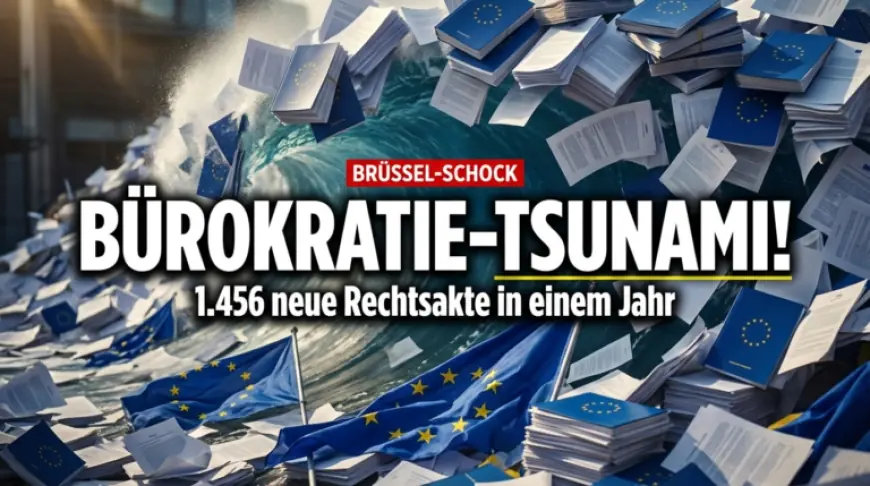
The European Union, under the leadership of Ursula von der Leyen, faces criticism for its increasing bureaucracy. The EU Commission’s recent efforts to reduce regulation have not led to expected results. Instead, the number of new legal acts introduced in 2025 has reached a staggering 1,456. This figure marks the highest rate of new regulations since 2010.
Record Regulation Under Von der Leyen
According to an unpublished report by the economic association Gesamtmetall, the EU has made empty promises regarding regulatory relief. The breakdown of the new regulations is alarming:
- 21 directives
- 102 regulations
- 137 delegated acts
- 1,196 implementing acts
This translates to an overwhelming addition of four new regulations per day for European companies. Such a rapid escalation raises concerns about businesses’ ability to cope with the administrative burden.
Business Concerns Grow
Oliver Zander, the Managing Director of Gesamtmetall, has voiced strong disapproval, highlighting that the current EU Commission is failing to deliver on its promises. Instead of easing the regulatory landscape, the organization has intensified the very bureaucratic challenges it pledged to reduce.
Delegated acts, in particular, allow the EU Commission to modify legislation autonomously, often without stringent democratic oversight. This situation has drawn warnings from former EU Commissioner Günter Verheugen, who emphasized the lack of parliamentary control over certain EU actions.
Broken Promises and Increasing Burden
A year prior, the EU Commission had announced a roadmap aimed at enhancing competitiveness. This included promises of improved conditions for businesses and a plan to reduce administrative burdens by 25% by 2029, with a target of 35% for small and medium-sized enterprises. However, these commitments have resulted in little more than unfulfilled expectations.
Contrary to the promises of streamlined regulations, the European economy now finds itself ensnared in a deluge of new rules, as global competitors from China and the U.S. advance without similar constraints.
The Consequences of Increased Regulation
This escalation of regulations signals a troubling trend. During von der Leyen’s tenure from 2019 to 2024, new legal acts exceeded those of her predecessors, Jean-Claude Juncker and José Manuel Barroso. Yet, rather than addressing the issues, the Commission has continued to ramp up regulatory activity.
The implications for the German economy are dire as it grapples with soaring energy costs, labor shortages, and a fragile economic climate. While other global economies pivot towards deregulation, Brussels continues to impose stricter regulations.
The burning question remains: not if Europe will fall behind in global competition, but rather how significantly it will lag.