

























SpaceX Proposes Million-Satellite Constellation for Orbital Data Centers

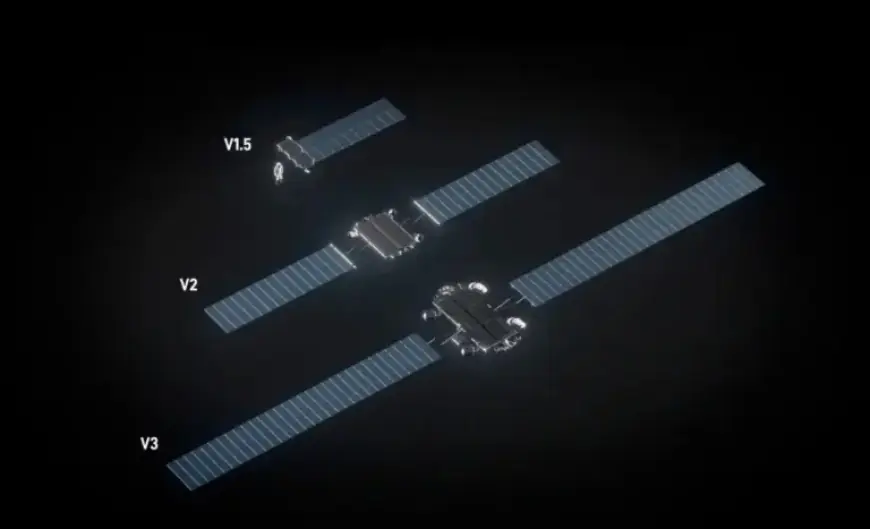
SpaceX has recently filed a proposal with the Federal Communications Commission (FCC) for an extensive satellite constellation designed to serve as an orbital data center. This ambitious plan aims to deploy up to one million satellites in low Earth orbit (LEO).
Proposed Satellite Constellation Details
The proposed satellites will orbit at altitudes ranging from 500 to 2,000 kilometers. They will be positioned in 30-degree and sun-synchronous inclinations. This setup is intended to optimize solar power generation for the satellites, which will operate with minimal maintenance costs.
- Altitudes: 500 to 2,000 kilometers
- Inclinations: 30-degree and sun-synchronous
- Operating Costs: Low, utilizing solar energy
Goals of the Constellation
SpaceX envisions this constellation as a transformative step towards a Kardashev Type II civilization, capable of harnessing vast solar energy. The company believes this initiative will significantly enhance computing capabilities for artificial intelligence (AI) applications, aiming to support billions globally.
Comparison with Global Proposals
Currently, no system has proposed a scale close to that of SpaceX’s. Recent plans from China, presented to the International Telecommunication Union, involve nearly 200,000 satellites. Meanwhile, Rwanda proposed constellations exceeding 300,000 satellites in 2021, potentially in collaboration with E-Space.
Technical Considerations
SpaceX’s filing lacked specific details on satellite size and mass. However, it plans to utilize mostly unused orbital slots. The satellites will communicate via intersatellite optical links with Starlink spacecraft, which will transmit data to Earth. They will also operate in the Ka-band, serving as a backup for telemetry purposes.
- Data Communication: Intersatellite optical links and Starlink connections
- Frequency Band: Ka-band for telemetry
- Operational Framework: Non-interference basis, requiring an FCC license
Regulatory Challenges
SpaceX has requested a waiver from the FCC’s customary milestone requirements. Typically, half of a proposed constellation must be operational within six years, with complete deployment in nine. The company argues that these requirements are unnecessary given their planned non-interference operations.
Market and Future Considerations
The demand for computing power, especially for AI applications, is a significant driver behind SpaceX’s plans. Recent reports suggest that the company may consider an initial public offering (IPO) to capitalize on this growing market.
SpaceX’s proposal emphasizes the advantages of moving data centers into orbit. The company argues that the falling costs of space launches combined with the rising expenses associated with terrestrial data centers could make orbital computing a more viable option in the near future.
Broader Implications
By leveraging its experience with Starlink and the upcoming Starship launch vehicle, SpaceX aims to set a new standard in data processing. The anticipated capabilities could potentially surpass the electricity consumption of the entire U.S. economy, without the need for extensive infrastructure overhauls.
In summary, SpaceX’s vision for a million-satellite constellation represents a groundbreaking approach to address the increasing demand for data processing and supports a sustainable future for computing technologies.