






















Hatam Qaderi: Iran’s Leaders Desperately Seek ‘Miracle’ Amid Weakening Power

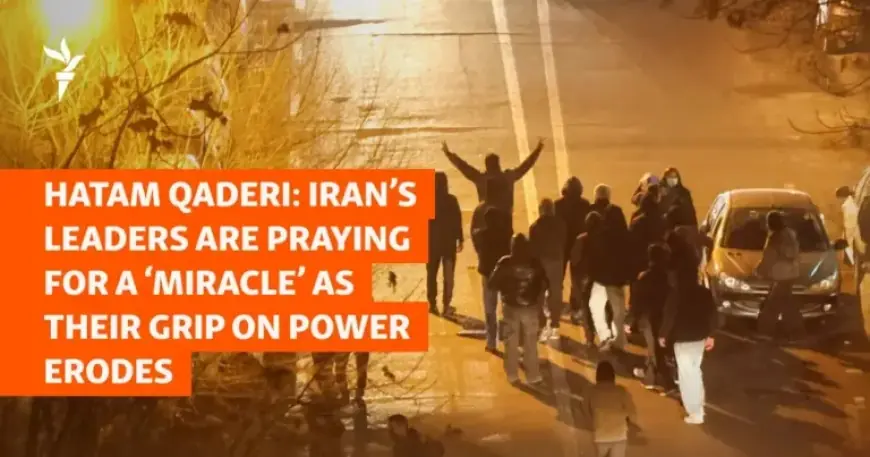
Iran’s leadership is currently grappling with the most significant challenges it has faced in decades. The combination of internal unrest and potential military threats from abroad paints a precarious picture of the nation’s future. Notably, a bloody crackdown on protests in early January 2023 resulted in the deaths of thousands, igniting discussions regarding the stability of the Islamic Republic.
Iran’s Weakening Power Amid Unrest
According to experts, the increasing turmoil within Iran may lead to the fall of its theocratic government. The socioeconomic crisis the country is enduring adds to the complications, with reports indicating that many citizens are being pushed into extreme poverty.
Insights from Hatam Qaderi
Hatam Qaderi, an academic based in Tehran and a critic of the regime, shared his perspective on the brutal crackdown and the implications of U.S. military action. He emphasized that recent violent events were not spontaneous but rather premeditated efforts by the authorities to quell dissent.
Reasons Behind the Crackdown
- Organized Violence: The Iranian government initiated a calculated response to the protests.
- Preventing Foreign Support: There was a belief that mass violence could deter public revolt in times of conflict.
- Economic Strain: Widespread poverty has fueled public discontent, necessitating oppressive measures to maintain control.
Qaderi also pointed to the psychological state of Supreme Leader Ayatollah Ali Khamenei. He suggested that Khamenei’s exhaustion from prior failures might lead to increased intolerance for opposition.
US Military Action: A Potential Outcome
Amid these tensions, Qaderi remarked on the likelihood of U.S. military action against Iran. He believes that the regime lacks the capacity to counteract advanced military technology, indicating a prolonged conflict is unlikely. However, such military intervention could further complicate Iran’s path towards any form of transition.
A Complex Path to Transition
The road forward appears bloody and fraught with challenges, according to Qaderi. He asserts that the transition away from the current regime is accompanied by fierce resistance and a lack of rational planning among protesters.
Hope for Change
Despite the overwhelming obstacles, there is a glimmer of hope. Qaderi underscored that the unrest signifies a departure from the establishment. However, without a significant shift in power dynamics, conditions could deteriorate further.
The Leaders’ Outlook
Iran’s leaders seem to oscillate between ideological conviction and a desperate hope for a miraculous intervention. Khamenei’s inability to effectively govern under current economic pressures suggests that the Islamic Republic is staring down a critical juncture.
Future Implications
The potential aftermath of any conflict raises questions about the future of Iran. Qaderi warns against the assumption that the end of the Islamic Republic will solicit a seamless transition to stability. Instead, he posits that both the opposition and citizens must prepare for an uncertain journey ahead, one that could be plagued by continued upheaval.
In conclusion, Iran’s leadership appears to be at a crossroads, desperately seeking a ‘miracle’ amid its weakening power, while the potential for significant change looms on the horizon.