




















Applauding Silence: Why Protest Faces Condemnation

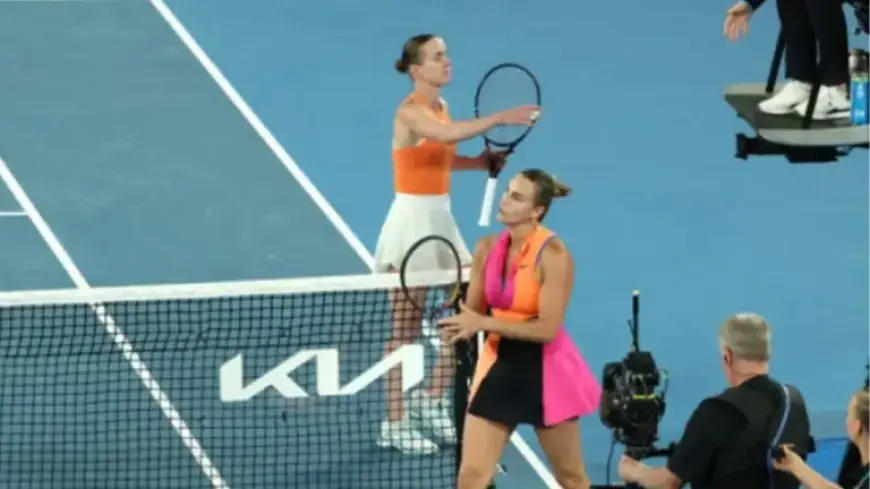
The recent incident at the Australian Open has highlighted the complex dynamics between sports and political expressions. Aryna Sabalenka, representing Belarus, faced off against Elina Svitolina from Ukraine. Notably, Svitolina opted not to shake hands with Sabalenka, a choice met with a calm response from the tournament officials and the crowd.
Applauding Silence: The Reaction at the Australian Open
This situation starkly contrasts with the reactions seen in other sports, particularly cricket. When players from India and Pakistan choose not to engage in a handshake during events like the Asia Cup, they often encounter significant backlash. Sports commentators frequently voice concerns about setting negative examples, urging a separation of sport from politics.
Selective Morality in Sports
The differing perceptions of the two scenarios raise questions about the moral judgments applied to various geopolitical conflicts. The Ukraine-Belarus matchup is often framed as a clear moral dilemma, with clearly defined heroes and villains. In contrast, the India-Pakistan rivalry lacks a universally agreed narrative, complicating the moral standpoint.
- Ukraine vs Belarus: Viewed as a straightforward moral conflict.
- India vs Pakistan: Ambiguity and sensitivity hinder straightforward interpretations.
This contrast leads to a broader discussion about how sporting events handle political meaning. The Australian Open’s approach of preemptively addressing Svitolina’s refusal to shake hands shows a new way of incorporating political context. Rather than ignoring the situation, the tournament opted to manage the emotional landscape through careful framing.
The Need for Formal Protocols
There is a growing argument that sports organizations should develop formal protocols to address geopolitical sensitivities in competitions. Such measures could benefit tournaments by acknowledging the emotional stakes involved with rivalries. This accountability to the historical contexts could enhance the viewing experience and mitigate misinterpretations.
- Tournaments should formally recognize fixtures with geopolitical sensitivity.
- Athletes could pre-announce decisions regarding ceremonies, anthems, or flag displays.
- Emotional tensions related to rivalries must be acknowledged as part of the competition’s value.
Historically, George Orwell noted that “sport is war minus the shooting.” The contemporary landscape suggests that these games may serve not only as entertainment but also as vehicles for political dialogue. In a time where the world’s most powerful emotional stage is sports, a re-examination of how political symbolism is managed may be overdue.
Sports and politics are interwoven. Recognizing this relationship could pave the way for a more reflective and inclusive experience in major athletic tournaments. As we advance toward future competitions, it is worth considering how awareness and strategies around political expressions can evolve.