





















“Melania” Movie Reviews Turn Brutal as Brett Ratner’s Documentary Hits Theaters and Ignites a Fight Over Propaganda, Privacy, and Power

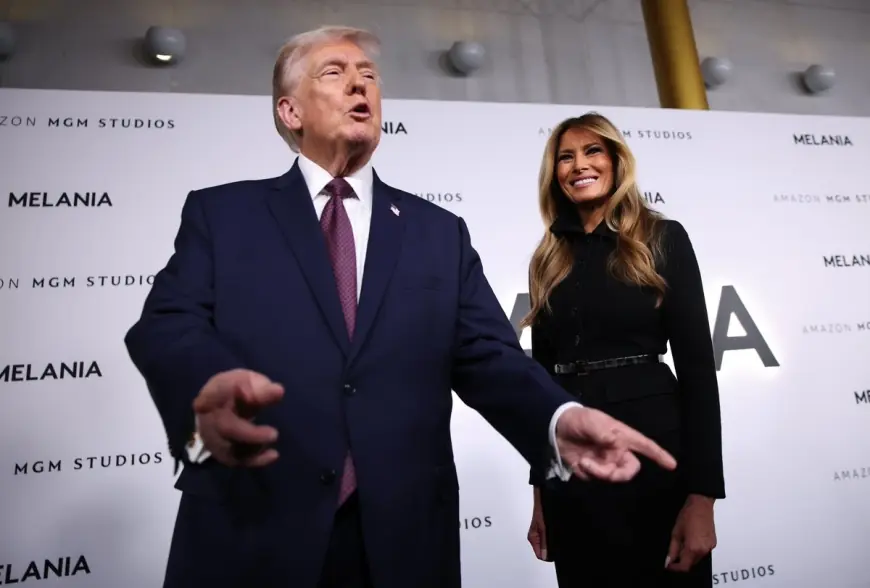
The new Melania Trump documentary, titled “Melania,” arrived in theaters on Friday, January 30, 2026 ET, after a high-profile premiere the night before at a major performing-arts venue in Washington. Directed by Brett Ratner, the film promises a rare look at the First Lady’s return to the White House in the run-up to Donald Trump’s 2025 second inauguration. Instead, early Melania movie reviews have been overwhelmingly negative, with critics and online commentators splitting into two camps: those calling it an unusually glossy and empty portrait, and those arguing the movie is less documentary than brand protection.
The result is a release that is now as much about the reaction as the film itself.
What the “Melania” Documentary Is About
“Melania” focuses on the roughly 20 days leading up to inauguration day, tracking preparations that include wardrobe fittings, event logistics, high-level meetings, and behind-the-scenes moments of transition planning. The film leans heavily on mood and aesthetics rather than investigative structure: fewer conventional sit-down interviews, more voiceover and curated access, and a tone that stays tightly controlled.
The movie also touches on Melania Trump’s personal history and her private rituals, including references to family and her mother’s death in 2024. But even sympathetic viewers have noted that the story rarely widens into broader political context, leaving major questions about influence and decision-making mostly unanswered.
Melania Movie Reviews: What Critics Are Saying
The critical consensus so far is unusually harsh. A major review-aggregation score quickly slid into single digits, a rare result for a wide-release political documentary. The most common critiques share a few themes:
-
It feels stage-managed. Reviewers describe scenes that look composed rather than observed, as if the camera is there to validate an image rather than discover anything new.
-
It offers little insight. Even when the film hints at stakes, it tends to pivot back to surfaces: outfits, optics, and ceremony.
-
It blurs documentary and messaging. Critics argue that the movie’s access comes with constraints that make it read like a promotional project.
Online reaction has been its own story. On at least one film-tracking platform, early user commentary appeared to surge before most people could plausibly have seen the movie, leading to accusations of pile-on behavior. Platforms have also been removing or moderating content that looks like coordinated manipulation. That turbulence makes it harder for casual viewers to separate actual audience reaction from internet performance.
Brett Ratner’s Return and Why It Matters to the Conversation
Ratner’s involvement is a major part of the film’s baggage. His career has been shaped by past allegations of sexual misconduct, and his return behind the camera was always likely to draw scrutiny. That scrutiny is now being folded into the broader critique: some viewers see the film as a vehicle for rehabilitation, while others see it as proof that the project was built to generate attention regardless of backlash.
Either way, Ratner is not just the director here; he is part of the story the audience is reacting to.
Where Is Melania Trump From?
Melania Trump was born in Slovenia, in Novo Mesto, and grew up in the town of Sevnica. She later worked as a model in Europe before moving to the United States.
That biography matters because the film positions her immigrant story as a central pillar of her identity and public narrative, especially in moments that frame her return to Washington as duty and resilience.
Behind the Headline: What This Release Is Really Testing
This film isn’t only competing in the entertainment marketplace. It’s competing in a legitimacy marketplace.
Context: Modern political documentaries often serve two functions at once: storytelling and message discipline. When the subject has strong incentives to protect privacy, the “documentary” label can become a point of friction rather than a promise.
Incentives:
-
The First Lady has incentive to present a curated self-portrait that discourages speculation and limits vulnerability.
-
The creative team has incentive to deliver a visually premium product that feels “important,” even if it isn’t revealing.
-
The distributor has incentive to turn politics into a cultural event that earns attention, subscriptions, and free conversation.
Stakeholders: Fans want access; critics want candor; political allies want a flattering narrative; opponents want evidence of manipulation. Meanwhile, corporate decision-makers are watching whether political entertainment can remain profitable without damaging broader brand trust.
Second-order effects: If this movie underperforms theatrically but overperforms as a streaming event, it may encourage more “controlled-access documentaries” where the subject retains unusual influence. If backlash hardens, it could push the market toward either more adversarial filmmaking or safer celebrity-style profiles that avoid politics altogether.
What We Still Don’t Know
Several important pieces remain unclear in public, and they shape how the film will be judged long-term:
-
How much editorial influence Melania Trump had over final cut decisions
-
Whether additional footage or a follow-on series will expand beyond the narrow pre-inauguration window
-
Whether the theatrical release is a genuine box-office play or mainly a marketing bridge to streaming
-
What verifiable audience sentiment looks like after the opening-weekend noise settles
What Happens Next: 5 Realistic Scenarios to Watch
-
Critics’ narrative hardens.
Trigger: the film’s public rating remains stuck near the bottom, and mainstream conversation treats it as a cautionary tale. -
Streaming rewrites the outcome.
Trigger: the movie becomes a high-curiosity watch at home, boosting completion rates even if reviews stay brutal. -
A backlash-to-backlash cycle.
Trigger: supporters frame criticism as political bias, generating renewed attention and polarizing viewership. -
A reputational spillover for the filmmaker.
Trigger: industry reaction treats the project as either a comeback template or a warning sign, shaping future hiring. -
The film becomes a proxy fight about press and access.
Trigger: debates shift from “Is it good?” to “Should projects like this be called documentaries at all?”
“Melania” is arriving as a test of what audiences will accept from a documentary when the subject is powerful, protected, and intent on controlling the frame. The early verdict from reviewers is clear. The bigger question is whether mass audiences treat that verdict as a warning, or as an invitation to watch for themselves.