
























Kennedy Center Turmoil Deepens as Cancellations Grow and Renaming Fight Heads to Court

The Kennedy Center is facing a widening mix of political pressure, artist pullouts, and legal challenges that are reshaping what many Americans think of as the nation’s flagship performing arts complex. The building was created as a living memorial to President John F. Kennedy, and its name is now at the center of a dispute that is spilling into programming, staffing, and the calendar of major events.
On Thursday, January 29, 2026, the venue is also set to host a high-profile film premiere tied to the current White House, underscoring how closely the Kennedy Center’s cultural role has become intertwined with national politics.
Leadership and branding changes fuel a wave of cancellations
The current flashpoint traces back to an overhaul of the institution’s leadership and governance, with President Donald Trump elected chair of the board and close allies installed in top roles. The center’s interim president and executive director, Richard Grenell, has publicly framed the moment as a reset in the venue’s direction and “commonsense programming.”
That shift has coincided with a growing list of cancellations by prominent artists and touring productions. Composer Philip Glass withdrew the planned world premiere of his Symphony No. 15, “Lincoln,” which had been scheduled for June 12 and June 13, 2026, saying the work’s values conflicted with what he views as the institution’s current direction. Renée Fleming also canceled scheduled appearances tied to the National Symphony Orchestra this spring, while the touring production of the musical “Hamilton” previously canceled a planned 2026 engagement at the venue.
The reason for several individual cancellations has not been stated publicly in detail beyond short statements, and the center has not released a full public timeline for how the expanded rebranding will be handled across all programs.
A new spotlight event lands amid staff churn
While the controversy continues, the Kennedy Center is still booking and hosting major events, including the Thursday, January 29, 2026 premiere of “Melania,” a nearly two-hour documentary produced by First Lady Melania Trump. The premiere is scheduled ahead of the film’s broader release on Friday, January 30, 2026, and it adds a highly visible political-adjacent moment to a venue already in the headlines.
At the same time, senior staffing has shown signs of instability. The center announced in mid-January that Kevin Couch would join as senior vice president of artistic programming, then confirmed his resignation less than two weeks after the hire was publicly disclosed. Further specifics were not immediately available about the circumstances of his departure.
How the Kennedy Center’s governance and programming typically work
The Kennedy Center operates through a hybrid model: it is a federally chartered cultural institution that also relies heavily on private fundraising, ticket revenue, and partnerships. A board of trustees plays an unusually influential role compared with many performing arts venues, particularly when leadership changes ripple into budget priorities and programming choices. Major bookings often involve multi-month or multi-year planning, with contracts that can include cancellation terms, marketing commitments, and financial guarantees for visiting companies and artists.
That structure matters now because changes at the top can cascade quickly. Even if a performance is artist-driven, decisions about what is presented, how it is branded, and how it is promoted are tightly connected to executive leadership, donor confidence, and the center’s relationships with resident organizations.
Lawsuit and legislative push raise the stakes over the “Kennedy” name
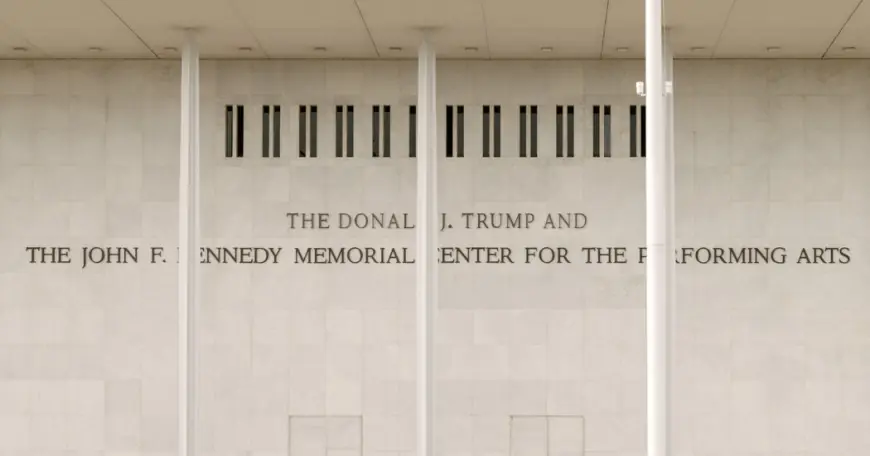
The renaming fight has moved beyond symbolism into formal legal and legislative action. A federal lawsuit filed by Rep. Joyce Beatty challenges the board’s mid-December 2025 vote that added President Trump’s name to the institution’s exterior signage and branding, arguing that only Congress can rename the national memorial. In Congress, additional measures have been introduced seeking to require removal of nonconforming signage and to formally state that the renaming violated federal law.
Key terms have not been disclosed publicly about the full cost of the signage and branding changes, including what related updates may still be pending across the broader campus.
The practical impact is being felt across multiple groups: touring companies and musicians weighing whether to keep dates on the schedule, ticket holders navigating cancellations and rescheduling, and staff working through shifting leadership priorities. Donors and arts education partners also face uncertainty, since programming stability can influence grants, sponsorships, and student-focused events that depend on long planning cycles.
In the weeks ahead, attention is likely to focus on the first major federal court deadlines in the renaming case and any hearings that follow, alongside the spring and early-summer 2026 performance calendar that will test whether the Kennedy Center can steady its lineup despite the ongoing controversy.