
























Bessent Defends Trump Accounts as Reserve Fund, Criticizes “Out of Touch” Detractors

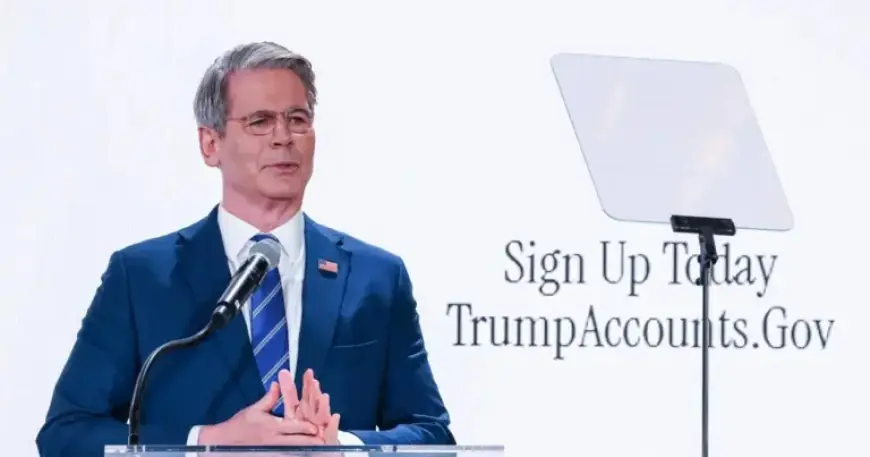
On Wednesday, U.S. Treasury Secretary Scott Bessent endorsed a new financial initiative associated with the Trump administration. He spoke about the potential benefits of the so-called “Trump Accounts,” which aim to create tax-preferred investment opportunities for children.
Bessent Defends Trump Accounts as Reserve Fund
Appearing on “CBS Saturday Morning,” Bessent highlighted how these accounts could act as a “rainy day fund” for kids reaching adulthood. Established under the recently introduced tax and spending law, the initiative is set to benefit approximately 25 million children born between January 1, 2025, and December 31, 2028.
Program Details
- The federal government will provide an initial $1,000 for each child’s account.
- Funds will be invested in the stock market, specifically in an index fund.
- Families can contribute up to $5,000 annually, and employers may add funds as well.
Noteworthy contributions include a pledge from philanthropists Michael and Susan Dell to contribute $250 per child. Major companies like Bank of America and JPMorgan Chase also announced plans to match the $1,000 seed fund for their employees’ accounts.
Addressing Concerns
While the program faces criticism regarding its potential impact on wealth inequality, Bessent strongly defended it. He argued that the initiative addresses financial challenges many families face, citing that a significant percentage of Americans struggle to manage a $500 emergency. This counters the idea that annual contributions would only benefit wealthier families.
Bessent stated, “It shows how out of touch anyone who says that is,” emphasizing the program’s accessibility. He further explained that philanthropists have the option to direct their contributions toward economically disadvantaged areas.
Impact on Financial Literacy
The initiative is also anticipated to enhance financial literacy among families, especially the estimated 38% of households that do not own stocks. Bessent expressed hope that continuous engagement with the markets would provide a form of financial education over the child’s upbringing.
Addressing Affordability Issues
In the discussion, Bessent shifted blame for inflation to the Biden administration, attributing the rising cost of living to their policies. He praised the Trump administration’s efforts, such as wage growth and tax cuts, aimed at providing relief.
- Proposals to cap credit card interest rates at 10%
- Restrictions on institutional investors purchasing single-family homes
Experts have voiced skepticism about the practical effectiveness of these proposals despite their introduction.
Federal Reserve Accountability
Bessent also touched on accountability within the Federal Reserve. He defended the ongoing Department of Justice investigation into Chair Jerome Powell, asserting that independence should not equate to a lack of responsibility. He emphasized the importance of the Fed maintaining a standard of integrity, noting the significance of its role in financial governance.
In summary, Bessent’s comments underscored the government’s commitment to providing financial education and support to children through the Trump Accounts, while addressing broader economic and accountability issues within the financial system.