























Feed-in Tariff Changes: 800,000 Households Face Decreased Benefits from April

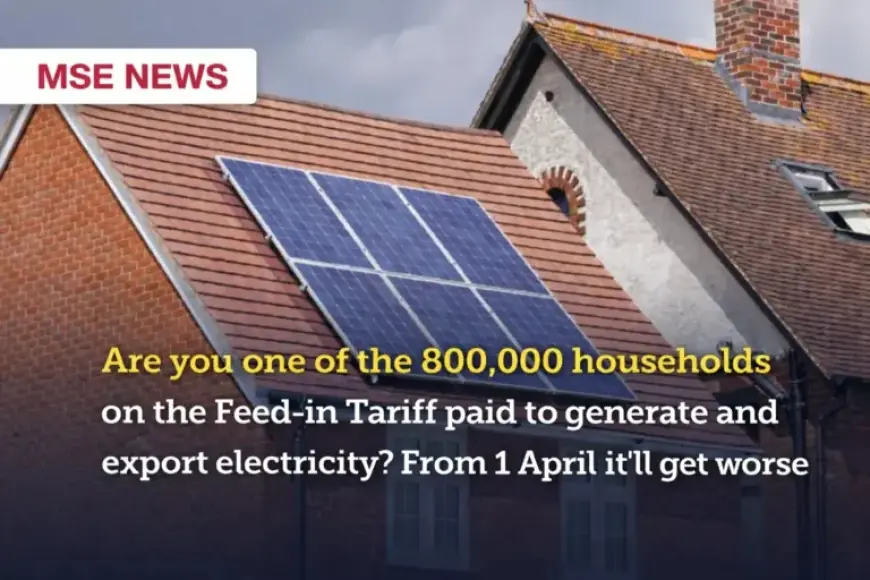
Over 800,000 households across England, Wales, and Scotland are set to experience reduced benefits from the government’s Feed-In Tariff (FIT) scheme starting April 2026. This development comes after the Government confirmed changes to the financial incentives for generating renewable electricity.
Details of the Feed-In Tariff Scheme Adjustments
Initially, the FIT scheme was closed to new participants in 2019, transitioning to the Smart Export Guarantee. However, existing users still receive fixed payments for the electricity they produce and sell back to the grid.
The Government’s plan to modify FIT rates was introduced in November 2025. Among the proposed strategies was a controversial option to freeze payment rates until aligning them with a lower inflation rate, potentially extending for a decade. Martin Lewis, founder of MoneySavingExpert.com, noted this freeze would breach the trust established with FIT participants, as they expected their payments to grow with inflation.
Confirmation of Changes
On January 28, 2026, the government revealed that it would not implement the feared freeze but would instead raise FIT payments according to the Consumer Price Index (CPI) starting from April 1, 2026. The current inflation measure used, the Retail Prices Index (RPI), has been criticized for possibly overestimating inflation levels and inflating payment amounts for participants.
- FIT payment increases will align with the CPI rate of inflation.
- CPI is commonly viewed as a more accurate measure of inflation.
- The adjustments aim to mitigate costs that are passed down to household electricity bills.
The Office of Gas and Electricity Markets (Ofgem) is expected to announce the new CPI-adjusted tariff rates for the 2026/27 period by April 1, 2026. Moving forward, these rates will be disclosed annually on February 1, maintaining a consistent schedule for FIT participants.
Industry Reactions
Martin Lewis described the government’s decision as the “least-worst option,” suggesting some relief among existing participants. He highlighted that avoiding a freeze until 2035 was crucial for maintaining public confidence in future government initiatives regarding renewable energy.
The upcoming changes signal a shift toward a more sustainable financial framework for the Feed-In Tariff scheme, though the impact on household earnings from renewable energy generation is expected to be less favorable going forward.