Over 10,000 SpaceX Starlink Satellites Now Orbit Earth, Continuing Their Surge

SpaceX has crossed a major orbital threshold. On March 17 at 1:19 A.M. EDT, a Falcon 9 lifted off from Space Launch Complex 4 East at Vandenberg Space Force Base. The rocket carried 25 Starlink satellites.
That flight brought SpaceX’s count of active Starlink craft to 10,020. The tally comes from launch tracker Jonathan McDowell. Filmogaz.com confirmed the figure using his statistics.
Over 10,000 SpaceX Starlink Satellites Now Orbit Earth, Continuing Their Surge into the body text only.
Milestone and deployment history
SpaceX began Starlink launches in May 2019. Since then the company has lofted 11,529 Starlink satellites. Some of those were replacements for deorbited or failed units.
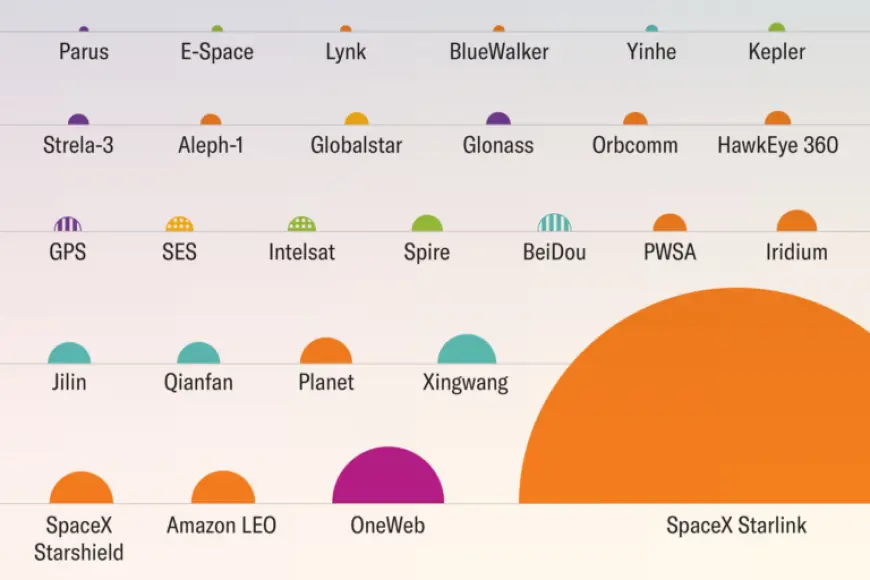
Starlink now represents about two thirds of all satellites in orbit. The constellation operates mainly between 480 and 550 kilometers above Earth. Falcon 9 missions can carry up to 60 satellites in one launch.
Launch capacity and logistics
SpaceX’s reusable Falcon 9 has completed more than 600 launches. That cadence has enabled rapid deployment. The result is a dominant operational footprint for Starlink.
Users and geopolitical reach
Starlink serves roughly 10 million users worldwide. Customers range from rural households to military users in Ukraine. The service also reaches remote Amazonian communities.
That reach gives SpaceX substantial influence over regional connectivity. Analysts note competitors are trying to challenge that dominance.
Rivals and planned constellations
Jeff Bezos–backed projects have launched around 200 satellites so far. The plan calls for more than 7,500 satellites in total for that program.
China supports several large constellations. Qianfan aims for about 15,000 satellites. Guowang plans roughly 13,000 satellites.
OneWeb remains much smaller with about 654 satellites in orbit. Meanwhile, Elon Musk has discussed plans for as many as one million satellites. Those would support an orbital artificial intelligence data center using Starship.
Traffic management and collision avoidance
Starlink satellites autonomously maneuver to avoid close approaches. SpaceX reported about 300,000 avoidance maneuvers in 2025 alone. That rate equals nearly 40 maneuvers per satellite that year.
Before Starlink, most satellites performed only a few avoidance moves annually. So far, no Starlink collision has been recorded. Still, experts warn risks grow as more constellations launch.
Expert concerns
Hugh Lewis, a space debris expert, says Starlink has altered how we use orbit. Mustafa Bilal at CASS notes more competitors would reduce any single provider’s monopoly. Samantha Lawler warns continued safe operation is essential to preserve usable orbits.
Incidents, debris, and atmospheric effects
Not all operations have been incident-free. In July 2024 a 2.5-kilogram fragment from a deliberately deorbited Starlink satellite survived reentry. It fell onto a farm in Canada.
In December 2025 Chinese authorities reported a near miss involving a Starlink satellite. That same month a Starlink satellite exploded in orbit, producing dozens of debris pieces. SpaceX told the FCC it identified and removed the part that caused the breakup.
Scientists also flag environmental unknowns. Thousands of satellites burning up in the atmosphere each year may affect stratospheric temperatures. The full climatic impact remains poorly understood.
Impact on astronomy
Professional astronomers report growing interference from satellite trails. A study led by Alejandro Borlaff at NASA’s Ames Research Center found that adding hundreds of thousands of satellites would mar many telescope images.
Researchers concluded that large increases in satellite numbers would make photobombing routine across ground- and space-based observatories. Many astronomers warn that no part of the sky would remain free of satellite crossings if growth continues unchecked.
How many satellites can orbit safely?
Projections vary widely. One 2022 study suggested millions of satellites might be possible. Other experts argue a sustainable ceiling could be closer to 100,000.
Industry growth continues. Roughly 1.7 million satellites are currently proposed worldwide. Policymakers and scientists disagree on how to manage that scale safely.
Space has changed quickly in just a few years. The challenge now is to balance connectivity, safety, and scientific access. Filmogaz.com will continue following developments closely.