

























Renewables Outpace Fossil Fuels as Australia Hits Power Demand Record

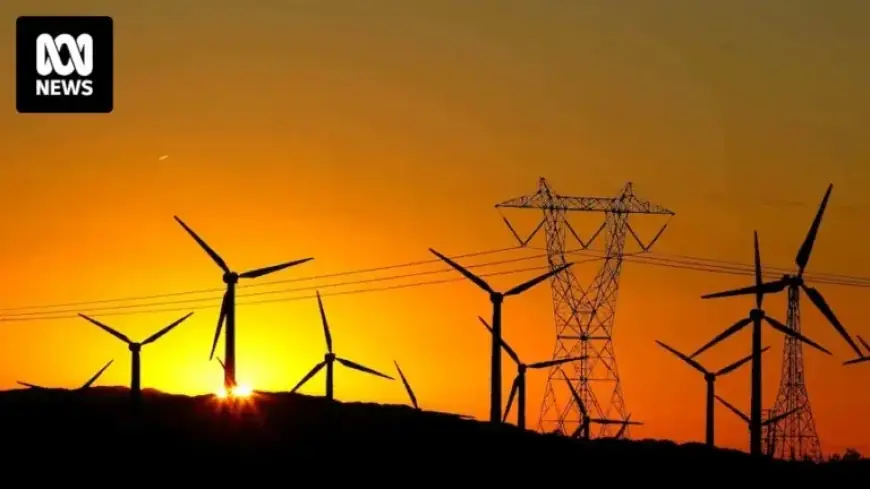
Australia has recently set new records for electricity demand, particularly during the last quarter of the year. This surge in consumption coincided with a significant milestone: for the first time, renewable energy sources supplied more power than fossil fuels across Australia’s National Electricity Market (NEM) during a quarter.
Record Electricity Demand
The Australian Energy Market Operator (AEMO) reported that the average underlying demand hit 24,271 megawatts in the three months ending December, marking a 530-megawatt increase, or 2.2%, from the previous high set in 2024. Contributing factors to this growth included:
- Increased demand for heating and cooling.
- The rise of power-intensive data centers.
- Population growth across the country.
Despite this record demand, AEMO noted that the significant growth in rooftop solar energy continues to meet much of the additional consumption. Rooftop solar recorded a substantial contribution, averaging 4,407 megawatts and peaking at 61% share at one point.
Renewable Energy Supplants Fossil Fuels
In a groundbreaking development, renewable energy accounted for over 51% of total power supply in the NEM, compared to 46% in the same period last year. AEMO attributed this increase to:
- A 29% rise in wind energy output.
- A 15% increase in grid-scale solar energy.
Battery Storage Utilization
The utilization of battery storage has notably surged, enhancing the stability and reliability of power supply. Battery usage has nearly tripled, reflecting the added capacity to the energy system.
Decline of Fossil Fuel Generation
Coal-fired generation plummeted to an average quarterly low of 11,544 megawatts, marking a 4.6% decrease year-on-year. Gas-fired power also saw a significant drop, down 27% from the same period in 2024, marking its lowest levels since 2000.
Wholesale Electricity Prices Decrease
The increased renewable energy output led to a substantial decline in wholesale electricity prices. Average prices fell to $50 per megawatt-hour, a 44% reduction from 2024 levels. The breakdown by state was as follows:
- Queensland: Prices fell 55% to $58 per megawatt-hour.
- South Australia and Victoria: Lowest prices averaged $37 per megawatt-hour.
The Transition Point in Australia’s Energy Landscape
AEMO’s executive general manager, Violette Mouchaileh, described this shift as a turning point for Australia’s energy transition. She noted that the growth of renewables and storage will reduce reliance on expensive coal and gas, thereby stabilizing electricity prices.
Challenges Ahead
Despite these advancements, Australia’s energy system faces challenges, including:
- The necessity of maintaining sufficient spinning reserves to ensure grid stability.
- Interventions required in Victoria and New South Wales due to dips in synchronous generation.
- Economic curtailment, leading to wasted renewable energy that could potentially be utilized.
Australia also experienced days of both record low and high demand. AEMO reported a historical low operational demand of 9,666 megawatts on October 4 due to abundant household solar supply. Conversely, extreme heat waves escalated demand sharply in South Australia.
Western Australia’s Energy Experiment
In Western Australia, the state’s largest island grid is experimenting with battery technology. Recent trends mirror those in the eastern states, with renewable energy supplying over 52% of demand in the area.
As Australia progresses through this energy transition, the reliance on renewables continues to reshape the landscape, showcasing the pivotal role of sustainable technologies in securing the nation’s energy future.