

























Did Ancient Civilizations Master Power Harnessing?

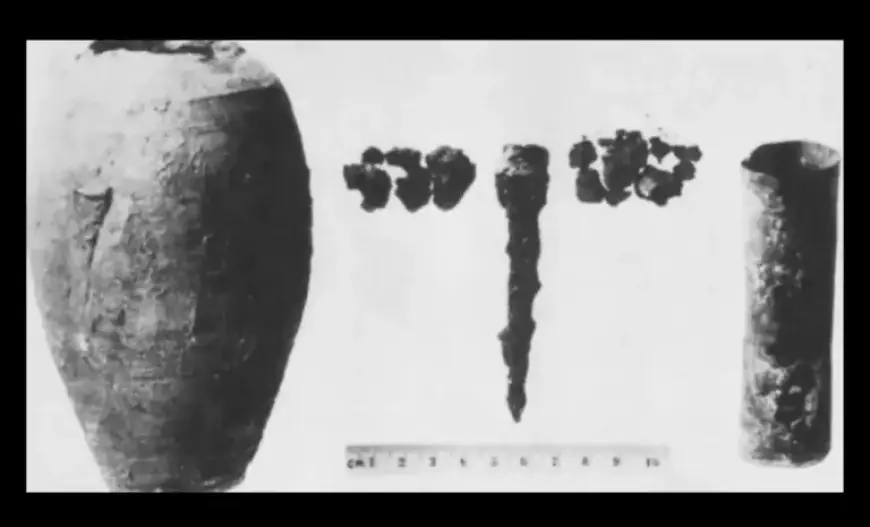
The Baghdad battery, an intriguing artifact dating back around 2,000 years, raises questions about ancient civilizations and their technological prowess. Found in Iraq almost a century ago, this object comprises a clay jar, a copper vessel, and an iron rod. Its potential uses have sparked debate among archaeologists and scientists alike.
Revisiting the Baghdad Battery: Power Source or Ritual Object?
Since its discovery in the early 20th century, the Baghdad battery has captivated researchers. Some argue that it may represent an ancient form of a battery, possibly a galvanic cell. Others believe it was used for ritualistic purposes rather than as a power-holding device.
Recent Research Insights
New experiments conducted by independent researcher Alexander Bazes suggest that the Baghdad battery could produce a small amount of electricity. Bazes estimates that it could generate roughly 1.4 volts, comparable to a modern AA battery. His experiments hint at its possible function as a galvanic cell.
Experimental Setup and Findings
- Bazes reconstructed the artifact based on historical descriptions.
- His setup included a porous clay jar, a copper vessel, and an iron rod.
- The combination could potentially allow for the creation of electrical cells.
Despite these findings, disagreement exists among experts. For instance, University of Pennsylvania archaeologist William Hafford challenges the notion that it was a battery. Hafford posits that the iron rod may have been an iron nail used in ancient religious rituals. He argues that such artifacts were often buried as offerings to ancient deities.
Contrasting Perspectives on Purpose
Bazes advocates for understanding the Baghdad battery as an early power-generating device. Alternatively, Hafford promotes the view that it served a ceremonial role, emphasizing its connection with ritualistic practices.
The Broader Implications of the Baghdad Battery
The ongoing debate surrounding the Baghdad battery illustrates the complexities of interpreting archaeological discoveries. Questions remain about its true function, whether as a power source or a magical artifact.
- The Baghdad battery represents a fascinating subject in the study of ancient technologies.
- It highlights the potential for advanced knowledge among ancient civilizations.
- Research into such artifacts may reshape our understanding of historical technological capabilities.
Conclusion
As new data emerges and further experiments are conducted, the narrative surrounding the Baghdad battery is likely to evolve. This artifact continues to be a focal point in discussions about the ingenuity of ancient cultures and their relationship with electricity.