

























Netflix Stranger Things enters its post-finale era with new spinoffs, stage expansion, and a fresh Duffer Brothers slate

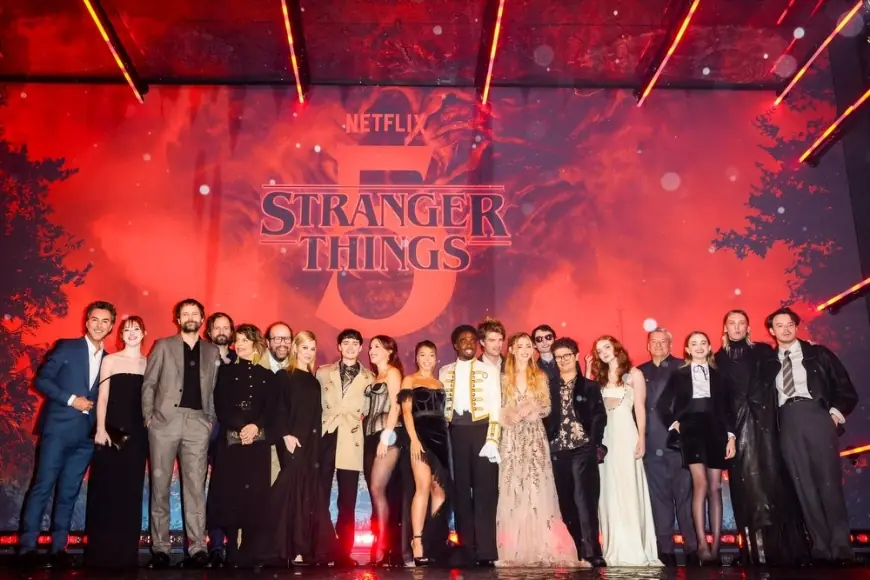
Netflix Stranger Things has officially moved from appointment TV to franchise management after the series wrapped its final season at the end of 2025. The finale landed on New Year’s Eve, capping a three-part rollout that turned the last chapter into a week-by-week event and kept the show in the cultural conversation well past the holidays.
Now the focus is shifting to what comes next: an animated continuation set in the mid-1980s, a separate live-action spinoff built around new characters, and an onstage prequel that has extended the brand beyond streaming.
The finale didn’t just end a story, it reset the business plan
The final season was released in volumes, with the last episode arriving Wednesday, December 31, 2025 at 8:00 p.m. ET. Netflix treated the closing chapter like a tentpole moment, pairing the streaming drop with special fan screenings in movie theaters that generated more than $25 million in revenue over the New Year’s window, based on publicly discussed results from the theatrical run.
The streamer also followed the finale with a behind-the-scenes documentary titled Stranger Things 5 Documentary: One Last Adventure, which debuted in January 2026 and was positioned as a capstone for the cast-and-crew journey.
Even with the main story complete, the franchise’s footprint is expanding rather than shrinking. A full public timeline has not been released for every upcoming project across streaming, animation, and stage, and the cadence of announcements has varied by format.
Tales from ’85 and a new live-action spinoff aim at different audiences
The clearest next step is an animated series, Stranger Things: Tales from ’85, slated for release later in 2026. The premise keeps the story world in Hawkins and returns to a winter 1985 setting, using animation to explore paranormal mysteries without the real-world constraints that come with live-action aging, schedules, and location demands.
Alongside the animated title, a separate live-action spinoff is also in development. The plan, as described by the creators, is to introduce new characters in a new town with a new corner of the mythology, while still connecting back to the larger universe. Key terms have not been disclosed publicly about the cast, episode count, or a target release window for that live-action spinoff.
Together, these two projects show a deliberate split strategy: one offering nostalgia and familiar emotional texture, the other creating an entry point for viewers who may be coming in after the flagship series has already ended.
How the franchise machine works after a hit show ends
Big streaming franchises typically move into a portfolio model once the core series concludes. Animation can be developed and produced on a different timeline than live action, with voice work, design, and post-production often running in parallel tracks that allow the story world to keep moving even when original cast members are unavailable or too closely associated with a completed arc. Live-action spinoffs, meanwhile, usually begin with a writers’ room and early development work, followed by casting, production scheduling, and location commitments that can take months before a release plan is set.
Stage productions operate on yet another track. They rely on ticket sales, long booking windows, and extended runs that keep the franchise visible even during gaps between new streaming releases. The result is a year-round presence that is less about one release date and more about maintaining momentum across multiple entertainment lanes.
Broadway and the West End keep Hawkins alive on stage
The stage prequel Stranger Things: The First Shadow has become one of the most tangible examples of the brand’s expansion. The play, set decades earlier than the television series, explores the roots of Henry Creel’s story and has been positioned as a standalone theatrical experience that still enriches the larger universe.
In New York, the Broadway production has continued its run with tickets made available well into 2026. In London, the West End engagement has also remained active with an announced closing window later in the first half of 2026. The stage route matters because it gives the franchise a physical, communal component that streaming alone cannot replicate, while also attracting tourists and theatergoers who may not be chasing the next on-screen release.
Who’s impacted next, and the next concrete milestones to watch for
The post-finale strategy affects several groups in practical ways. Netflix subscribers and long-time fans are the most obvious stakeholders, because the spinoff slate determines whether the universe feels like a satisfying extension or a diluted echo. Theater operators and live-event venues are another key group, since one-off screenings and theatrical tie-ins can bring audiences into seats during otherwise soft periods, while stage runs can drive steady foot traffic and local spending.
For cast-and-crew communities, the shift also changes opportunity: animation voice work and spinoff casting open doors for new talent, even as the original ensemble’s story is closed.
The next verifiable milestone is an official release-date announcement and first trailer for Tales from ’85 later in 2026, followed by casting or production updates for the new live-action spinoff. In the nearer term, the first major post-finale project from the creators’ production banner, the limited series Something Very Bad Is Going to Happen, is scheduled to arrive in March 2026, giving audiences a fresh taste of the creative team’s next chapter while the Stranger Things universe prepares its own return.