

























South Australia’s Battery Fleet Nearly Depleted Last Night

Last night, South Australia’s battery fleet faced significant depletion, coinciding with soaring temperatures and increased market demand. The region almost reached its historical demand record, creating pressure on the energy system.
Energy Demand and Stored Energy Levels
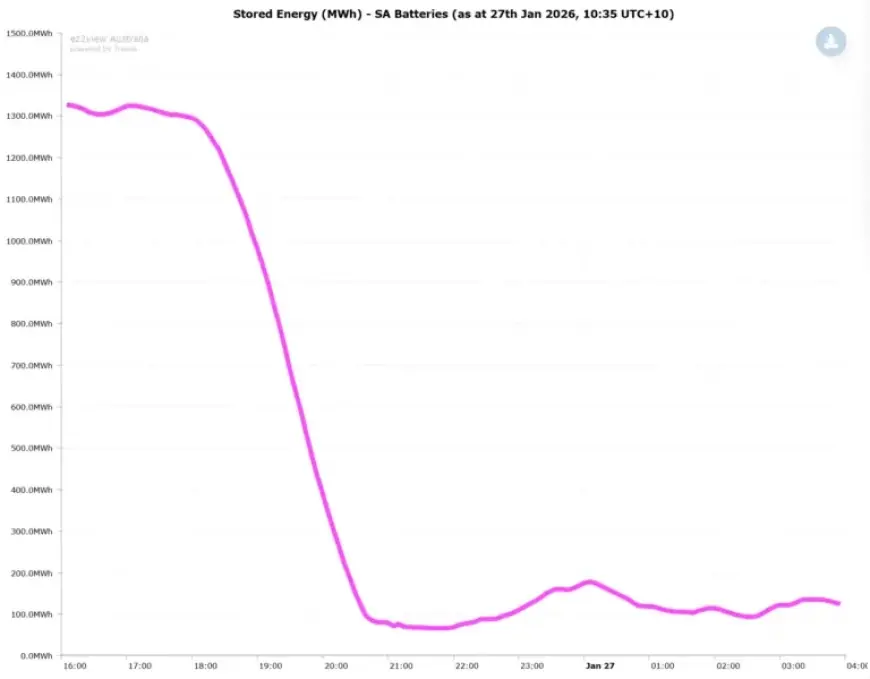
Between 4:00 PM and 4:00 AM NEM time, South Australia’s utility-scale battery units displayed fluctuating performance. An analysis from AEMO data revealed that stored energy peaked at 1,325 MWh at 5:05 PM. However, this level rapidly diminished during a high-price window.
By 9:45 PM, stored energy had plummeted to just 66 MWh. Many batteries in the fleet typically offer around two hours of duration. As sustained high prices lasted over three hours, this caused many batteries to reach their energy limits.
Bid Availability Trends
The decline in stored energy was mirrored by a significant drop in bid availability. From around 8:30 PM, as prices surged to the Market Price Cap of $20,300/MWh, the battery system’s bid availability sharply declined. This was particularly pronounced in the region’s largest facilities.
Impact on Major Battery Facilities
- Torrens Island BESS (250 MW) became unavailable at approximately 8:40 PM, with a report of 20 MWh stored.
- Blyth BESS (200 MW) also ceased operations around the same time and maintained about 10 MWh of charge.
This situation indicates that the residual energy remaining in batteries during low points was likely being reserved to maintain minimum operational charges rather than being genuinely available for market use.
Recharging Opportunities
Despite these challenges, the Mannum BESS briefly recharged and contributed a small amount of capacity starting at around 8:30 PM. However, by this time, effective discharge capability across the fleet had largely diminished until after the extreme pricing period concluded.
In summary, last night’s significant depletion of South Australia’s battery fleet highlights the challenges of peak demand periods and the importance of energy storage management.