

























Vital Farms Eggs Scandal Explained: Linoleic Acid Claims, “Pasture-Raised” Expectations, and What Comes Next

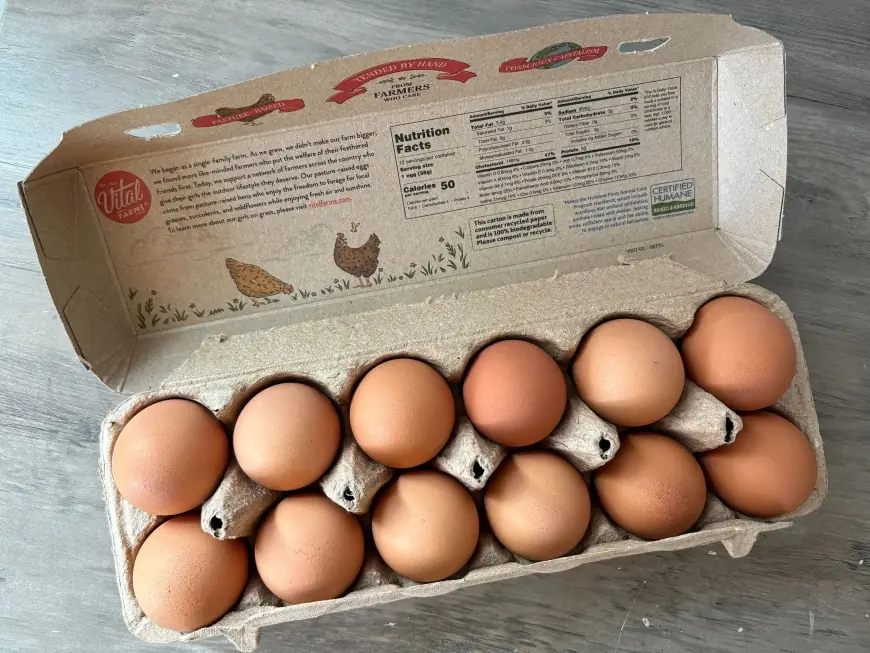
As of Monday, January 26, 2026 (ET), the “Vital Farms eggs scandal” isn’t being driven by a recall or a food-safety alert. It’s a trust fight—sparked in recent days by viral posts pointing to fatty-acid testing that allegedly shows higher-than-expected linoleic acid (an omega-6 fat) in Vital Farms eggs. Critics argue the numbers undermine what shoppers think they’re paying for when they buy a premium “pasture-raised” carton. Supporters counter that the outrage confuses outdoor access with a fully forage-based diet, and that feed realities at scale are being reframed as wrongdoing.
What people are alleging about Vital Farms eggs
The core claim circulating online is that testing found Vital Farms eggs with linoleic acid making up roughly the low-to-mid 20% range of the egg’s fat. Critics use that figure to argue:
-
The hens’ diet must be heavily influenced by corn- and soy-based supplemental feed, not just pasture forage.
-
The “pasture-raised” label and premium price imply a meaningfully different nutrient profile than what the tests suggest.
-
Visual cues (like deeper yolk color) can be misread as proof of superior nutrition if diet formulation includes color-boosting ingredients.
None of that automatically equals deception—but it does collide with a common consumer assumption: that “pasture-raised” means “mostly living off pasture.”
What Vital Farms says, and where the label confusion begins
Vital Farms’ public position can be summarized as: pasture access is real, but supplemental feed is still necessary. That’s not unusual in egg production, including in many pasture systems, because forage availability changes with weather, seasons, and flock behavior.
This is where the controversy gets combustible. Many shoppers interpret the label as a diet promise (“bugs and grass most of the time”), while many producers use it as an access and housing promise (“meaningful outdoor time, with feed to maintain health and consistency”). Both interpretations sound reasonable—until a single lab number forces everyone to pick a side.
Behind the headline: why linoleic acid became a proxy war
This story went viral because it pushes several high-engagement buttons at once:
-
A simple villain number. One percentage is easy to share, easy to moralize, and hard to contextualize in a short post.
-
Premium-price psychology. When people pay more, they’re buying certainty—about animal welfare, ingredients, and outcomes. Anything that hints the difference is “mostly marketing” triggers anger.
-
The broader “seed oil” debate. Linoleic acid has become a lightning-rod topic online. That makes eggs—normally a “safe food” in wellness culture—an unexpectedly explosive battleground.
-
Greenwashing fatigue. Consumers are primed to suspect that feel-good packaging hides industrial realities. Whether or not that’s true in a given case, the suspicion is already in the air.
In other words, the “scandal” label is less about one company and more about a cultural moment where labels are treated like contracts.
What we still don’t know (and what would actually settle the argument)
If you want to treat this as more than an internet firestorm, the missing pieces matter:
-
Testing transparency: How many eggs were tested, from which regions, from which product lines, and using what lab methods?
-
Natural variation: Egg nutrient profiles can shift with season, feed batches, and flock behavior. One snapshot may not represent the whole supply.
-
Meaningful benchmarks: How do these results compare to other pasture-raised brands, cage-free eggs, organic eggs, and truly corn/soy-free systems?
-
Health relevance: Even if the linoleic acid percentage is accurate, the real question is what it means in a full diet—an area where expert opinions vary and online discourse often overstates certainty.
Without those details, you’re left with a loud claim and an equally loud rebuttal—both partially true depending on what “pasture-raised” is assumed to guarantee.
Second-order effects: what this could change in the egg aisle
Even if the outrage cools, it can reshape buying and labeling:
-
Feed transparency becomes a competitive weapon. Expect more cartons to advertise corn-free or soy-free feeding (usually at higher prices).
-
Label scrutiny increases. Shoppers may start demanding specifics: hours outside, pasture quality, stocking density, and feed disclosure.
-
Certifications face pressure. Certifications focused on welfare and access may be criticized for not signaling nutrient outcomes clearly.
-
Marketing language tightens. Brands may adjust wording to reduce “implied diet” interpretations that aren’t guaranteed.
What happens next (realistic scenarios)
Over the next several weeks (ET), the most likely paths are:
-
More data enters the conversation: additional tests, counter-tests, and deeper explanation of methodology.
-
A transparency push: clearer feed statements and simpler explanations of what pasture access does and doesn’t mean.
-
A short-lived boycott cycle: intense online heat that fades unless new, verifiable allegations emerge.
-
Industry-wide ripple: competitors lean into feed claims to capture skeptical shoppers.
Why it matters
Because this isn’t just about eggs. It’s about whether modern food labels can carry the weight consumers place on them. The Vital Farms “eggs scandal” reveals a gap between what people think they’re buying (a different biological product) and what many pasture systems actually promise (a different welfare and access model). When that gap becomes visible, the backlash is predictable—especially in a market where trust is often the real premium.