
























“Fake Beckham Feud Videos Emerge; Public Indifference Grows”

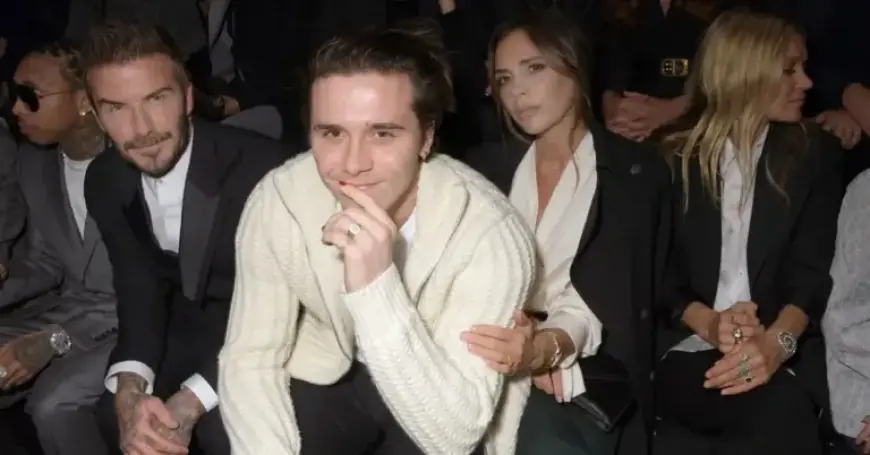
This week, Brooklyn Beckham stirred controversy by publicly distancing himself from his renowned family. The eldest son of David and Victoria Beckham accused them of attempting to undermine his marriage to Nicola Peltz, daughter of billionaire Nelson Peltz. His revelations triggered a frenzy on social media, prompting the creation of fake videos that captured the imagination of countless users.
Fake Beckham Feud Videos Emerge
Brooklyn Beckham’s dramatic claims, shared via Instagram Stories, highlighted alleged inappropriate behavior by his mother during his 2022 wedding. He accused Victoria Beckham of “dancing very inappropriately,” a claim lacking any supporting evidence. Despite this, internet users quickly generated artificial intelligence (A.I.) videos depicting Victoria’s supposed dance moves, mimicking iconic scenes from movies like “Saturday Night Fever” and “Pulp Fiction.”
Public Reaction and A.I. Content Creation
- Social media users embraced the fabricated A.I. videos with amusement.
- User comments expressed enjoyment over the creativity behind the fake content.
- The Beckhams remained silent, though sources indicated they found the creativity amusing.
Experts noted that the allure of such generated content reflects a broader societal trend. Kristian J. Hammond, an A.I. expert, warned that public eagerness for sensational narratives could lead to misinformation. The easy accessibility of A.I. tools makes famous individuals prime targets for digital manipulation. Moreover, these creations can blur the lines between reality and fiction.
Consequences of A.I. in Celebrity Culture
A.I. technology is not limited to harmless entertainment. There are troubling instances where it has been used to depict harmful scenarios involving celebrities. In the wake of serious events, A.I.-generated tributes have even emerged, highlighting the technology’s potential for both creativity and misrepresentation.
Understanding the Impact of Fake Content
Though many viewers might discern the deceptive nature of the Beckham videos, they reflect a growing desensitization to factual accuracy online. Dr. Casey Fiesler expressed concern regarding the public’s indifference to content authenticity, warning that such attitudes may lead to a larger societal apathy about truth.
The fascination with the fabricated aspects of the Beckham family story captures a cultural moment where reality can easily be overshadowed by digital fabrications. As many consumers of this content seek quick gratification from sensational stories, the challenge remains to maintain a healthy skepticism toward the increasing prevalence of A.I.-generated media.