























Discussion Banned on Set for ‘A Knight of the Seven Kingdoms’ Film

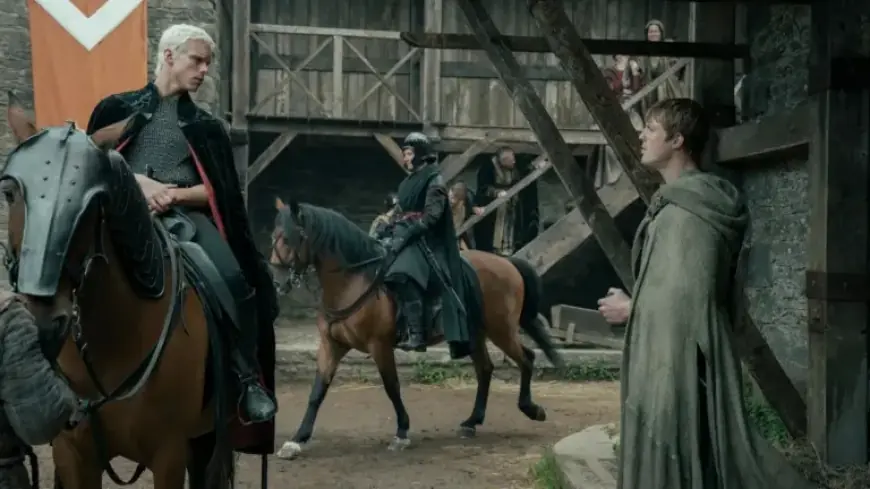
The jousting subgenre has captured audience interest for decades, leading to various films and television adaptations. Among notable titles are 2021’s “The Last Duel,” 1981’s “Excalibur,” and 1952’s “Ivanhoe.” Recently, the upcoming series “A Knight of the Seven Kingdoms” has drawn comparisons to a classic jousting film, “A Knight’s Tale.”
Discussion Banned on Set for ‘A Knight of the Seven Kingdoms’
Showrunner Ira Parker has implemented a unique creative policy regarding “A Knight’s Tale.” He has banned any mention of it in the writers’ room or on set. Parker acknowledges the film’s brilliance, but stresses that “A Knight of the Seven Kingdoms” derives from an earlier story, “The Hedge Knight.” This tale was penned two years before “A Knight’s Tale” was released.
Comparative Analysis of Storylines
Despite its 59% rating on Rotten Tomatoes, “A Knight’s Tale” remains popular. Released in 2001, it stars Heath Ledger as William Thatcher, a squire in 14th-century Europe. Following the death of his knight, Sir Ector, during a joust, William seizes the opportunity to assume the knight’s identity and compete in tournaments. Joined by fellow squires Roland and Wat, he creates the persona of Sir Ulrich von Lichtenstein.
This narrative shares similarities with “A Knight of the Seven Kingdoms,” particularly in its opening sequence. Both stories commence with the death of a knight and a squire inheriting the chance to joust. However, the character Ser Duncan the Tall does not assume a deceased knight’s identity but navigates his knighthood journey through self-invention. His squire, Egg, questions his name, prompting a humorous exchange about his title.
Origins of the Stories
It’s important to clarify that “A Knight’s Tale” does not directly copy “The Hedge Knight.” The latter, published in 1998, predates the popularization of the “Game of Thrones” series. Thus, it would be improbable for the Hollywood film to have drawn influence from it. Instead, “A Knight’s Tale” is more closely inspired by Geoffrey Chaucer’s 14th-century work, “The Canterbury Tales.”
In conclusion, while the two productions share thematic elements, they stand as distinct works. “A Knight of the Seven Kingdoms” continues to carve its niche in the jousting canon, demonstrating the timeless allure of knightly tales.