AMD Extends RDNA 3.5 iGPU Use in APUs, Adopts RDNA 5 for Premium SoCs

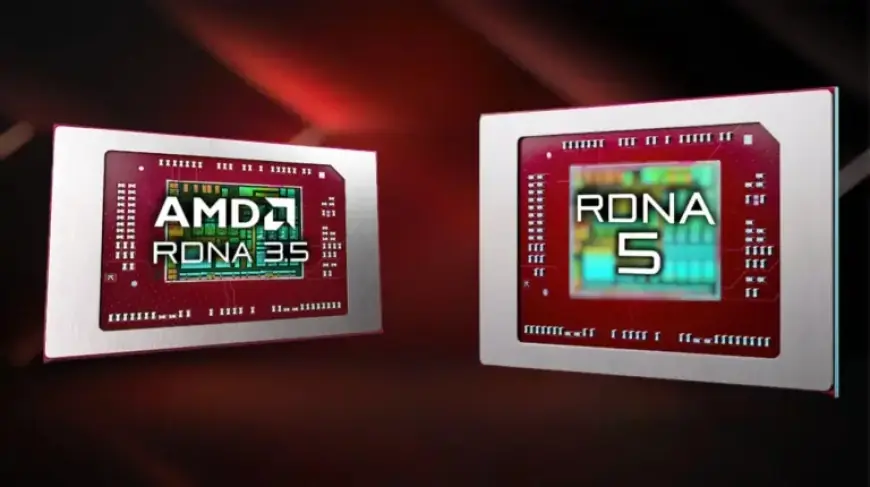
AMD has announced that its RDNA 3.5 graphics architecture will continue to power its APU lineup until 2029. However, upcoming premium System-on-Chip (SoC) products will feature the new RDNA 5 iGPUs, marking a significant evolution in AMD’s graphics technology.
AMD’s APU and Graphics Architecture Roadmap
Since the release of RDNA 3, AMD’s APUs have not experienced a substantial architectural change. Although RDNA 3.5 provided a notable enhancement, it primarily improved upon the existing RDNA 3 framework. Meanwhile, AMD’s RDNA 4 architecture was introduced for discrete GPUs, featuring enhanced AI and ray tracing cores, along with support for FSR Redstone.
Despite advances in discrete graphics, AMD has opted to maintain RDNA 3.5 within its APU family. The latest APU launch, the Ryzen AI 400 “Gorgon Point,” relies on RDNA 3.5 but has higher clock speeds. There are also larger variants, including the Strix Halo and Gorgon Halo “Ryzen AI MAX,” which utilize RDNA 3.5 and offer up to 40 compute units, compared to 16 in the mainstream versions.
APU Segmentation Strategy
AMD is strategically segmenting its APU offerings based on performance needs:
- Entry-Level & Mainstream APUs: These products will continue to utilize RDNA 3.5 until 2029, targeting sectors that do not require high-performance iGPUs, such as office laptops.
- Premium iGPUs: The RDNA 5 architecture will debut in premium iGPU products, enhancing performance and feature sets significantly.
The Ryzen AI 500 “Medusa Point” family is expected to be the final series to employ RDNA 3.5 technology in its iGPUs. Post this series, all subsequent APUs will transition directly to RDNA 5.
Performance Configurations of AMD Ryzen APUs
| APU Family | Codename | GPU Codename | Max GPU Compute Units | TFLOPs |
|---|---|---|---|---|
| Ryzen 2000 | Raven Ridge | Vega | 11 | 1.76 |
| Ryzen 3000 | Picasso | Vega | 11 | 1.97 |
| Ryzen 4000 | Renoir | Vega+ | 8 | 2.15 |
| Ryzen 5000 | Cezanne | Vega+ | 8 | 2.04 |
| Ryzen 6000 | Rembrandt | RDNA 2 | 12 | 3.40 |
| Ryzen 7000 | Phoenix Point | RDNA 3 | 12 | 8.30 |
| Ryzen AI 400 | Gorgon Point | RDNA 3 | 16 | ~8.50 |
| Ryzen AI MAX 400 | Gorgon Halo | RDNA 3 | 40 | ~15.00 |
| Ryzen AI 500 | Medusa Point | RDNA 3.5 | TBD | TBD |
| Ryzen AI MAX 500 | Medusa Halo | RDNA 5 | TBD | TBD |
AMD is poised to increase core counts in upcoming APUs, aiming to enhance their competitiveness against Intel, which has plans to unveil its Xe3 architecture soon. With the introduction of Medusa, AMD will launch APUs with RDNA 5 GPU cores, marking a new chapter in their graphics performance evolution.
The future of AMD’s APU lineup looks promising, and with the addition of RDNA 5, they aim to meet the growing demands for high-performance computing in the technology market.