
























Samsung Galaxy S26 Ultra: Late-February 2026 launch talk grows louder as “Privacy Display” and faster charging leaks stack up

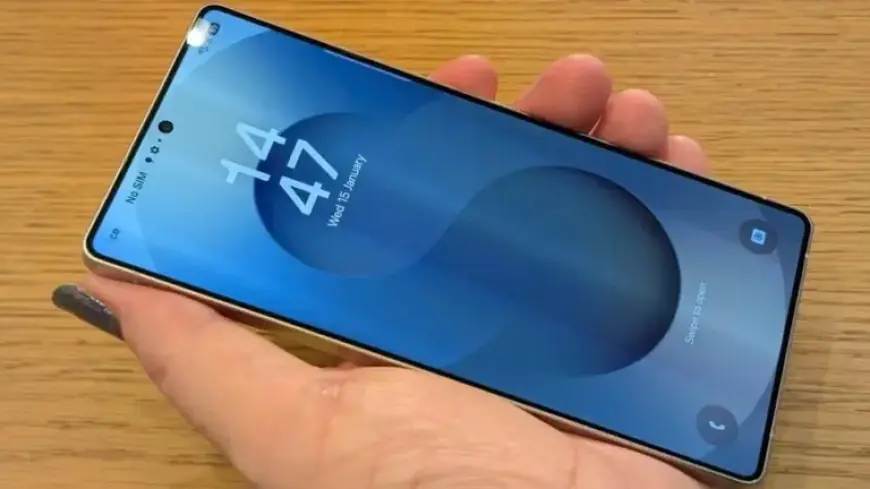
The Samsung Galaxy S26 Ultra is starting to look less like a simple annual refresh and more like a targeted response to two pressures: privacy anxiety in public spaces and buyer fatigue with slow, incremental upgrades. In the past several days, a cluster of reports has converged on a similar story: a late-February 2026 unveiling, early-to-mid March availability, a new angle-restricting “Privacy Display” feature, and a meaningful bump in wired charging speed—while the rest of the spec sheet appears to lean on refinement rather than reinvention.
What happened and what’s new right now
The newest wave of chatter centers on timing and screen features. Multiple independent reports now point to an announcement around February 25, 2026 (ET), with early March 2026 (ET) sales timing frequently mentioned. That’s notable because it suggests Samsung may be drifting away from its earlier-year flagship cadence, even if only by a few weeks.
On features, the headline grabber is the alleged Privacy Display—a built-in mode that reduces readability from off-angles, aiming to block “shoulder surfing” on trains, in cafés, and in offices. Alongside that, leaks have repeatedly circled around 60W wired charging as a key upgrade, plus incremental camera and design updates and a mostly conservative color lineup.
Privacy Display: why Samsung would push this now
If the Privacy Display reports hold, Samsung is trying to turn a daily annoyance into a differentiator. Privacy filters have existed for years as add-ons, but they’re clunky: they can permanently degrade clarity, color, and brightness. A software-toggle approach paired with display-level tuning is a smarter pitch—privacy when you need it, normal viewing when you don’t.
Behind the headline, the incentives are clear:
-
Enterprise and government buyers care about screen privacy in shared environments.
-
Commuters and travelers increasingly do banking, messaging, and work tasks on phones in public.
-
Samsung can market “privacy” without needing a headline-grabbing camera leap, which is harder and more expensive to deliver year over year.
The risk: if the off-angle dimming is too aggressive, it could annoy users during normal use—like showing a photo to a friend or glancing at navigation from a slightly shifted viewpoint.
Battery and charging: the upgrade people will actually feel
Rumors around faster wired charging (often cited around 60W) keep resurfacing because it’s one of the few changes that’s instantly noticeable. Camera gains can be subtle; charging time isn’t. If Samsung delivers a real-world reduction in “minutes to usable” (say, a quick top-up before heading out), that’s a selling point that cuts through spec-sheet noise.
Behind the scenes, charging upgrades create a stakeholder ripple:
-
Accessory makers benefit if higher-watt chargers become the “new normal.”
-
Carriers and retailers get an easy in-store demo.
-
Samsung must balance battery health, heat, and longevity, especially if it keeps battery capacity roughly similar to recent Ultra models.
Cameras: likely improvements, but the bigger bet is software
Camera talk appears to lean toward quality improvements rather than a dramatic redesign. That usually means sensor tweaks, lens refinements, and—most importantly—processing upgrades. The “Ultra” audience expects the phone to rescue difficult shots: moving subjects, indoor lighting, harsh backlight, and long zoom.
Behind the headline, the camera race has shifted:
-
Hardware changes are expensive and slower to iterate.
-
Software can produce bigger perceived gains—especially in low-light, portrait edge detection, and video stabilization.
-
AI-assisted editing features increasingly matter as much as “pure” optics.
Design and colors: “playing it safe” is a strategy, not laziness
Leaked color chatter suggests Samsung may stick to familiar tones with a couple of livelier options. That can feel boring, but it’s often deliberate:
-
Safe colors reduce inventory risk.
-
It nudges fashion-forward buyers toward limited or direct channels.
-
It keeps focus on headline features like privacy and charging rather than aesthetics.
Design-wise, most reports hint at refinement—small contour changes, subtle frame tweaks, and the usual durability narrative—rather than a radical silhouette shift.
What we still don’t know
Even with a pile of consistent leaks, big questions remain unanswered:
-
Whether Privacy Display is exclusive to the Ultra or spreads across the lineup.
-
The real charging speed in practice (peak wattage vs sustained charging curve).
-
Any meaningful battery capacity jump, not just charging speed.
-
The exact chip strategy by region and how it affects heat, gaming, and battery life.
-
Pricing—especially given premium-material expectations and component costs.
What happens next: 5 scenarios to watch
-
Privacy Display becomes the tentpole feature
Trigger: Samsung demos it prominently and positions S26 Ultra as the “public-life” secure phone. -
Charging steals the show
Trigger: Verified tests show notably faster top-ups without excessive heat or battery wear concerns. -
Camera narrative pivots to “consistency”
Trigger: Early samples emphasize fewer missed shots and better video, not just higher megapixels. -
Launch timing shifts again
Trigger: Supply constraints or software readiness pushes the reveal deeper into late February or early March 2026 (ET). -
Buyers hesitate and wait
Trigger: If upgrades feel too incremental, upgrade cycles stretch and Samsung leans harder on trade-in and preorder incentives.
Why it matters
The Samsung Galaxy S26 Ultra isn’t just about raw specs—it’s about which pain points Samsung thinks are most urgent in 2026. If Privacy Display and faster charging are real and well-executed, they signal a pivot toward everyday friction: privacy in public, and time saved at the wall. If they’re underwhelming, the S26 Ultra risks being seen as a cautious bridge year—competent, premium, but not compelling enough to pull upgrades forward.