























Guy Fieri’s new look jolts his brand on purpose—and exposes how easily “real” celebrity images can be bent

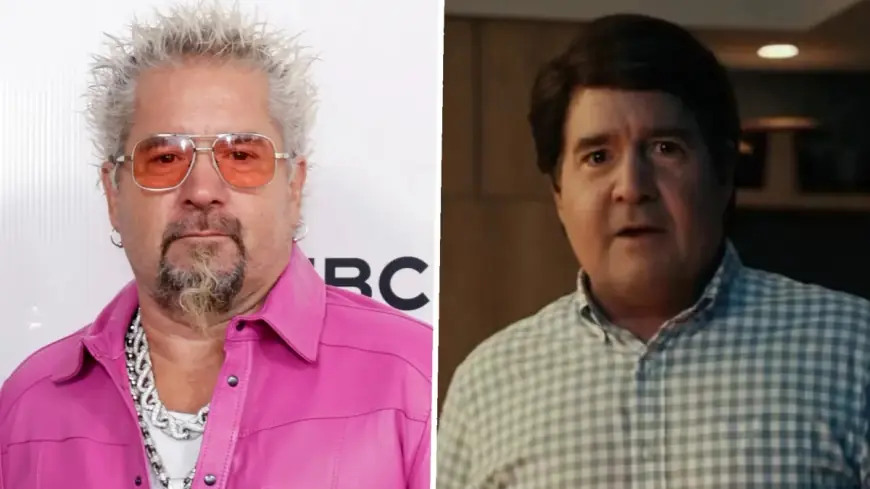
Guy Fieri built a career on being instantly recognizable: the spiked bleached hair, the goatee, the loud shirts, the whole walking-billboard vibe that tells you the energy before he says a word. That’s why the Guy Fieri new look moment hit so hard this week. It wasn’t just a haircut gag—it was a reminder that celebrity identity is a product, and the fastest way to make people talk is to temporarily unplug the logo they’ve memorized.
Why the makeover matters more than the hair
A dramatic “before/after” works because it forces a split-second question: Is this still the same person? For Fieri, that question is unusually loaded. His look has functioned like a trademark for two decades, welded to his on-screen persona and the way audiences file him away—big, brash, and permanently mid-bite in a diner booth.
The twist is that the new look didn’t arrive as a quiet personal change. It landed as a content drop designed for reaction: a clean-cut, suburban-dad style—neatly parted brown hair, clean-shaven face, button-down shirt and khakis—paired with a joke that he was done celebrating his birthday “as Guy” and would do it “as just a guy.” The contrast was the point, and it worked. Fans did double-takes. Friends and family piled on with teasing. The clip sprinted across feeds because it played like a mini-prank on the audience’s own expectations.
And in 2026, there’s an extra layer: people don’t only ask why a celebrity changed. They ask whether it happened at all. The cleaner and more “ordinary” the makeover looks, the more it invites suspicion that a filter, edit, or AI trick is doing the work.
What Guy Fieri actually posted, and what people are arguing about
The Guy Fieri new look surfaced in a short birthday video shared to social media on January 23, tied to his 58th birthday. Visually, the transformation is stark: the familiar bleached spikes are gone, replaced by a tidy, side-parted brunette style. The goatee appears to be gone too, replaced by a smooth, clean-shaven face. The wardrobe swap completes the joke—less rock-show host, more “I’m here to discuss your policy options.”
He captioned the moment with a simple line: “New Year. New Guy. New Look.” The framing made it clear this wasn’t a midlife crisis reveal; it was a bit.
Still, debate caught fire almost immediately over whether the makeover was “real.” Some viewers treated it like a straight-up transformation. Others questioned if the clip used AI or face/hair manipulation—especially because the effect looks too precise, and because the gag relies on the uncanny feeling of seeing a familiar face wearing a totally different identity.
One reason the argument has legs: the clip doesn’t show a full “process” or an unbroken set of angles long enough to satisfy skeptics. That’s normal for social media. But it’s also exactly what makes modern image skepticism unavoidable—video is no longer automatic proof.
Micro Q&A
Is Guy Fieri permanently changing his signature style?
There’s no clear sign this is a permanent rebrand. The post plays like a birthday joke built for reactions, not a long-term identity reset.
Was the new look AI or a filter?
The video itself doesn’t definitively settle it. The uncertainty is part of why it went viral: people are now trained to doubt what they’re seeing, even in a simple selfie-style clip.
Why do people care so much about a hairstyle?
Because Fieri’s look is a shortcut to his persona. When the shortcut disappears, audiences feel like the “character” has changed—even if the person hasn’t.
Fieri has always understood spectacle, and this was spectacle with a sharper edge: a quick, funny identity swap that doubles as a stress test for how trust works online now. Whether it was a real makeover, a digital trick, or a mix of both, the outcome is the same—Guy Fieri reminded everyone that his brand is strong enough to vanish for a moment and still dominate the conversation.