

























Apple’s “new M5 MacBook” chatter: what may be coming next, and why it matters

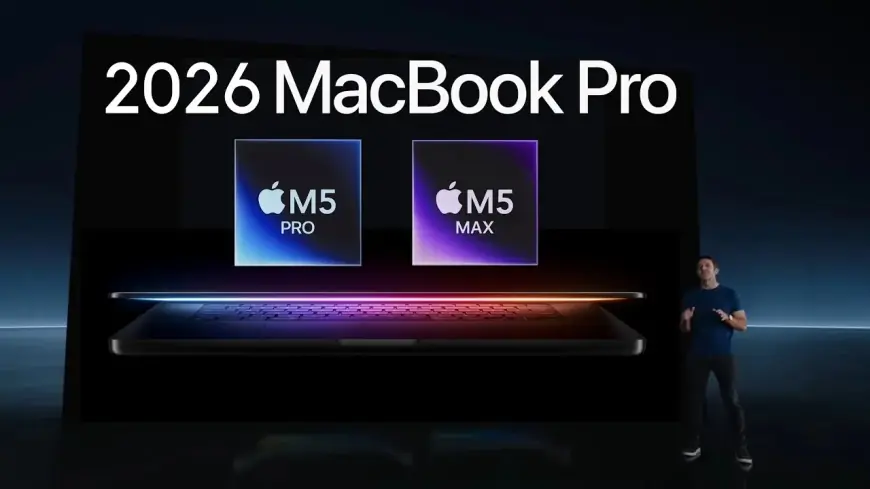
As of Monday, January 26, 2026 (ET), conversation around a “new M5 MacBook” is less about the first appearance of M5 and more about the next wave of MacBook updates—especially higher-end configurations that typically follow the baseline chip debut. The practical question for buyers is simple: is an upgrade imminent enough to wait, and will it be a meaningful jump or a routine refresh?
What people mean by “new M5 MacBook” right now
M5 is already a known quantity in the MacBook family, so “new M5 MacBook” usually points to one of two things:
-
A pro-tier expansion: MacBook Pro models equipped with M5 Pro and M5 Max, aimed at creators and developers who need sustained performance, more GPU headroom, and higher memory ceilings.
-
A mainstream rollout: a MacBook Air update that brings M5 efficiency and AI-focused improvements to the volume laptop line, likely with minimal external design change.
What’s driving the current spike is timing speculation: some watchers expect something soon (days to weeks), while others frame it as an early–first-half 2026 refresh window. Apple hasn’t confirmed a schedule publicly.
Why now: cadence, competition, and “refresh stacking”
Even when the outside design stays the same, laptop cycles are strategic. Three forces tend to pull Apple toward an earlier refresh:
-
Competitive pacing: The broader PC market is pushing hard on “AI PC” messaging. Apple has every incentive to keep the Mac’s on-device AI story fresh and measurable.
-
Product-line clarity: A near-term update can simplify the lineup (and retail positioning) by aligning price tiers with clearer performance steps.
-
Spacing the bigger change: When a more substantial redesign is expected later, a smaller spec-focused refresh beforehand can maintain momentum without forcing a risky, all-at-once transition.
In plain terms: a “new M5 MacBook” in early 2026 can be less about reinventing the laptop and more about keeping Apple’s performance narrative—and sales mix—on track.
Behind the headline: the real battle is efficiency plus on-device AI
The most important shifts in modern laptops aren’t always obvious in photos. What matters day-to-day is a trio of tradeoffs:
-
Sustained performance under load: Pro-tier chips typically matter most when the machine is exporting video, compiling code, running local models, or doing long renders—tasks where cooling and power limits decide real speed.
-
Unified memory and bandwidth: On-device workflows increasingly rely on moving data fast and keeping more of it close to the compute. Even modest gains here can change what’s practical without reaching for the cloud.
-
Battery-per-watt leadership: Apple’s strongest advantage has been “do more while consuming less.” A new chip generation is a chance to widen that gap—especially in thin-and-light machines.
The incentive structure is clear: Apple benefits when more users can do “pro” tasks locally, because it reinforces the value of the hardware platform (and reduces reliance on external services for performance).
What we still don’t know
If an M5 MacBook update lands soon, the missing pieces that will decide whether it’s worth waiting include:
-
Launch format: quiet announcement versus a more structured creator-focused push
-
Which models move first: 14-inch only, or both 14- and 16-inch at once
-
Memory defaults: base unified memory and whether higher tiers become more affordable
-
Thermal tuning: real sustained performance versus short burst benchmarks
-
Pricing and availability: especially outside the US, where timing and configuration can vary
Until Apple publishes the specifics, any near-term timetable should be treated as developing.
What happens next: realistic scenarios to watch
Here are the most plausible paths from here (ET), with triggers that would make each one likelier:
-
Late-January press cycle: a near-term reveal of M5 Pro/M5 Max MacBook Pro models. Trigger: coordinated accessory/storefront changes and unusually tight messaging around creator workflows.
-
February–March MacBook Pro refresh: a slightly slower rollout tied to supply readiness. Trigger: continued “soon, but not immediate” signaling from reliable watchers.
-
Spring MacBook Air with M5: mainstream update lands after pro models (or alongside them). Trigger: chatter shifting from “Pro/Max” to Air-focused supply and education pricing.
-
Staggered launch: 14-inch first, 16-inch later. Trigger: mixed signals on which configurations are shipping in volume.
-
Slip to later in the first half of 2026: if inventory, yields, or broader roadmap priorities intervene. Trigger: silence after expected windows pass without Apple communications.
Why it matters for buyers
If you’re deciding whether to buy now:
-
Buy now if your work can’t wait, you’re coming from an older Intel-era machine, or you’re getting a meaningful discount on current stock.
-
Consider waiting if you specifically want pro-tier performance (especially GPU-heavy workflows), you routinely max out memory, or you want the longest runway before the next upgrade.
The key is expectations: the next “new M5 MacBook” is likely an inside-the-chassis upgrade more than a visual redesign—valuable if you’re performance-bound, less urgent if you’re not.