
























Saskatchewan Premier: Trump’s Tariff Threats Undermine Fair Trade System

Recent tariff threats from U.S. President Donald Trump have raised significant concerns in Saskatchewan regarding trade stability. The threats were made in a social media post where Trump warned of imposing a 100 percent tariff on all Canadian goods entering the U.S. if Canada engages in a deal with China.
The Impact of Trump’s Tariff Threats in Saskatchewan
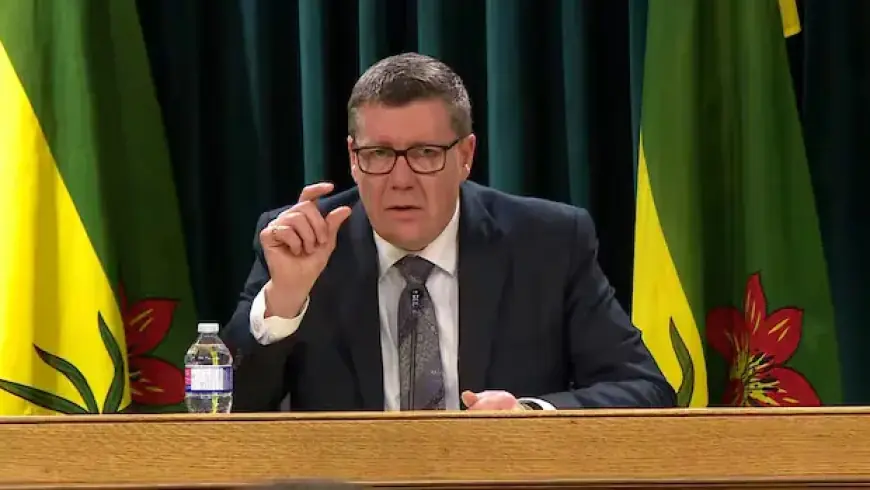
Premier Scott Moe of Saskatchewan highlighted the detrimental effects of Trump’s threats on the fair trade system that had been appreciated for decades. He pointed out that just a week prior, Trump had praised the Canada-China agreement as a beneficial deal for Canada, calling it a “good thing.”
- Trump’s 100 percent tariff threat on Canadian goods.
- Agreement with China allowing 49,000 electric vehicles at a lower tariff rate.
- Importance of maintaining the Canada-U.S.-Mexico Agreement (CUSMA).
Recent Developments in Canada-China Relations
Last week, Canada finalized an agreement with China, which allows for an influx of Chinese electric vehicles at a reduced tariff of 6.1 percent. In return, China will lower tariffs on Canadian canola seed and suspend “anti-discrimination” tariffs on various Canadian products.
According to Statistics Canada, Saskatchewan produced approximately 12.2 million metric tonnes of canola in the previous year, constituting more than half of Canada’s overall output of 21.8 million metric tonnes. This farming background puts Saskatchewan in a vulnerable position as it navigates the complex trade landscape.
Voices from the Farming Community
Dean Roberts, a farmer from western Saskatchewan and chair of Sask Oilseeds, expressed his concerns. He described the current environment as unsettling, with significant geopolitical uncertainties affecting decision-making for upcoming planting seasons. “We have an elephant on either side of us,” he stated, referencing the U.S. and China.
Roberts acknowledged his satisfaction with the recent Canada-China agreement but lamented the instability affecting the agricultural industry at large. “I would dearly love to wake up one day in July and have my biggest concern be grasshoppers,” he said, emphasizing the lack of tools available to manage geopolitical risks.
Economic Uncertainty in Agriculture
Monty Reich, CEO of South West Terminal, voiced similar sentiments, stating that the agricultural sector feels as though it has reverted to square one regarding trade uncertainty. He noted that the political landscape increasingly influences market conditions, contributing to heightened stress for farmers.
- Commodity prices are declining.
- High input costs stress profitability.
- Farmers face intense decision-making pressures amid uncertainty.
As Saskatchewan grapples with these external pressures, the future of trade relations remains uncertain. The agriculture sector is left to navigate a challenging landscape marked by fluctuating policies and market volatility.