

























Research Reveals Renewables Overtake Fossil Fuels in EU Electricity Market

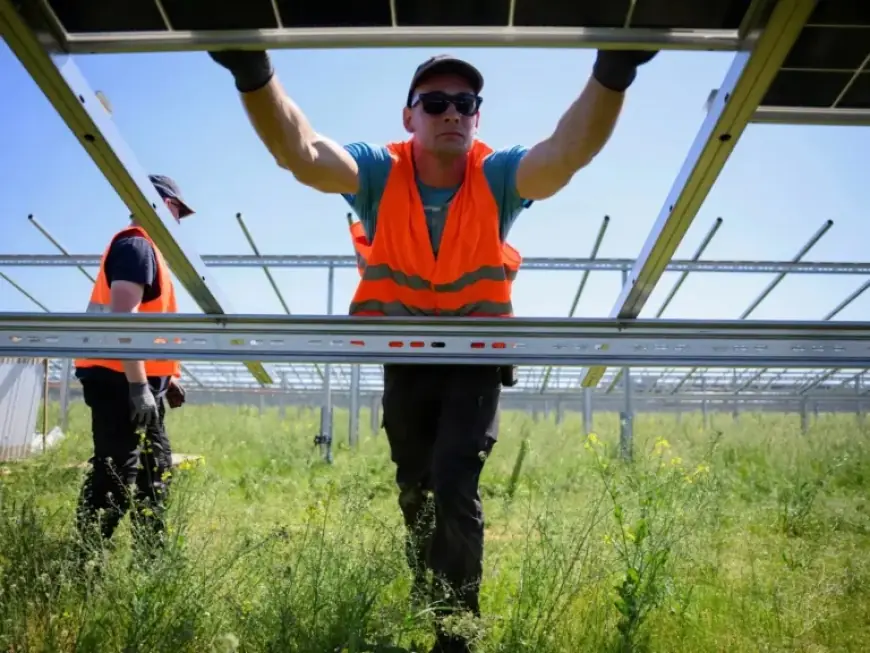
A recent report from the think tank Ember highlights a significant milestone for renewable energy in the European Union. In 2022, wind and solar power collectively outpaced fossil fuels, generating 30% of EU electricity compared to 29% from coal and gas. This marks the first time renewables have outperformed fossil fuels in the region, illustrating Europe’s rapid shift towards green energy.
Renewable Energy Growth in the EU
In its European Electricity Review, Ember emphasized that this achievement signals a pivotal moment in the transition away from greenhouse gas-emitting sources. When including hydroelectricity and biomass, the renewables share of the electricity market rises to 48%. Meanwhile, nuclear energy accounted for an additional 23% of electricity production within the EU.
Factors Driving the Transition
One of the main drivers behind the solar power surge is the annual increase of one-fifth in solar energy production for four consecutive years. This growth has been partially fueled by geopolitical events, including Russia’s invasion of Ukraine, which disrupted gas supplies to Europe.
Interestingly, much of the progress in renewable energy has stemmed from the installation of rooftop photovoltaic panels on homes, rather than large-scale industrial projects. Ember identifies this trend as an underutilized opportunity for energy independence, capable of meeting up to 40% of the EU’s electricity demands.
Global Trends and Future Projections
The International Energy Agency reports that solar and wind energy have expanded at record rates for the past 23 years and are set to capture more market share. Ember forecasts that by 2025, renewables will dominate the electricity market, reducing the reliance on fossil fuels not only in Europe but also globally.
This shift is echoed in developing countries, where notable drops in coal usage were observed last year. In China, for example, coal-fired power decreased by 1%, marking the first decline in a decade.
Challenges and Concerns
Despite the optimistic outlook, concerns have emerged regarding the rapid scaling of solar power. For instance, in Greece, solar photovoltaic capacity rose to 12GW in 2025 from 9.5GW in 2024, representing a 25% increase. However, this surge has led to excess supply, causing disruptions in energy distribution.
Industry experts warn that without adequate electricity storage solutions, the aggressive expansion could jeopardize investor stability. There are fears that many firms might face financial difficulties due to plummeting returns as demand struggles to keep pace with supply increases.
The Situation in the United States
In contrast, the United States is experiencing challenges in renewable energy growth. Recent data indicated a 2.4% rise in emissions due to increased coal consumption. The ongoing policies of the Trump administration, including the rollback of climate project subsidies, are hindering progress toward clean energy sources.
Despite these setbacks, recent court rulings have allowed the continuation of large offshore wind projects, signaling ongoing legal battles over energy regulations. Research indicates that legislative and judicial actions will be vital in cementing a sustainable clean energy transition.