






















Enrique Lores set to lead PayPal after stepping down as HP CEO

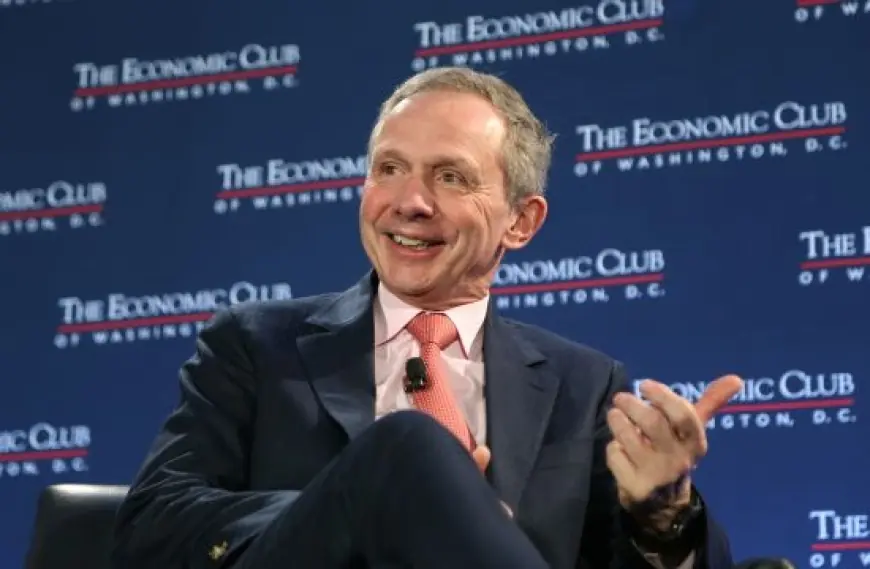
Enrique Lores is preparing for a high-profile jump from hardware to fintech, after PayPal named him its next president and chief executive officer effective March 1, 2026. The move comes the same day HP announced that Lores has stepped down immediately, with Bruce Broussard tapped as interim CEO—an unusually fast leadership handoff that lands as PayPal confronts slower growth in its core checkout product.
The leadership changes were disclosed early Tuesday morning, Feb. 3, 2026 (around 7 a.m. ET), alongside PayPal’s latest quarterly results and a 2026 outlook that fell short of market expectations.
A rapid transition at HP
HP said Broussard will serve as interim CEO effective immediately after Lores resigned as president, CEO, and a member of the board to pursue another professional opportunity. The company did not provide further details on Lores’ departure timeline or a search process for a permanent successor.
For HP, the abrupt change adds uncertainty to a multiyear restructuring plan announced late last year that targets 4,000 to 6,000 job cuts by fiscal 2028. That plan has been framed as a cost and productivity push alongside heavier investment in AI-enabled PCs and related offerings, at a time when component costs and pricing pressure have complicated profit forecasts.
With an interim chief executive in place, investors will likely focus on whether HP’s near-term operational targets and savings initiatives stay on track—and how quickly the board moves to name a permanent CEO.
PayPal’s board turns to a “transformational” operator
PayPal’s board said it appointed Lores after a detailed review of the company’s competitive position and execution pace. The company said Jamie Miller, its chief financial and operating officer, will serve as interim CEO until Lores begins on March 1, and David W. Dorman will become independent board chair effective immediately.
In its announcement, PayPal highlighted Lores’ track record leading large-scale operational change, pointing to his tenure at HP and efforts to expand beyond traditional PCs and printing into services, subscriptions, and newer “future of work” products, including AI-related offerings. Lores said he plans to balance long-term transformation with faster, more consistent quarter-to-quarter execution.
The appointment is also notable because Lores has been closely involved with PayPal’s governance, having served on the board for nearly five years and as board chair since July 2024. That continuity may help speed decision-making, but it also raises the bar for near-term results given how directly the board has tied the change to execution.
Earnings and guidance set the immediate pressure
PayPal’s leadership news landed alongside results that underscored the company’s current challenge: restoring momentum in branded checkout while navigating softer consumer spending.
For the quarter ended Dec. 31, PayPal reported:
-
Revenue of $8.68 billion
-
Total payment volume of $475.1 billion (up 6% on a currency-neutral basis)
-
Adjusted earnings of $1.23 per share
The company’s 2026 profit outlook implied flat to only slightly higher adjusted profit versus expectations for stronger growth, and shares fell about 9% in premarket trading Tuesday.
PayPal also flagged that online branded checkout growth slowed to 1% in the quarter, down from 6% a year earlier. Management attributed the deceleration to weaker U.S. retail conditions, international headwinds, and tougher comparisons.
What Lores inherits: checkout competition and speed
The biggest strategic test for Lores will likely be whether PayPal can revive higher-margin branded checkout while maintaining growth in other parts of the business. The checkout segment sits at the center of investor scrutiny because it represents brand strength and pricing power, but it is also where competition has intensified as large technology ecosystems keep pushing their own payment experiences.
The company has described near-term actions to restore branded checkout momentum, while continuing to streamline lower-margin unbranded processing and other cost lines. For a new CEO arriving from outside fintech operations—despite long experience in global consumer and enterprise hardware—credibility may hinge on early decisions around product priorities, merchant incentives, and the cadence of feature releases.
A key question over the next two quarters will be how quickly PayPal can show stabilization in checkout growth and better operating leverage, especially if consumer spending remains uneven.
What to watch next
In the weeks leading up to March 1, attention is likely to split between two tracks: PayPal’s transition planning and HP’s leadership search.
Key takeaways:
-
PayPal will be judged quickly on whether branded checkout growth improves from the current low-single-digit pace.
-
Leadership continuity at PayPal’s board level may enable faster execution, but also intensifies accountability for near-term delivery.
-
HP’s interim setup makes its next earnings cycle and any reaffirmed cost targets more sensitive to leadership signaling.
By early spring, investors should have clearer evidence of whether the CEO change is translating into faster product execution at PayPal—and whether HP can maintain operational momentum without the executive who led its recent restructuring and AI repositioning.
Sources consulted: Reuters; PayPal Holdings, Inc.; HP Inc.; Barron’s