

























World’s Oil and Gas Dependence Reveals Dangerous Vulnerability

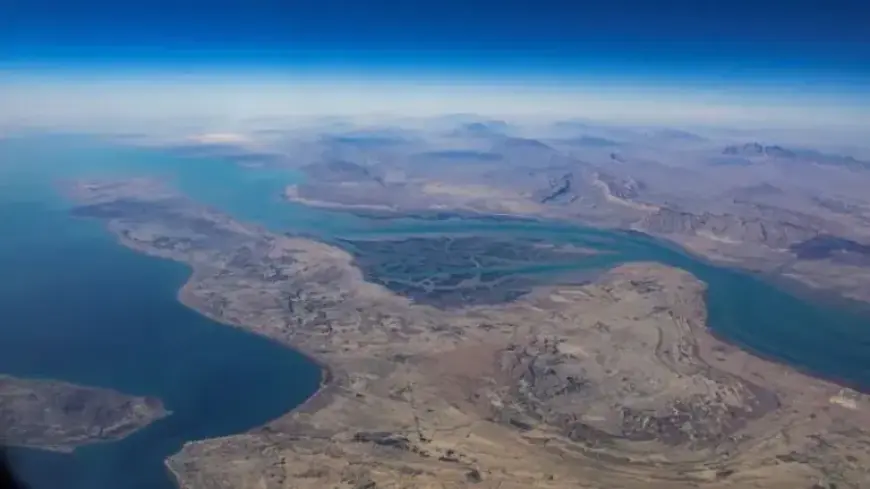
The recent Iranian blockade of the Strait of Hormuz exposed how geography can be used as a weapon. The narrow waterway carries roughly a fifth of global oil and gas. Its partial closure pushed energy prices higher, sparked fuel shortages, prompted rationing and raised fears of recession.
The episode underlines that the World’s Oil and Gas Dependence Reveals Dangerous Vulnerability. Analysts warn the current system relies on continuous flows through a few chokepoints. When those flows stop, economies feel the shock immediately.
Key maritime chokepoints and recent disruptions
The Strait of Hormuz is the primary export route for Gulf oil. Around 20% of the world’s oil and gas moves through it.
The Bab el-Mandeb connects the Red Sea and Suez Canal to the Gulf of Aden. It carries about 6% of seaborne traded oil. Attacks by Iran-backed Houthi militants in 2023 forced many vessels to reroute around the Cape of Good Hope.
The Strait of Malacca links the Indian and Pacific Oceans. It is the largest maritime chokepoint for oil transport. Piracy and robbery incidents rose to a 19-year high in 2025, with over 130 cases reported by the ReCAAP Information Sharing Centre.
- Rystad identified five fragile lifelines in 2025, including the Turkish Straits and the Cape of Good Hope.
- Disruption in any of these routes can trigger steep price rises and supply shocks.
Fossil fuels versus renewables: how risks differ
Fossil-fuel systems require continuous shipments of oil and gas. Any interruption cuts off supply quickly.
Renewable systems depend on infrastructure rather than daily fuel flows. Once built, solar panels and wind turbines generate domestic power for decades.
Experts use analogies to describe the difference. Li Shuo of the Asia Society Policy Institute compared importing oil to repeatedly visiting a drug dealer. Buying solar panels, he said, is more like purchasing a car.
Clement Sefa-Nyarko of King’s College London notes the world remains about 80% dependent on fossil fuels. He estimates roughly 25% of that dependence transits a single chokepoint.
Vegard Wiik Vollset of Rystad warns importers are vulnerable to sudden stoppages. Antoine Vagneur-Jones of BloombergNEF says an electrified grid is inherently more resilient.
Clean-energy supply chain vulnerabilities
Renewables bring different chokepoints. Key components rely on minerals such as cobalt, lithium, graphite and rare earth elements.
China dominates processing and manufacturing for many of these inputs. More than 70% of lithium processing occurs in China. About 80% of cobalt processing is handled there. China also produces over 90% of polysilicon, wafers and photovoltaic cells.
Beijing mined roughly 60% of global rare earths and processed about 90%. In 2025, China imposed export restrictions after trade tensions. Those moves prompted swift diplomatic responses.
Even with concentrated supply chains, analysts say impacts differ. Blocking fuel shipments halts energy flows instantly. Limits on components mainly slow new build-outs rather than cut existing supply.
Responses and longer-term outlook
Governments and industry are acting to diversify supply chains. The United States and India are ramping up domestic solar manufacturing.
Other strategies include mineral recycling and developing alternative technologies. Sodium batteries are an example that could reduce lithium dependence.
An IEA analysis found solar costs in China are lower than in other major markets. Chinese solar is about 10% cheaper than in India, 20% cheaper than in the United States, and 35% cheaper than in Europe.
Experts expect deployment of renewables to accelerate after shocks. Still, analysts caution that no energy system is without vulnerabilities. Building resilience will require both infrastructure investment and supply-chain diversification.
Filmogaz.com will continue to monitor developments as countries weigh faster electrification against new strategic dependencies.