
























New Fossil Discovery Could Reveal Unknown Form of Life

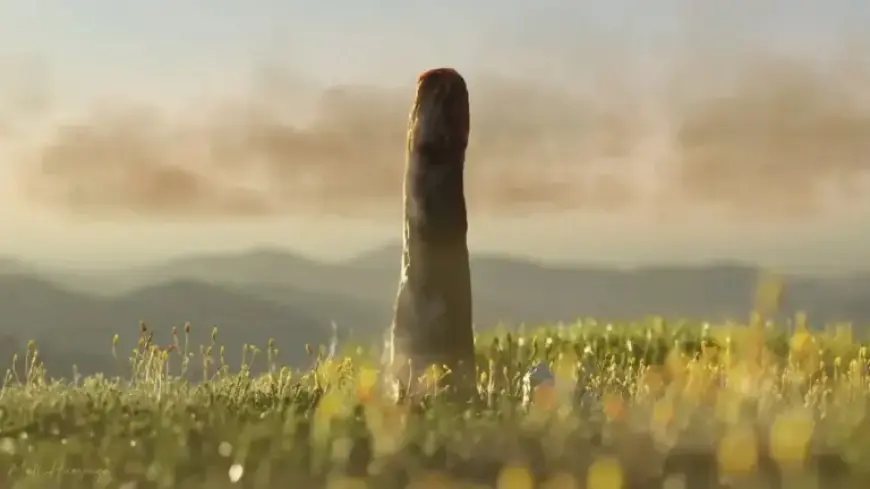
Recent research suggests that the towering Prototaxites could represent a previously unknown form of life that coexisted with early plants on Earth. These enigmatic structures dominated the landscape approximately 407 million years ago, long before trees existed.
Significance of Prototaxites
Prototaxites, which could grow over 25 feet tall, was first identified in 1843. It was named in 1859 by a researcher who recognized that these fossils did not fit neatly into any existing biological categories. Speculations about its nature included hypotheses that it might be a land-based kelp or even a mushroom.
New Study Insights
A recent study published in *Science Advances* indicates that Prototaxites likely belonged to a distinct lineage, placing it alongside the existing six kingdoms of life: plants, animals, fungi, protists, bacteria, and archaea. This assertion follows extensive comparisons between Prototaxites fossils and fossil fungi found in the same rock deposits.
- Composition: Prototaxites featured interwoven tube structures but differed significantly from modern fungal species.
- Distinct Features: Its branching tubes varied wildly, unlike the orderly arrangement observed in contemporary fungi.
- Lack of Chitin: Chemical analysis revealed no traces of chitin, a fundamental component of fungal cell walls.
Expert Opinions
Researchers, including co-lead author Laura Cooper from the University of Edinburgh, affirm that Prototaxites is significantly different from current fungi, questioning its classification within that group. Paleobotanist Kevin Boyce acknowledges that it may represent an extinct lineage rather than conforming to traditional fungal characteristics.
Ecological Role and Mysteries
Prototaxites likely played an ecological role similar to that of fungi, consuming decayed organic matter in an era with minimal available nutrients. The mechanisms behind how these massive organisms thrived in a world filled with diminutive plants remain a mystery.
Conclusion
The continued investigation into Prototaxites could reshape our understanding of early terrestrial life. As scientists delve deeper into its classification and ecological role, they may uncover vital insights into the nature of life on Earth before the advent of trees.