

























Ottawa Embraces Chinese Investment in Canada’s Food Processing, Manufacturing Industries

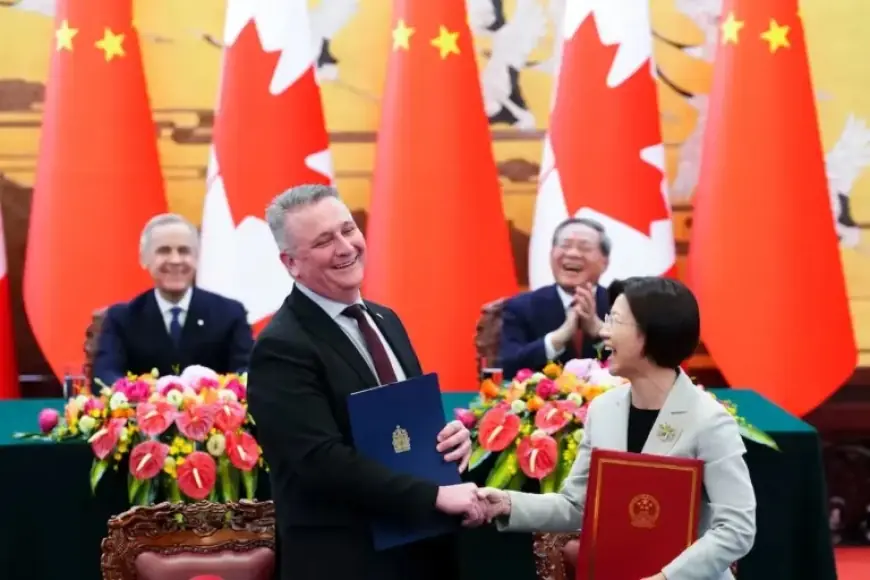
Ottawa is actively promoting Chinese investment in Canada’s food processing and manufacturing sectors. This push aims to enhance the capital needed for the country’s agricultural competitiveness on the global stage. Agriculture Minister Heath MacDonald highlighted numerous opportunities resulting from recent trade agreements with China, particularly in domestic value-added processing.
Growing Opportunities for Investment
During a recent interview, MacDonald expressed optimism about Chinese interest in Canadian agricultural expertise. His comments followed the Prime Minister’s trade mission to Beijing, which aimed to improve Canada-China relations. This mission led to tariff reductions on agricultural goods and established agreements on food safety and energy.
- Trade mission date: January 15
- Minister involved: Heath MacDonald
- Key focus: Chinese investment in agriculture and processing
The prospect of increased Chinese investment has garnered support from industry experts. However, the emphasis remains on maintaining Canadian control over its agricultural resources. Evan Fraser, director at the Arrell Food Institute, emphasized Canada’s potential to become a significant global food source in the coming years, given climate changes affecting other nations.
The Economic Landscape of Canadian Agriculture
Canada’s agricultural sector generated approximately $149.2 billion in 2024, contributing to 7% of the country’s GDP and supporting one in nine jobs. Despite this, Canada has experienced a decline in its global agricultural export ranking, dropping from fifth in 2017 to seventh in early 2025. Without intervention, projections suggest a further decline to ninth by 2035.
| Year | Global Export Ranking |
|---|---|
| 2017 | 5th |
| 2025 | 7th |
| 2035 (projected) | 9th |
Despite a growth in investments in value-added processes—from $1.5 billion in 2000 to $5.3 billion in 2025—Canadian agri-food remains starved for capital. Factors including inadequate transportation infrastructure and regulatory obstacles hinder scalability for agri-food businesses, according to industry leaders like Alison Sunstrum, CEO of Conserve X.
Addressing Challenges for Investment
To attract foreign capital, the Canadian government must tackle these challenges effectively. Sunstrum argued for creating an environment that is highly investable. Meanwhile, Dana McCauley, CEO of the Canadian Food Innovation Network, cautioned about potential risks, particularly concerning intellectual property and foreign interference.
- Concern: Intellectual property threats from foreign investors
- Need: Strong contracts and safeguards
- Goal: Build stable, long-term relationships with investors
MacDonald reassured that foreign investment does not equate to dependency but is essential for Canada’s agricultural resilience. As the global landscape evolves, Canada must continue to seek trade opportunities while adhering to its values.
Conclusion
Ottawa’s initiative to embrace Chinese investment in food processing and manufacturing highlights the necessity of capital in enhancing Canada’s agricultural sector. With both opportunities and challenges defined, the relationship with China may prove pivotal in establishing Canada as a leading global agriculture powerhouse.