
























Wolford v. Lopez Challenges Supreme Court’s 2nd Amendment Framework

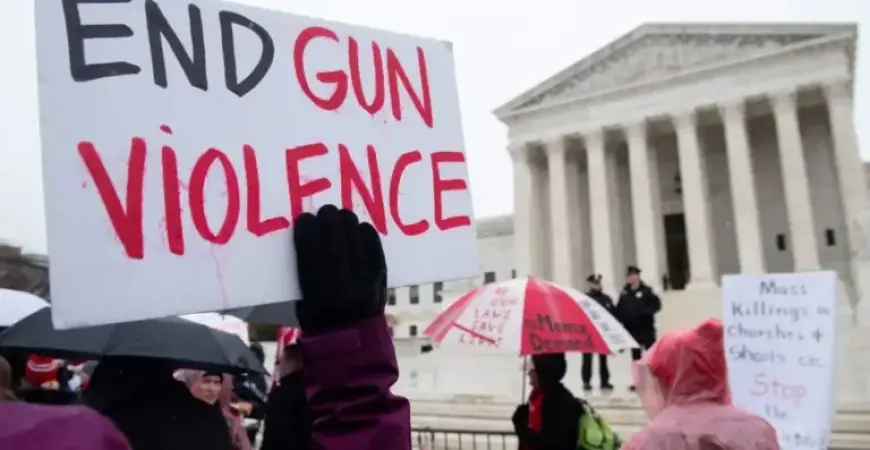
The Supreme Court recently tackled the intricate legal principles surrounding Second Amendment rights in the case of Wolford v. Lopez. This case, heard on a Tuesday morning, scrutinizes a law from Hawaii that seemingly undermines a previous ruling, New York State Rifle & Pistol Association v. Bruen, established in 2022.
Case Background: Wolford v. Lopez
In Bruen, the court invalidated a long-standing New York statute. This law mandated that individuals demonstrate “proper cause” to obtain a public carry handgun license. The current case challenges a Hawaii law that requires gun owners to obtain explicit permission from a business owner or manager before bringing a firearm onto the premises.
This stipulation functions as an indirect ban on public firearms, as few businesses are likely to grant such permissions. Consequently, gun owners often unwilling to leave their weapons behind may find themselves unable to carry firearms in most public venues.
Bruen’s Legal Framework
Bruen introduced a specific legal test for Second Amendment cases, stipulating that regulations must align with the historical tradition of firearm laws in the United States. Government lawyers are tasked with demonstrating that current laws are parallel to historical examples at the time the Constitution was crafted.
- Modern-day gun regulations must adhere to historical standards.
- The rule has been criticized for its vagueness and difficulty in application.
Arguments Presented
Hawaii’s legal advocates argued that historical laws substantiate their regulation. They referenced laws from the 1700s, such as:
- A 1771 New Jersey law preventing firearms on non-owned land without written permission.
- A 1763 New York law imposing similar restrictions on carrying firearms onto enclosed land.
Despite these historical precedents, the Republican majority of justices appeared skeptical about upholding the Hawaii law. Justice Amy Coney Barrett and other justices expressed concern over adhering strictly to Bruen’s criteria.
Implications of the Supreme Court’s Decision
The Republican justices exhibited a desire to apply a dual standard in Second Amendment interpretations. Chief Justice John Roberts highlighted the inconsistency in applying different standards to the First and Second Amendments. He remarked on the historical preference for the right to bear arms being treated as “disfavored.”
Justice Samuel Alito emphasized that relegating the Second Amendment to a secondary status could undermine the validity of its protections.
Conclusion
The outcome of Wolford v. Lopez could significantly influence the landscape of gun regulations in the U.S. If the court rules against the Hawaii law, it will affirm an inclination to equate Second Amendment rights with other constitutional protections. Conversely, a ruling in favor of the law may further complicate the application of Bruen’s historical test.
The implications of this case extend beyond legal semantics; they could redefine the relationship between historical firearms regulation and contemporary gun rights as understood under the Second Amendment.