Keon Coleman and the Bills press conference: why Buffalo’s owner put the spotlight on a young receiver—and what it signals next

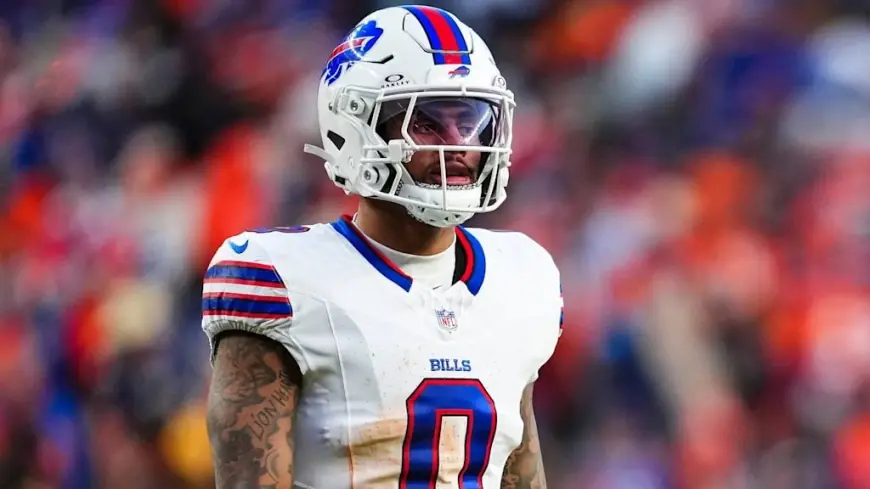
A routine Buffalo Bills end-of-season press conference turned into a major storyline when team leadership publicly unpacked the “Keon Coleman situation” in unusual detail. In the same setting where the Bills addressed their coaching change and roster direction, the organization’s top decision-makers directly discussed how Coleman was drafted, why his development stalled, and what has to change for him to remain part of the team’s long-term plan.
What matters right now isn’t just the criticism—it’s the message. Buffalo is framing Coleman’s struggles as a blend of maturity and missed momentum, while also trying to protect the front office from blame as the team resets its coaching staff and re-evaluates the receiving room.
Bills press conference recap: what was said about Keon Coleman
The key moment came when questions shifted to whether Buffalo had done enough at wide receiver and why the unit didn’t progress the way the team expected. Instead of leaving it to the general manager, the owner stepped in and essentially clarified two things: Coleman was a strongly supported choice from the coaching side during the draft process, and the front office’s decision-making was collaborative—implying that any public blame aimed at the general manager was misplaced.
That instantly created a different kind of tension than a normal season wrap-up. Teams rarely revisit draft-room dynamics in public because it can land awkwardly on the player still in the building—especially one still on a rookie contract. Buffalo then tried to balance that dynamic by stressing the organization still believes Coleman can help, and by describing his issues as more behavioral than talent-related.
-
The Bills publicly revisited how Keon Coleman became their pick, highlighting internal collaboration in the decision.
-
Buffalo emphasized that Coleman’s main problems were maturity and professionalism, not ability.
-
The team pointed to multiple discipline-related moments that disrupted his season and confidence.
-
Leadership insisted there’s still belief in Coleman’s talent, while making clear expectations will tighten.
-
With a new head coach coming, Coleman’s role could change quickly depending on fit and trust.
Why this became a headline: the draft blame game is rare in public
Press conferences after a coaching change usually follow a predictable script: praise the outgoing staff, acknowledge shortcomings, promise a thorough search, and speak in generalities about the roster. This one didn’t. By bringing Coleman into the conversation, Buffalo effectively used a single player’s story to explain a bigger organizational point—how decisions were made, and who should be accountable.
It also hinted at something fans often suspect but rarely hear stated: the draft board isn’t one person’s list. Coaches, scouts, analytics, and executives all push priorities, and the final choice can reflect compromise. Sharing that publicly may reassure some supporters about leadership alignment, but it can also raise questions about how unified the organization really was before the coaching change.
Keon Coleman’s on-field story: a fast start, then a long stall
Coleman’s season arc is the part that makes this feel so consequential. By Buffalo’s own framing, he showed enough early—both in offseason progress and a strong opening performance—to convince the team he could take on a bigger role. But after that, his production and consistency never matched the early promise.
The Bills didn’t position this as a pure “he can’t play” problem. They described a pattern where disciplinary setbacks and maturity issues chipped away at playing time, rhythm, and confidence. In a receiver’s world, those disruptions matter: fewer reps, fewer chances to build timing with the quarterback, and a shorter leash when mistakes happen.
What this means for Buffalo’s next coach and the WR room
This is where the press conference becomes forward-looking. A coaching change often resets the hierarchy in a position group, and wide receiver is especially sensitive to that because usage is so tied to trust and scheme. Buffalo’s leadership is essentially leaving two doors open at once:
-
Coleman gets a “reset” under a new staff, with clear expectations and a defined role.
-
If the new staff doesn’t buy in—or if professionalism issues continue—Buffalo can pivot quickly, even if the contract still has time left.
That doesn’t automatically mean a trade is imminent. But it does mean Coleman enters the offseason with a brighter spotlight than most young receivers want, and with less patience likely available if early signs are negative in spring and summer.
A short historical parallel: in many NFL rebuild points, young skill players become “tests” for a new staff—if they respond to structure and thrive, they’re cornerstones; if not, they’re often the first to be replaced as the new coach reshapes the locker room.
FAQ
Did the Bills criticize Keon Coleman in a press conference?
Yes. Team leadership openly discussed concerns about maturity and discipline while also stating they still believe in his talent.
Was Buffalo saying the general manager didn’t want to draft Coleman?
The message was that the coaching side pushed strongly for Coleman and the final decision reflected collaboration, not a single person’s preference.
Does this mean Keon Coleman will be traded?
Not necessarily. It signals that his future may depend heavily on how the new coaching staff views his fit and whether he meets stricter expectations.
The next signal to watch is who Buffalo hires as head coach and what that staff emphasizes—receiver development, accountability, and schematic usage. If offseason messaging shifts from “reset and develop” to “competition and evaluation,” it will tell you how secure Coleman’s role really is heading into training camp.