Gulf Nations Caught in Crossfire as Iran Strikes Expand to Airports and Cities

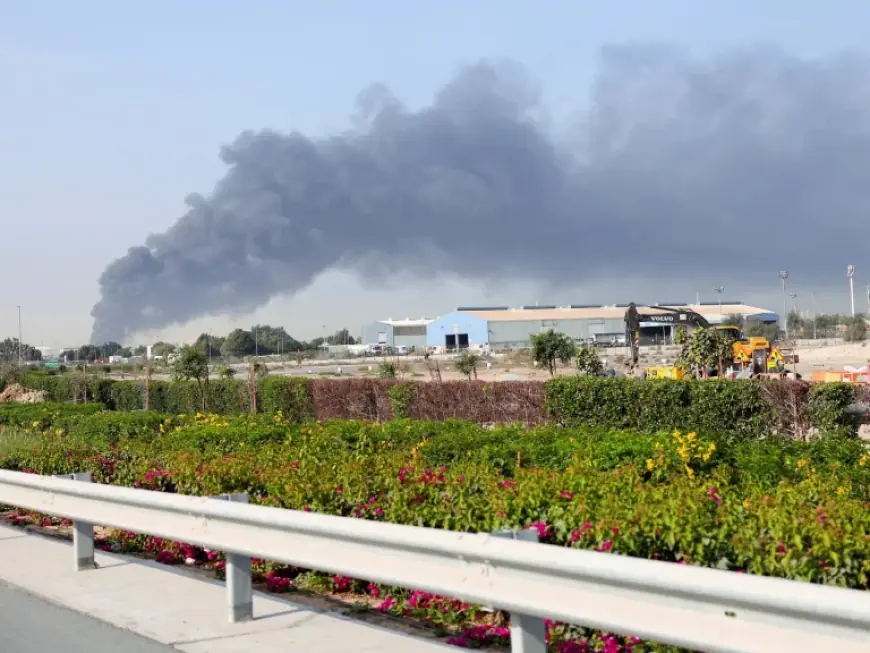
The US-Israeli bombardment of Iran has triggered a wave of retaliatory strikes that have struck gulf nations across the region, hitting military sites, airports and commercial areas and exposing gaps in air defences. The scale of the assault — and the pace of the response — has forced governments to confront immediate damage and broader strategic uncertainty.
Gulf Nations’ airports, ports and cities targeted
Iranian missiles and drones have struck six states in the Gulf: Saudi Arabia, Qatar, the United Arab Emirates, Bahrain, Kuwait and Oman. The attacks included a mix of ballistic missiles, cruise missiles and unmanned aerial vehicles aimed at a range of sites from US military bases to civilian infrastructure. In the United Arab Emirates, the defence ministry has said it had so far dealt with 165 incoming ballistic missiles, two cruise missiles and 541 drones. In Bahrain, residents reported multiple blasts, with at least two impacts among roughly 20 detonations described by witnesses.
Targets named in the wake of the strikes included the US Navy’s 5th Fleet headquarters in Bahrain, and airports, ports and commercial areas across the region. Some of the damage to civilian buildings has come from debris falling from intercepted weapons, highlighting how interceptions do not eliminate risk to densely built urban and commercial zones. What makes this notable is that sites never designed for wartime conditions — luxury hotels, shopping malls and modern airport terminals — have now become part of the operational map of the conflict.
Abbas Aragchi’s denial and Tehran’s stated aims
Iran’s Foreign Minister Abbas Aragchi denied that Tehran set out to strike its neighbours, insisting that the campaign was aimed at foreign military presence. Aragchi said, “We are not attacking our neighbours in the Persian Gulf countries, we are targeting the presence of the US in these countries. ” At the same time, Iran signalled a broader willingness to retaliate against any state it considered complicit in the initial assault that targeted Iranian leadership and officials.
The immediate cause-and-effect trajectory is clear: a US-Israeli bombardment that killed a number of high-ranking Iranian officials, including Supreme Leader Ali Khamenei, was met by Iranian strikes across the Gulf. That retaliation has had direct consequences for partner states of Washington, which now face attacks despite not having launched strikes from their territory. The Gulf Cooperation Council’s previous model of managed rivalry and external security guarantees has been placed under acute strain.
Damage, defence gaps and strategic recalculation
Officials and analysts in the region warn that the assault could reshape long-standing assumptions about security. The strikes have already exposed gaps in air-defence coverage, with successful interceptions still leaving falling debris and occasional hits on airports and civilian infrastructure. Gulf states’ efforts to show they were not operationally complicit in the initial assault did not prevent them from being targeted, underscoring a new vulnerability tied to hosting foreign military assets.
The broader implication is that prolonged conflict will force Gulf capitals to revisit defence planning and diplomatic posture. Pressure to choose clearer alignments could grow, and the economic consequences of sustained instability — from disrupted maritime routes to higher insurance and financing costs — would complicate the region’s long-term projects and investment plans. For now, the immediate task for regional authorities is managing damage, securing vital infrastructure and trying to close the defensive gaps that the latest strikes have exposed.