

























Remote-Controlled Proteins Illuminate Cell Activity

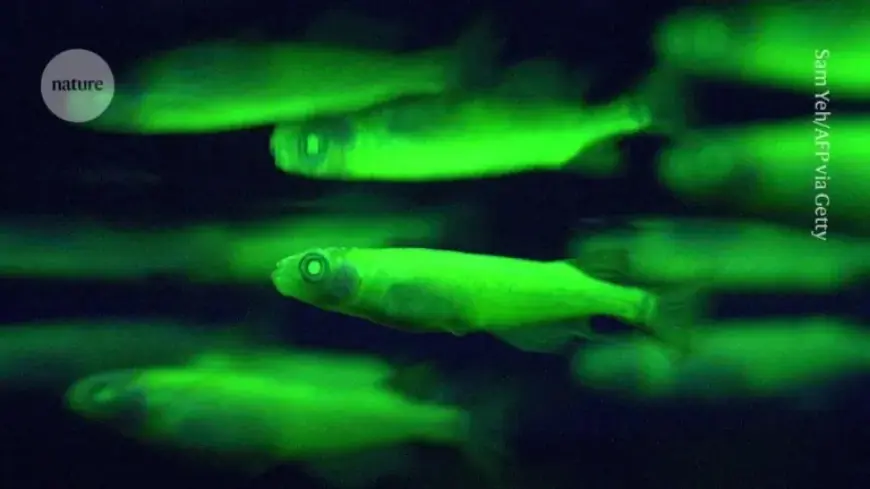
Researchers have developed novel magnetically controlled fluorescent proteins, enhancing our ability to observe cellular activity. This advancement presents opportunities for remote-controlled biosensors and therapies.
Magnetically Controlled Fluorescent Proteins
A team led by physicist Andrew York at the Chan Zuckerberg Biohub in San Francisco has made significant strides in this field. Their study, recently published in *Nature*, focuses on magnetically responsive proteins that can be manipulated within living organisms. This approach could transform our understanding and management of biological processes.
Development and Mechanism
The journey began two years ago at Calico Life Sciences, where York and biochemist Maria Ingaramo discovered a property of the well-known green fluorescent protein (GFP). They noted that GFP dimmed by approximately 1% when exposed to a weak magnetic field.
To enhance this response, researchers engineered a new protein named MagLOV. Unlike GFP, MagLOV can dim its fluorescence by 50% or more in the presence of a magnet, demonstrating significantly improved sensitivity.
Experimentation and Findings
- Research Team: Comprised of biophysicist Gabriel Abrahams and bioengineer Harrison Steel from the University of Oxford, UK.
- Key Experiment: The researchers explored how magnetic fields affect MagLOV. They discovered that the quantum properties of electron pairs in the protein can be influenced by these fields.
- Results: The study demonstrated that they could switch the fluorescence of MagLOV in Escherichia coli cells using a combination of magnetic fields and radio waves.
This capability allowed them to locate MagLOV-expressing bacterial cells embedded in silicon blocks by varying the magnetic field strength. Future plans involve testing the same techniques in animal models.
Applications
The genetic encoding of MagLOV presents a unique opportunity to monitor molecular processes remotely using magnets. Since magnetic fields can penetrate biological tissues, this technique holds promise for non-invasive monitoring methods in living systems.
In summary, the advancements in magnetically controlled proteins like MagLOV may pave the way for innovative biosensors and therapeutic strategies. As this research progresses, it is poised to impact various fields, from biotechnology to medicine.