Report Highlights China’s Air Force as Revolutionary Threat to Indo-Pacific

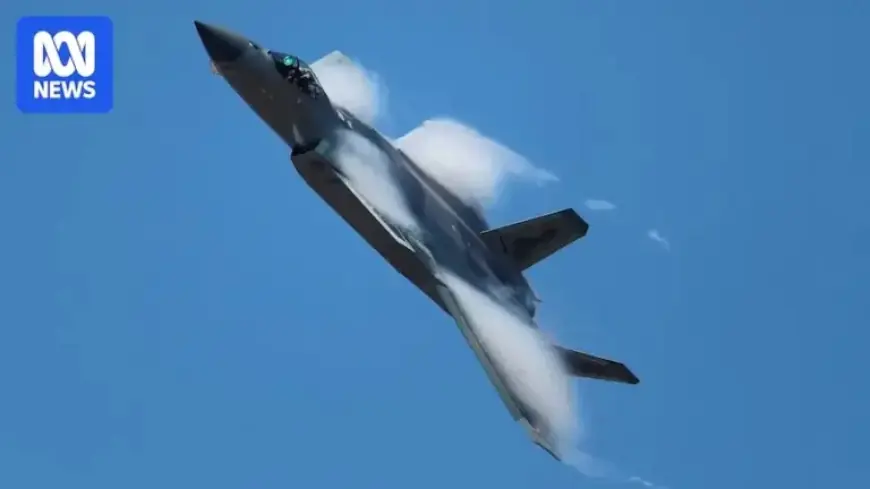
A recent report highlights the serious threat posed by China’s air force to the United States and its allies in the Indo-Pacific region. The Royal United Services Institute (RUSI) states that China’s military modernization represents a “potentially revolutionary challenge” in aerial combat capabilities. Previously perceived as significantly less capable, the Chinese air force now possesses advanced technology that complicates any intervention in a potential conflict over Taiwan.
Threats to Aerial Supremacy in the Indo-Pacific
China’s People’s Liberation Army (PLA) has developed a variety of capabilities that threaten American air assets. According to the RUSI report, these capabilities can affect U.S. air force refueling tankers, naval carrier groups, and forward air bases from distances of over 1,000 kilometers. Key advancements include:
- Thousands of long-range ballistic and cruise missiles.
- Long-range surface-to-air missiles.
- Cutting-edge fifth-generation fighter jets.
The production of J-20 stealth fighters has expanded, with over 120 units being produced annually. This figure surpasses the number of F-35 jets bought by the United States. By 2030, it is estimated that the PLA Air Force could have around 1,000 operational jets.
Implications for Military Power Dynamics
Experts warn that China’s rapid military advancements could allow it to eclipse the U.S. in advanced combat aircraft. Dr. William Matthews noted that China’s modernizing fleet may eventually include a sixth-generation aircraft, which would alter the global balance of aerial power significantly.
While U.S. aircraft like the F-35 are technically advanced, the RUSI report suggests that the U.S. will need to rely on existing assets to achieve temporary air superiority in potential conflicts. Despite superior technology, the U.S. faced operational constraints in the region.
Missile Capabilities and Combat Readiness
China’s air-to-air missiles, such as the PL-15 and PL-17, offer advantages in range compared to their American and European counterparts. The effectiveness of these systems was demonstrated in a recent conflict between Pakistani and Indian air forces, where a Chinese missile shot down an Indian jet.
China has also conducted military drills near Taiwan to signal its commitment to preventing any moves toward independence. Efforts to enhance its military capabilities include the development of ultra-long-range missiles with potential ranges exceeding 2,000 kilometers.
Challenges for U.S. Intervention
The U.S. faces challenges in responding to Chinese aggression. Dr. Matthews remarked that while the U.S. Air Force has extensive combat experience, it has not faced a peer-level adversary since World War II. China could potentially replenish military losses more quickly due to its growing industrial capabilities.
With control over rare earth minerals vital for military equipment, the U.S. might struggle to maintain supply lines during a conflict. This concerning dynamic gives China a strategic advantage in a theoretical conflict over Taiwan.
Future Outlook for Taiwan and Regional Forces
In any confrontation over Taiwan, the Chinese PLA would prioritize supporting troop landings while targeting threats to its operations. The enhanced combat capabilities would complicate U.S. and allied efforts to engage effectively. Daniel Shats emphasized that China’s inventory allows for strikes across Taiwan and on critical infrastructures, boosting the speed and scale of any potential landing operations.
Meanwhile, Taiwan is investing in initiatives like the T-Dome air defense system to improve its defense against Chinese aerial threats. However, political challenges persist, potentially hindering the necessary funding for these projects.
Regional Military Developments
Countries in the Indo-Pacific, including Australia, Japan, and South Korea, are also enhancing their air force capabilities. Collectively, they possess 159 fifth-generation jets, with Japan set to acquire additional F-35s. Despite these efforts, experts contend that they are still lagging behind the pace of China’s military modernization.
Currently, the U.S. is focusing on strengthening regional bases and enhancing interoperability with allies, aiming to counter the rapid advancements of the PLA. As tensions continue to rise, the dynamics of air combat and military power in the Indo-Pacific remain critical areas for analysis and development.