






















Starfleet Academy sparks fresh debate as William Shatner jokes about “assuming command” amid online backlash

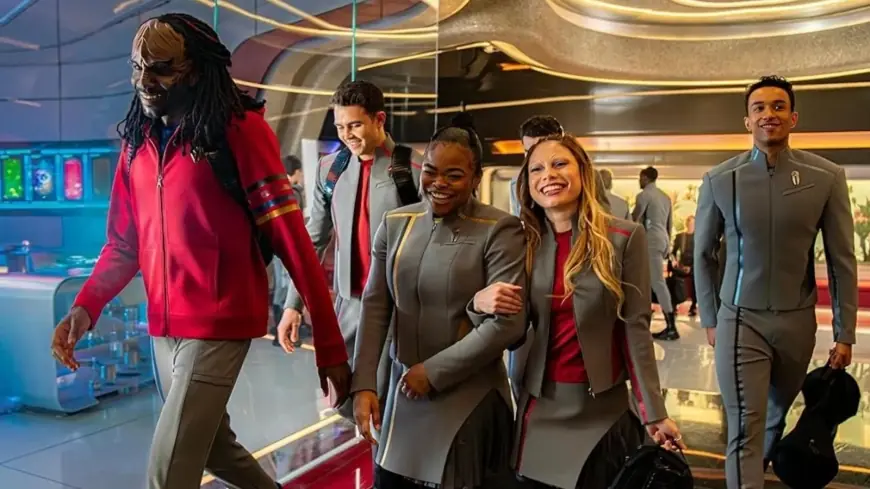
“Starfleet Academy” is barely out of the gate, yet it has already become the latest flashpoint in the long-running tug-of-war over what modern “Star Trek” should look like. The newest series—centered on cadets and campus life in the Federation’s flagship training program—has prompted familiar reactions online, but the story accelerated this week when William Shatner waded in with a characteristically dry, self-aware response that instantly reignited franchise chatter.
Shatner, best known as the original Captain James T. Kirk, responded on social media after a high-profile political figure criticized the new show and suggested the franchise should hand Shatner broad creative control. Shatner’s reply leaned into parody rather than confrontation, playing up the absurdity of the idea while sprinkling in classic Trek-style nitpicks and production-jab humor. The result: a viral moment that turned a culture-war flare-up into a conversation about legacy, canon, and what “Starfleet Academy” is trying to be.
Starfleet Academy and the political backlash that pulled Shatner into the spotlight
The controversy started with online commentary targeting “Starfleet Academy” for its tone, casting, and the broader direction of the franchise. A senior political aide then amplified the criticism with a post framed as “how to fix” the brand—putting William Shatner at the center of the solution.
Shatner’s response didn’t endorse the critique. Instead, it deflated the premise by treating it like an over-the-top pitch meeting: yes, sure, “assume command,” why not—while poking fun at the logistics of continuity and the spectacle of handing any massive, modern production to one person.
That comedic posture matters. In a media climate where franchise discourse can harden into camps overnight, Shatner’s approach signaled that he wasn’t interested in becoming a partisan cudgel. He made himself the punchline, not the target.
William Shatner’s long Trek shadow and why his name still moves headlines
Even decades after his first appearance as Kirk, William Shatner remains a gravitational force in Trek’s public imagination. His presence carries a few overlapping meanings:
-
A symbol of the franchise’s origins and its pop-cultural peak
-
A lightning rod for debates about “classic” vs “modern” Trek
-
A walking reminder that Trek has always balanced earnest optimism with occasional camp
That’s why even a joking post can trigger a secondary wave of speculation: Does Shatner want to return? Is he being courted? Is “Starfleet Academy” planning legacy cameos? The honest answer right now is simple: there’s no confirmed announcement that Shatner is appearing in “Starfleet Academy” in any acting capacity. The noise is being powered by the moment, not by verified casting news.
Still, the episode is revealing. It shows how strongly “Starfleet Academy” is being read not just as a TV show, but as a statement about the franchise’s identity—and how quickly the conversation can be hijacked by external agendas.
What Starfleet Academy is actually doing: a youth-forward Trek with institutional stakes
“Starfleet Academy” is designed to feel different from bridge-centric Trek. Instead of following an established crew with decades of experience, it aims at the pressures of training: ambition, politics, mistakes, mentorship, and the moral education that supposedly turns bright recruits into Federation officers.
That premise can look “smaller” than galaxy-spanning war arcs, but it’s also fertile ground for what Trek does best: arguing about principles through character conflict. Academy settings naturally surface questions like:
-
Who gets access to power, and who doesn’t?
-
Can an institution teach empathy, or only discipline?
-
What does “service” mean after trauma and upheaval?
Those themes are part of Trek’s DNA. The irony in the backlash is that “Star Trek” has always used the future to talk about the present—sometimes subtly, sometimes not.
What happens next: the franchise calculus after Shatner’s viral moment
In practical terms, Shatner’s comment creates three likely ripple effects for “Starfleet Academy”:
-
It boosts visibility beyond the existing fanbase. People who weren’t watching suddenly know the show exists—and that it’s “in the conversation,” for better or worse.
-
It widens the expectation gap. Some viewers will show up hoping the series fights the culture war; others will show up hoping it ignores it entirely. The show can’t satisfy both.
-
It amplifies legacy-cameo speculation. Even if producers never planned it, the idea now has momentum—meaning any future cameo, reference, or archival nod will be scrutinized for “meaning.”
The smartest path for “Starfleet Academy” is to stay focused on storytelling and let the online turbulence burn off. If the show delivers compelling cadets, credible stakes, and a clear moral center, the noise becomes background. If it wobbles early, the discourse will define it before it can define itself.
why Starfleet Academy and William Shatner became a proxy fight
This week’s flare-up wasn’t really about whether one actor should “take over” a franchise. It was about ownership—who “gets” to claim Trek as theirs, and whether the future should resemble someone’s memory of the past.
William Shatner’s joke cut through that. It reminded everyone that Trek has survived reinventions, misfires, tonal shifts, and generational handoffs for nearly sixty years. “Starfleet Academy” doesn’t need to be rescued by a legend. It needs to stand on its own: new faces, new dilemmas, and the same stubborn hope that tomorrow can be better than today.