

























US Economy Appears Strong Post-Trump, But Is It Sustainable?

The United States economy is currently experiencing notable growth following the presidency of Donald Trump. Key indicators such as unemployment rates and gross domestic product (GDP) growth suggest a robust economic performance. However, experts warn that underlying issues could undermine this apparent strength.
US Economic Performance Under Trump
In December, inflation stood at a modest 2.7%, with the unemployment rate remaining low at 4.4%. Additionally, the GDP grew at an impressive rate of 4.3% in the third quarter of 2025, marking the fastest expansion in two years.
Stock Market Trends
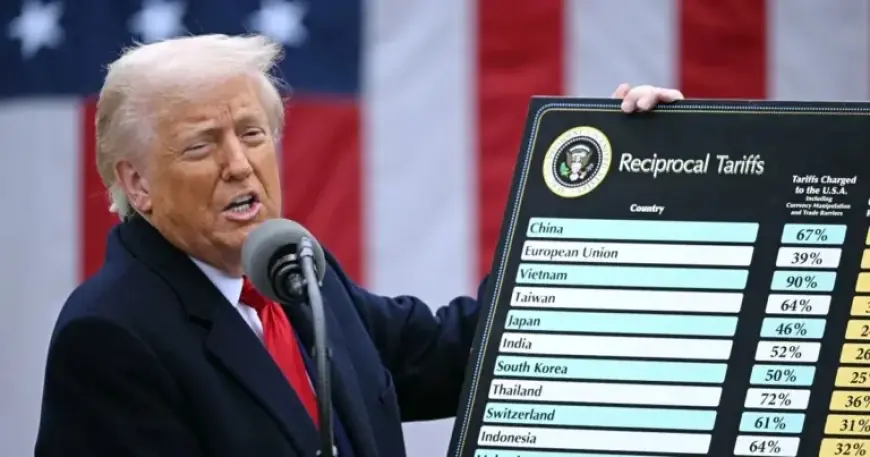
The stock market has provided a significant boost to the economy, rising nearly 30% following Trump’s announcement to ease some tariffs. This rapid increase, largely driven by leading technology companies, has enhanced consumer wealth and spending. Oxford Economics reported that the rise in consumer spending since the COVID-19 pandemic can be attributed, in part, to this boost in net wealth.
- Stock market growth: Nearly 30% increase since April 2 announcement.
- GDP growth: 4.3% in Q3 2025.
- Inflation: 2.7% in December.
- Unemployment rate: 4.4% last month.
Wealth Inequality
Despite these promising figures, wealth distribution has become increasingly uneven. The top 10% of earners now account for approximately half of all consumer spending, the highest percentage recorded since 1989.
“The gains are going a lot to people in higher income brackets,” noted Marcus Noland from the Peterson Institute for International Economics. This trend emphasizes the disparities occurring in the current economic landscape.
Job Market Dynamics
While specific sectors such as healthcare and hospitality have seen job growth, industries like retail, manufacturing, and construction have experienced job losses. The impact of Trump’s immigration policies contributed to a negative net migration rate for the first time in over fifty years, according to Brookings Institution analysis.
Experts predict a net decline of two million workers in the US workforce this year, attributing this decrease to strict immigration measures.
The Rise of Policy Uncertainty
Smaller businesses, in particular, are feeling the effects of increased policy uncertainty. Many lack the resources to adapt to the changing market. Oxford Economics highlighted that smaller firms are missing out on the AI-driven economic boom, which has primarily benefited larger corporations involved in capital-intensive industries.
Future Economic Outlook
While the economy shows signs of growth, experts caution that the benefits may not be sustainable. The term “jobless growth” has been coined to describe a scenario where economic expansion does not lead to increased hiring. “This could be the new norm,” said economist Bernard Yaros, highlighting concerns about the impact of rapid advancements in AI on employment.
In conclusion, while the US economy appears strong post-Trump, the sustainability of this growth remains uncertain. Significant challenges, including wealth inequality and workforce shortages, need to addressed to ensure long-term stability.